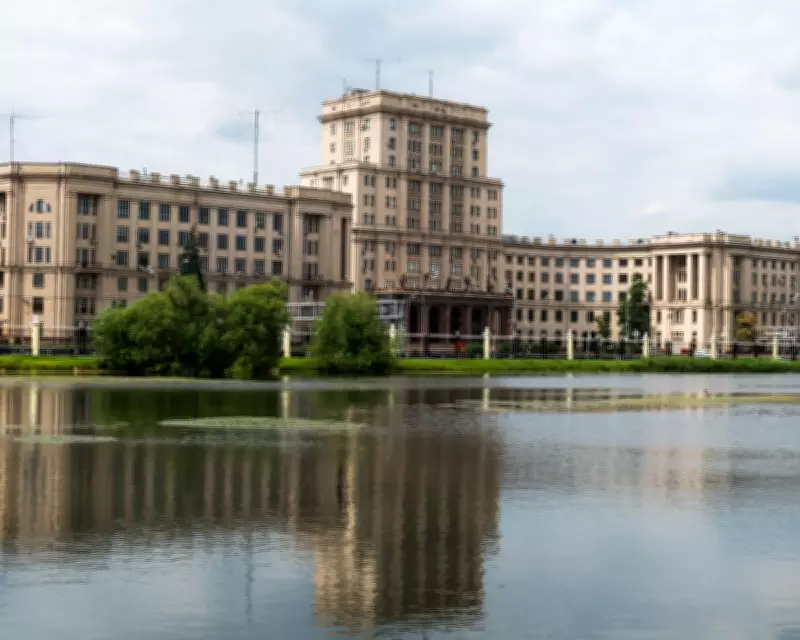
Documents obtained by a consortium of journalists have revealed that Bauman Moscow State Technical University, one of Russia's most prestigious institutions, houses a secret faculty known as Department 4 or 'Special Training' that prepares students for careers in the GRU, Russia's military intelligence directorate. The GRU has been implicated in hacking western parliaments, poisoning dissidents abroad, and interfering in elections across Europe and the United States.
Secret Faculty Unveiled
The existence of this path from Bauman directly into Russia's military intelligence apparatus is revealed for the first time through over 2,000 internal documents obtained by a consortium of six outlets: the Guardian, Der Spiegel, Le Monde, the Insider, Delfi, and VSquare. The files, covering several years up to 2025, include course syllabuses, exam records, staff contracts, and career assignments of graduates, tracing their path from classroom exercises in hacking and disinformation to postings in notorious cyber-units.
Bauman, founded in 1830, has trained engineers and scientists for Soviet rockets, tanks, and weapons systems. A 2013 internal letter to then Defence Minister Sergei Shoigu stated that the university conducts more research and development than any other higher education institution in Russia, with over 40% for the Ministry of Defence.
Curriculum and Training
Embedded within the university's military training centre, Department 4 is divided into three specialist streams. The most prominent, code 093400, is titled the 'Special Reconnaissance Service'. The GRU exerts direct control over recruitment and grading, sending its own officers to conduct exams and oversee placements. The department is led by Lieutenant Colonel Kirill Stupakov, a signals intelligence officer who signed a three-year contract in 2022 with GRU Unit 45807.
Core courses include 'Defence against technical reconnaissance', spanning 144 hours over two semesters. Students learn password attacks, software vulnerabilities, and trojans. They must carry out practical penetration tests and develop a computer virus. The curriculum also covers the structure of US and British military intelligence agencies, and information warfare. Advanced students complete a seminar on developing a disinformation campaign, creating a social media video using 'manipulation, pressure and hidden propaganda'. Teaching materials promote Kremlin orthodoxy, portraying the war in Ukraine as 'inevitable' and alleging 'genocide' in Donbas.
Graduates and Cyber Units
Among the 69 students who graduated in spring 2024 was Daniil Porshin, assigned to Fancy Bear, a GRU hacking group indicted by the US Department of Justice for interfering in the 2016 presidential election. Another graduate was posted to Unit 74455 in Anapa, home to the Sandworm hacker unit, accused of targeting Ukraine's power grid, the French presidential campaign, the South Korean Winter Olympics, and the Salisbury nerve agent investigation.
The documents show that dozens of students have been dismissed, but many are deemed worthy. Fifteen from Porshin's cohort were directed into GRU units. The programme shows no signs of slowing, with the latest cohort not graduating until 2027.
Western intelligence services have warned of increasing Russian hybrid activities. In February, Dutch intelligence warned of cyber-attacks, sabotage, and influence operations targeting critical infrastructure. In April, Sweden's minister for civil defence accused Russia of regular destructive cyber-attacks against EU institutions.
While the documents provide unprecedented insight, insiders say Bauman is just one of several elite universities used to recruit gifted students for military and intelligence structures. Another university, Mirea, is considered even more crucial in training hackers.