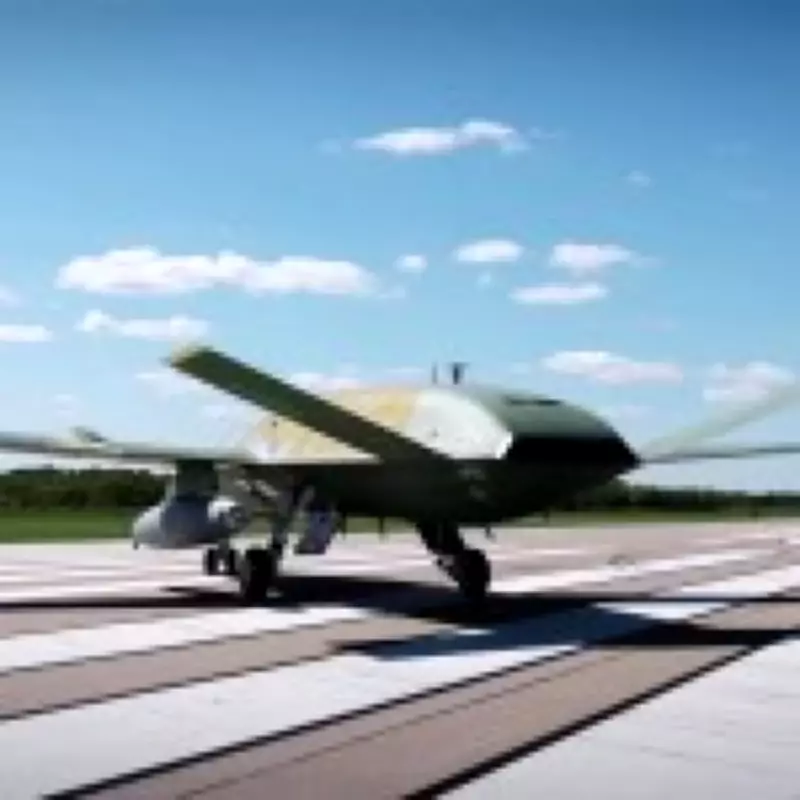
The United States has unveiled the first flight of a robotic aircraft designed to enhance the lethality of jet fighter missions. The autonomous MQ-25A Stingray will refuel warplanes in mid-flight, enabling them to conduct extended operations. Boeing and the US Navy announced the successful completion of a two-hour test flight of an operational model at MidAmerica St. Louis Airport.
Successful Test Flight
During the flight, the unmanned aircraft demonstrated its ability to autonomously taxi, take off, fly, land, and respond to commands from the Unmanned Carrier Aviation Mission Control System MD-5 Ground Control Station. This milestone brings the Stingray closer to aircraft carrier operations and marks the beginning of a new era in naval aviation, according to Boeing.
Role of the MQ-25A Stingray
The MQ-25A Stingray will primarily serve as a carrier-based aerial refueling drone for the US Navy. It will refuel fighter jets at sea, extend the range of the carrier air wing, and free up F/A-18 Super Hornets to focus on strike missions. Additionally, it may be used for surveillance and other support roles from an aircraft carrier.

Dan Gillian, vice president and general manager of Boeing Air Dominance, stated: 'Today's successful flight builds on years of learning from our MQ-25A T1 prototype and represents a major maturation of the program. The MQ-25A is the most complex autonomous system ever developed for the carrier environment, and this historic achievement advances us closer to safely integrating the Stingray into the carrier air wing.'
Program Details
The aircraft is the first of four Engineering Development Model aircraft to be delivered to the Navy under the original $805 million Engineering and Manufacturing Development contract. Boeing and the Navy will conduct additional test flights at MidAmerica St. Louis Airport to further validate the aircraft's flight controls and capabilities before transitioning to Naval Air Station Patuxent River, Maryland, for carrier qualifications.
The US has been utilizing more advanced military weapons in recent combat operations, including 5,000-pound penetrator bombs dropped along Iran's coastline. These munitions, identified as GBU-72 Advanced 5k Penetrator bombs, were first released in 2021. The US deployed them over Iran to address 'hardened, deeply buried target challenges,' specifically missile silos along the Strait of Hormuz. The Air Force describes the weapon's design and effectiveness as developed using advanced modeling and simulation techniques, with lethality expected to be substantially higher compared to similar legacy weapons like the GBU-28.