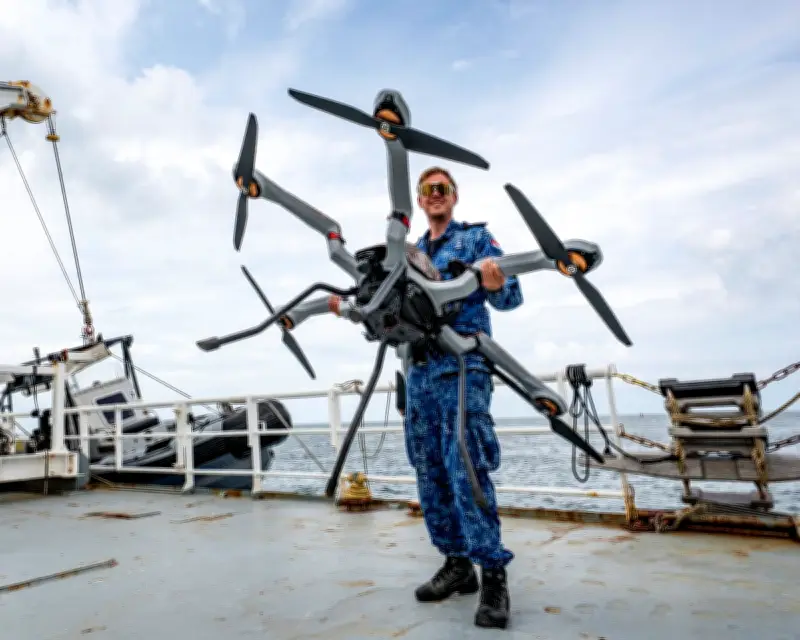
The Royal Netherlands Navy is pioneering the use of uncrewed systems, including drones and autonomous vessels, to transform its sea defences. During recent trials off the coast of Den Helder, the navy tested Defender 1 and Defender 2, uncrewed vessels controlled by computer systems, alongside Noa drones and a Lobster Robotics undersea mine mapper. These systems are central to a five-week mission led by Capt Sjoerd Feenstra, head of the expertise centre for unmanned systems.
Future of Naval Operations
Feenstra envisions that within a decade, crewed platforms will be surrounded by a ring of uncrewed systems operating autonomously. The Dutch military budget aims to use uncrewed systems for more than half of its work within five years, while the UK plans to spend over £5bn on similar technology. The GeoSea vessel, previously used for monitoring seabeds around windfarms, now serves as the base for testing these systems, which are designed to be interchangeable as technology evolves.
Drones have become increasingly prevalent in live conflicts, with their use surging since Russia's invasion of Ukraine in 2022. They have also been deployed in Iranian strikes and the Middle East war, while the US Navy used unmanned sea vessels against Iran this year. For the Dutch navy, uncrewed systems are essential for keeping personnel out of danger zones, especially as work demands more information, speed, and capacity.

Technical Challenges and Ethical Considerations
Technical failure remains a risk, as artificial intelligence can hallucinate or produce false results, according to software integration lead Ferdinand Peters. He emphasises that systems should work for humans, not think for them, and careful consideration is needed on where to deploy AI. The Dutch navy ensures that a person is always part of the decision-making chain, particularly regarding lethal actions. The ethical question is not new; the Netherlands has used the Goalkeeper air defence system, which can function autonomously, for over 40 years.
Feenstra notes that even with human planning, mistakes can occur, raising questions about culpability in fully automated systems. Despite these challenges, the Dutch approach inspires other nations collaborating on North and Baltic sea security, according to naval analyst Lee Willett. He states, 'The Dutch punch above their weight. They are also advancing what they have because they recognise that they are a relatively small navy in an incredibly important part of the world.'
Impact on Manpower and Family Life
Sidharth Kaushal, senior research fellow for sea power at the Royal United Services Institute, believes the trend towards uncrewed systems is inevitable. While they do not eliminate the need for manpower—often requiring more engineers—they offer a better balance for family life by reducing long stretches at sea. Kaushal remarks, 'This is the direction of travel.' The Dutch navy's trials demonstrate a commitment to integrating uncrewed systems as a core component of future naval operations.