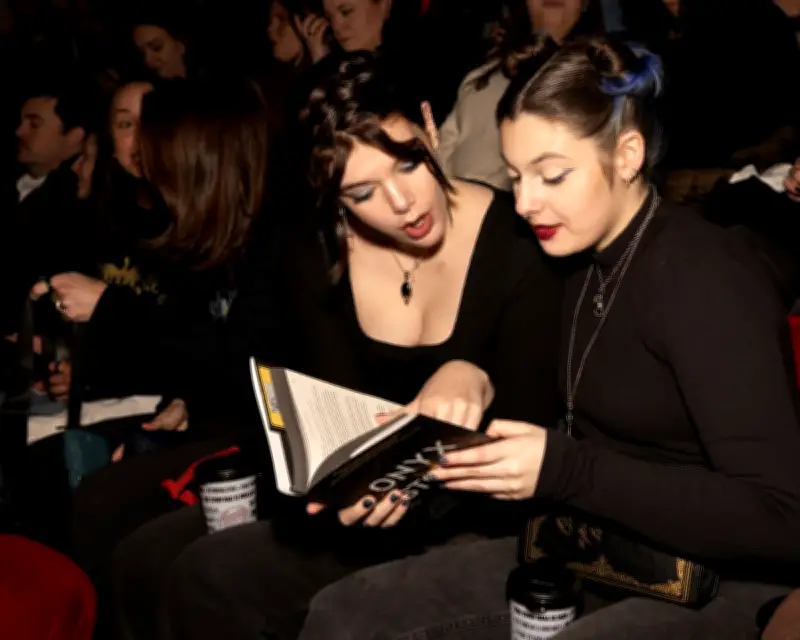
The romantasy genre—a fusion of romance and fantasy—has become a commercial publishing phenomenon, dominating bestseller charts and powered by female authors and readers, primarily those under 35. This trend reflects a thirst for escapism from the political misalignment plaguing many modern relationships, according to a Guardian analysis.
What Happened: The Rise of Romantasy
Romantasy books, filled with dragons, fairies, and ardent lovers, have exploded in popularity over the past three years. Sarah J. Maas, author of the A Court of Thorns and Roses series, has sold over 75 million copies worldwide. Rebecca Yarros's Onyx Storm recorded the biggest UK opening week for a hardback fiction title in a decade. The genre is fueled by BookTok, where hashtags for popular series garner billions of views.
In 2024, the UK publishing industry hit £1 billion in revenue for the first time in years, driven largely by romantasy. Sales of science fiction and fantasy books increased by 41.3% between 2023 and 2024, according to industry data.
Details: Why Women Are Drawn to Romantasy
Guardian books writer Emma Loffhagen visited Bad Girl Books, Britain's first bricks-and-mortar romantasy bookshop in Oxford, where she observed a queue of about 100 people, mostly women. “The escapism is a really big element,” Loffhagen said. “Women are the heroes, slaying dragons while having amazing love stories. It doesn’t feel like it can be achieved in the real world.”
Readers appreciate that male characters are written through the female gaze, with storylines centered on female empowerment. Many books include “spice” (sex scenes), but fans emphasize the appeal of plot, friendships, and world-building. Loffhagen noted that readers often pre-emptively defend their taste against literary snobbery.
Impact: Reflecting Modern Dating Disillusionment
The romantasy boom coincides with young women’s growing disillusionment with heterosexual romance. Concepts like “heteropessimism”—despair at being attracted to the opposite sex—have gone mainstream. Survey data shows a widening ideological gender gap, with young British women more likely to identify as left-wing, while young men are nearly twice as likely to support Reform UK.
“If you are a young woman today and see that young men are less progressive than 30 years ago, it’s really isolating,” said Loffhagen, 26. “It’s understandable that women want to date someone who shares their values.” The rise of dating apps has also made offline engagement feel abnormal, prompting a pivot to algorithm-free singles events.
Loffhagen added, “It’s hopeful that we’re acknowledging something feels broken in dating and gender relations, and those discussions are partly prompted by romantasy’s popularity.”