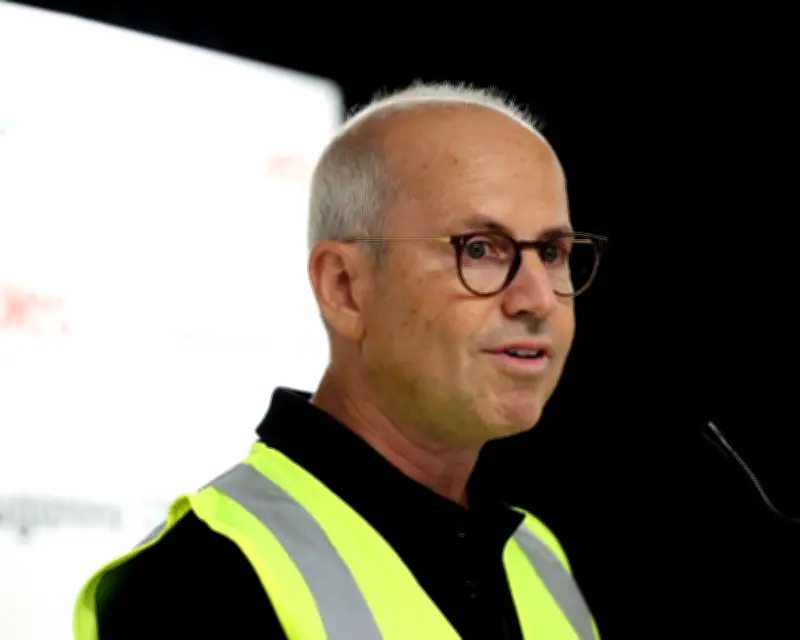
Tim Steiner, the co-founder and chief executive of Ocado, has stated he has “no intention of being a puppet master” exerting control over staff, as an apparent boardroom row over succession at the grocery technology company intensifies. Steiner, who is set to step down as CEO in 2028, suggested that any successor would be pleased to work alongside him.
Shares plunge as profits fall sharply
Shares in the group slid nearly 15% to their lowest level in over a decade on Thursday, after the company revealed pre-tax profits of £17m in the six months to 31 May, a dramatic decline from £607m in the same period a year earlier. The profit drop reflects a significant downturn in the company’s financial performance.
In a trading statement, Ocado attempted to downplay reported boardroom tensions regarding Steiner’s position, with no comment from its chair, Adam Warby. Warby had reportedly begun searching for a new chief executive without consulting Steiner, according to sources.
Succession plan outlined
Last week, Ocado announced that Steiner would step down as chief executive in two years but remain for an additional year in a “founder role,” offering “strategic guidance, deep market expertise and support” to the board through 2029. Steiner said on Thursday that if those running the business at that point wanted him to stay longer, he would be open to it.
“Anybody I have ever spoken to about the possibility of the role, externally or internally, is more than happy to keep some of my involvement in terms of relationships with clients with the perspective of having spent 26 and a half years of solving these challenges,” Steiner said. “I have no intention of being a puppet master and controlling everybody. I will be there to support them and give clients ongoing certainty of my involvement and how we can help them.”
Leadership speculation and valuation slump
The succession plan was announced after weeks of speculation and rumours over Ocado’s leadership, following a slump in its stock market valuation over the past year. Steiner, who co-founded Ocado in 2000 with two other former Goldman Sachs bankers, said on Thursday he remained “fully committed to leading Ocado through the next phase” and insisted the business was “on a good path.”
He declined to comment on the position of Warby, who became chair in 2024, and whether the pair could continue to work together. However, Steiner, who has collected almost £100m in pay from Ocado since its stock market listing in 2010, said he was “not standing in the way” of hiring a new chief executive.
Future growth and international expansion
“It’s an exciting time,” Steiner said, with the business still expecting to generate positive cashflow by its year-end in November. Ocado anticipates signing up new clients in the US within the next six to 12 months, and existing clients are experiencing strong growth. He added that Ocado is poised to open its robot-run distribution centres for clients in South Korea and Japan, as well as in Phoenix, US, later this year.
Steiner also noted that new facilities are likely to be needed in the UK from 2028, as its retail joint venture with Marks & Spencer continues to grow rapidly, with sales up 15% to £1.76bn in the half year.
Analyst reaction
Adam Vettese, a market analyst for the trading platform eToro, commented: “The group remains loss-making, with cash burn still evident, albeit improving, and international technology adoption has continued to lag following earlier partner setbacks. With the shares already down almost 30% year to date and trading near multi-year lows, the negative reaction underlines persistent doubts over execution and the timeline to cashflow positivity.”