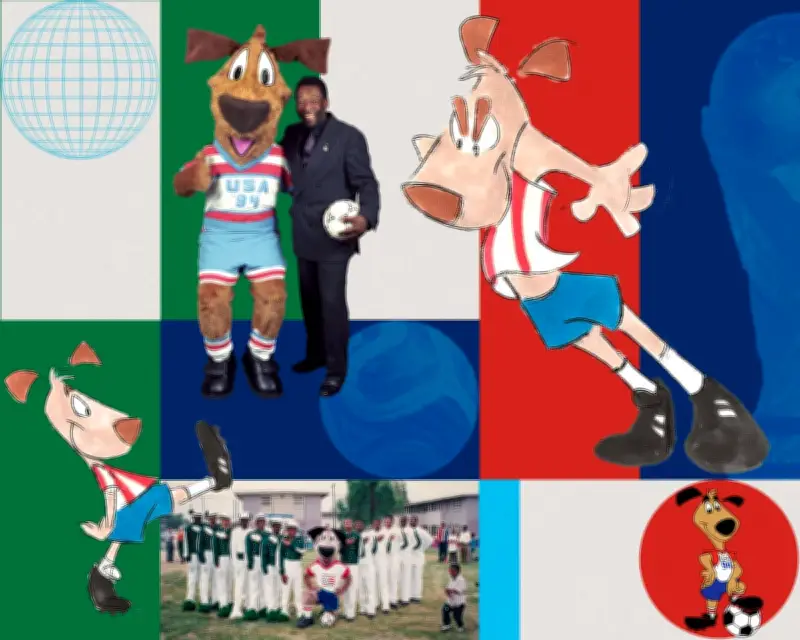
Deep within a dark warehouse in Hillsborough, North Carolina, there sits a severed head. Encased in plastic, perfectly preserved and seemingly begging to be reanimated, it belongs to an American soccer legend: Striker the dog, the mascot of the 1994 FIFA World Cup. For a seismic summer 32 years ago, Striker was more ubiquitous than any of the tournament's players, plastered on billboards, Coke cans, key chains, caps, and hundreds of other items. Kids carried Striker dolls, grown men played Striker-themed pinball machines and Super Nintendo games, and fans posed for photos with the pup in stadiums.
From Warner Bros to the World Stage
Striker's creation was an unlikely journey. John Over and Joey Banaszkiewicz, young animators at Warner Bros in the mid-90s, were responsible for some of the most well-known pieces of American animation of the late 20th century, including Animaniacs and Tiny Toon Adventures. In the summer of 1992, between seasons, they faced potential layoffs. Steven Spielberg insisted they be kept on and found other work. Around that time, the organizing committee for the 1994 World Cup was searching for a mascot. Alan Rothenberg, the US Soccer Federation president, set a meeting with Jean MacCurdy, president of Warner Bros Animation.
The Evolution of World Cup Mascots
World Cup mascots began in 1966 with World Cup Willie, a lion in a union jack. Since then, they ranged from Juanito (a Mexican child) in 1970, to Naranjito (an anthropomorphic orange) in 1982, and Ciao (a cubist stick figure) in 1990. Early concepts for the 1994 mascot included a humanoid soccer ball called "Soccerey Bally," but US Soccer rejected it. Over and Banaszkiewicz explored a dozen possibilities before settling on a dog, inspired by the "underdog" idea given soccer's relative unpopularity in the US at the time.
Design by Committee
The design process was fraught with challenges. Over recalled, "We ran into problems with these dorks at [US Soccer]. They'd look at your drawings. Somebody kicks a ball and you have the leg go way up. They would say – well, 'a child could never kick a ball that hard.' Like, it's a freaking soccer dog, dude." Banaszkiewicz added, "It ended up being sort of a design by committee thing. In the world of animation, that's always death." The public named the mascot via a 1-900 number ($0.95 per call) or mail-in ballot, choosing from four names: Striker, Sweeper, Champ, and Sidekick. About 25,000 people voted, making Striker the clear favorite.
Commercial Success and Cultural Impact
The organizing committee ordered a dozen costumes from Scollon Productions at $2,500 each. Striker was given a backstory: born to Mr. and Mrs. Mutt, a graduate of obedience school, and single – "playing the field." Rothenberg said, "He best represents sports and this country. And, being crass and commercial, we want to sell as much merchandise as possible." Tournament organizers estimated they would make more than a billion dollars off merchandise bearing Striker's likeness. Striker was unveiled at Mann's Chinese Theatre in Hollywood in October 1993, where he left his paw prints in cement.
Life as Striker
Carlos Parada, a marketing employee for the organizing committee, was tasked with safekeeping the World Cup trophy and Striker. He created guidelines for the costume performers: Striker never speaks, never removes his head in public, and communicates through mime. Parada also produced a training film. Striker appeared at pre-tournament friendlies, the World Cup draw, and was plastered on billboards, TV ads, and airplanes. However, he was banned from the opening ceremony after a dispute between Disney and Opryland USA; one Opryland employee said, "He is not here because we think he's stupid."
Legacy and Forgotten Creators
Despite the snub, Striker became a beloved figure. Mexico goalkeeper Jorge Campos was fascinated with him, and the Argentina squad threw him in the air after a win. Over and Banaszkiewicz were unaware of Striker's lasting impact. Over said, "I remember Jean MacCurdy and I went down to watch them unveil Striker... It all felt so forced. This love for this character was sort of forced." Nevertheless, for a generation of American kids, Striker was part of a magical summer that ignited a love for soccer. As the tournament has become more commercialized, Striker evolved into a symbol of a simpler time. Now, as the 2026 World Cup approaches with new mascots, Striker remains one of the most memorable in history.