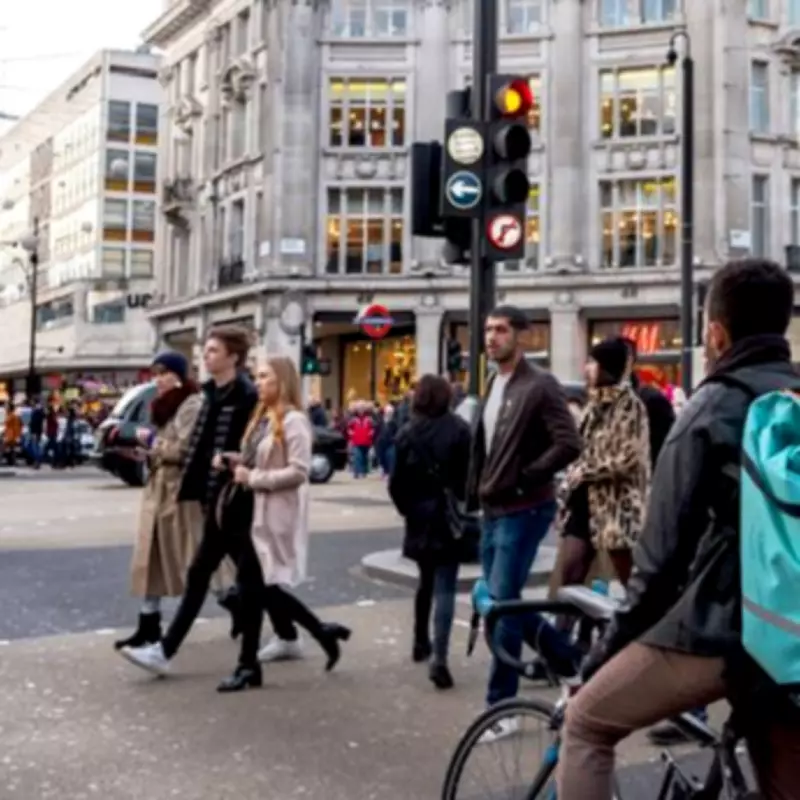
An American expat residing in London has publicly shared his ongoing bewilderment regarding one specific daily habit of Londoners that he simply cannot comprehend. The 61-year-old man, who has been living in the capital for nearly a year, took to the popular online forum Reddit to directly question local residents about how they achieve this remarkable feat.
The Puzzling Observation That Sparked a Major Discussion
"How do Londoners walk so fast without sweating?" the American man posted on the AskUK subreddit, clearly perplexed. He elaborated by stating, "I am in reasonably good shape and walk or run 4-5 miles every day in Zone 1. Although I have been trying to walk faster, I am constantly passed by men in suits and women in skirts and heels."
The expat admitted with genuine frustration, "How do these people walk so fast without sweating like fiends? If I try to keep up, I am soaked within minutes." His sincere inquiry quickly garnered hundreds of responses from British users, highlighting significant cultural and lifestyle distinctions between the United States and the United Kingdom.
British Explanations for the Remarkable London Pace
One Reddit user offered a straightforward explanation: "The answer is you aren't in as good shape as they are, simple as that, regardless of how much in good shape you think you are. But that comes from people in the UK walking a lot more than people from the US all our lives."
Another Londoner shared a personal perspective, stating, "As a Londoner walking doesn't really feel like I'm exercising and I love to go at top speed. But on the other hand if we both went for a run I bet I'd be so much sweatier, more red, and more tired than you. I think the answer is most of us have been walking like this our whole lives."
Additional Factors Contributing to the Phenomenon
A third individual provided a more comprehensive analysis, noting, "London is a young city. It's also a fit city - a lot of those young people work out a lot. Most people are used to walking, the city is built for it. It's a bustling city so people walk fast. People are also acclimatised to the weather. It may seem like they're wearing ridiculous things for the walking but it's suitable for the distance they plan to cover and terrain. Nothing's that far anyway and if it is, you get on the tube for a bit."
Offering reassurance from an American perspective, a woman who has lived in the UK for six years commented, "Fellow American living the UK for 6 years now. Your body does adjust as you do it more, but also you kind of learn to stop caring and walk at your own pace. For me, that is significantly faster than people back home when I'm in the US, lightning speed compared to tourists meandering through Soho, but slower than the fastest London commuter in their 20s or 30s."
Humorous Insights and Practical Advice
Meanwhile, another Brit injected humor into the discussion, joking about street fundraisers: "Someone with a clipboard will ask you if they can 'Have a minute of your time to talk about donkeys with cancer who need new hooves' or something. And when you say you have no shrapnel they'll get out a card reader."
The original poster responded to this with newfound understanding, writing, "OK, this explains why they ALWAYS go for me! Thanks for connecting the dots. I will definitely start walking London speed when I spot them."
Scientific Backing for Brisk Walking Benefits
Interestingly, research published in the American Journal of Preventive Medicine last year discovered compelling health benefits associated with brisk walking. Among 85,000 participants studied, individuals who briskly walked for at least 15 minutes daily experienced almost a 20 percent decrease in early mortality risk. In contrast, those who strolled slowly for over three hours per day saw just a 4 percent reduction in mortality risk.
This scientific finding adds substantial weight to the Londoners' habitual fast walking, suggesting their daily commute might contribute significantly to their long-term health and vitality. The cultural practice of rapid urban walking appears to align with established medical recommendations for maintaining physical fitness and reducing health risks.