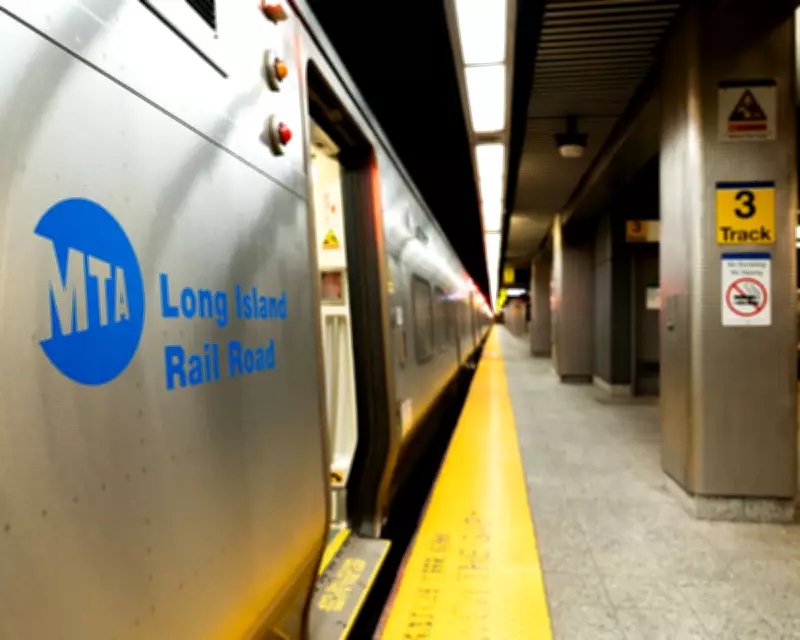
The shutdown of the Long Island Rail Road (LIRR), North America's largest commuter rail system, continued into a second day on Sunday after unionized workers went on strike for the first time in three decades. The railroad, which serves New York City and its eastern suburbs, ceased operations just after midnight Friday after five unions representing about half its workforce walked off the job.
Governor Urges Commuters to Work from Home
Kathy Hochul, the New York governor, has urged commuters to work from home and planned a news conference for late Sunday morning. The unions and the Metropolitan Transportation Authority (MTA), the public agency that runs the railroad, have been negotiating for months on a new contract, with talks stalled over workers' salaries and healthcare premiums. The Trump administration attempted to broker a deal, but the unions were legally allowed to strike starting at 12:01 a.m. Saturday.
Union and MTA at Odds
Kevin Sexton, national vice-president of the Brotherhood of Locomotive Engineers and Trainmen, stated that no new negotiations have been scheduled. "We're far apart at this point," Sexton said early Saturday. "We are truly sorry that we are in this situation." MTA Chairman Janno Lieber countered that the agency "gave the union everything they said they wanted in terms of pay" and suggested the unions had always intended to walk out.
The MTA was not expected to provide an update on the strike before the governor's news conference, scheduled for 11 a.m.
Impact on Commuters and Events
The walkout, the first for the LIRR since a two-day strike in 1994, promises to cause headaches for sports fans planning to see the Yankees and Mets battle this weekend or watch the Knicks' playoff run at Madison Square Garden, which is located directly above the railroad's Penn Station hub in Manhattan. On Saturday afternoon, the station was devoid of its usual weekend bustle, with only a few dozen people seen traversing the main concourse, many dragging rolling luggage from departing or arriving Amtrak trains, which are not affected by the strike.
Departure boards normally showing upcoming trains by destination instead listed ghost trains marked "No Passengers." A few signs affixed to customer service windows explained that the railroad was shut down because of a strike. Access to platforms was blocked off with bicycle-rack style barricades and roll-down gates as MTA police officers stood sentry, directing people to alternative transportation.
Workweek Concerns
If the stoppage continues into the workweek, the roughly 250,000 people who ride the system each weekday will be forced to find other routes to the city from its Long Island suburbs. For many, that likely means navigating the region's notoriously congested roads.
Political Blame Game
Hochul, a Democrat, blamed the Trump administration for cutting mediation short and pushing the negotiations toward a strike. Trump, a Republican, responded on his Truth Social platform, saying he had nothing to do with the strike and "never even heard about it until this morning." "No, Kathy, it's your fault, and now looking over the facts, you should not have allowed this to happen," Trump said, renewing his endorsement of Long Island politician Bruce Blakeman, who is challenging Hochul's re-election bid. "If you can't solve it, let me know, and I'll show you how to properly get things done."
The MTA has said it would provide limited shuttle buses to New York City subway stations, but that contingency plan was not envisioned to handle all the riders the system normally carries on a workday.