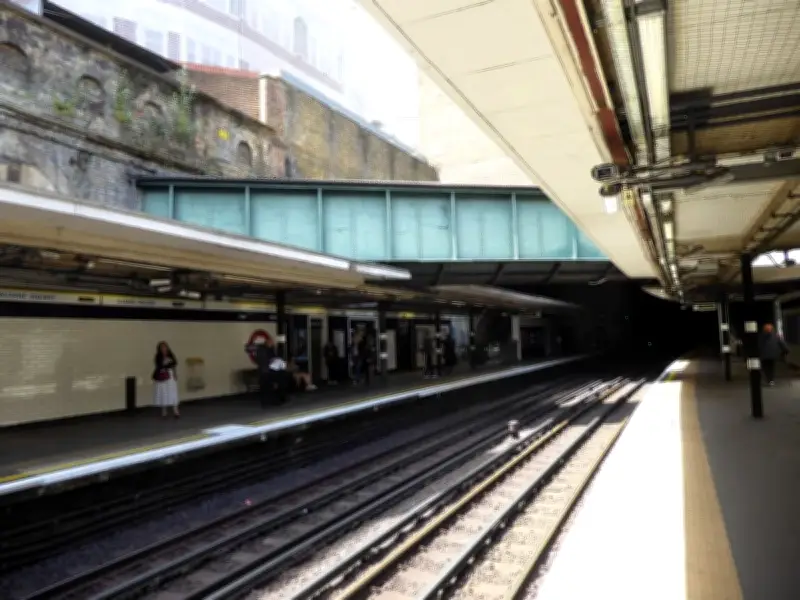
Nearly half of the London Underground's 250-mile (400km) network is actually above ground, according to research from analytics company Esri UK. Only two of the 11 lines—the Victoria line and the Waterloo & City line—run entirely underground.
Which lines are truly underground?
The Victoria line and the Waterloo & City line are the only two Tube lines that are completely subterranean. The Waterloo & City line is also the shortest on the network by a significant margin.
In some locations, the naming becomes particularly ironic. At Whitechapel and West Hampstead, for example, the Underground runs above the Overground's Windrush and Mildmay lines.
Why is it called the Underground?
The name originates from the Metropolitan Railway, the world's first underground railway, which opened in 1863 between Paddington and Farringdon. Engineers used the cut-and-cover method—digging a trench, laying the track, and then capping it with a roof.
Shortly after, the District Railway was built between South Kensington and Westminster using the same technique. These two services evolved into today's Metropolitan and District lines.
How much of each line is above ground?
Esri UK's research shows that 86 per cent of the Metropolitan line runs above ground. Most of the genuinely underground sections, as shown on Transport for London's map, are concentrated in Central London. As passengers travel away from the centre, the network increasingly emerges into the open.
The term 'Underground' only gained widespread popularity in the early 20th century, after the Underground Electric Railway Company of London (known as the Underground Group) was formed and acquired all lines except the Metropolitan. By 1908, the name began appearing at stations alongside the now-iconic roundel symbol.
Today, the Underground is regarded as one of London's most recognisable icons, alongside telephone boxes and double-decker buses. The research highlights a curious quirk of the network's history and naming, which continues to surprise both visitors and long-time residents alike.