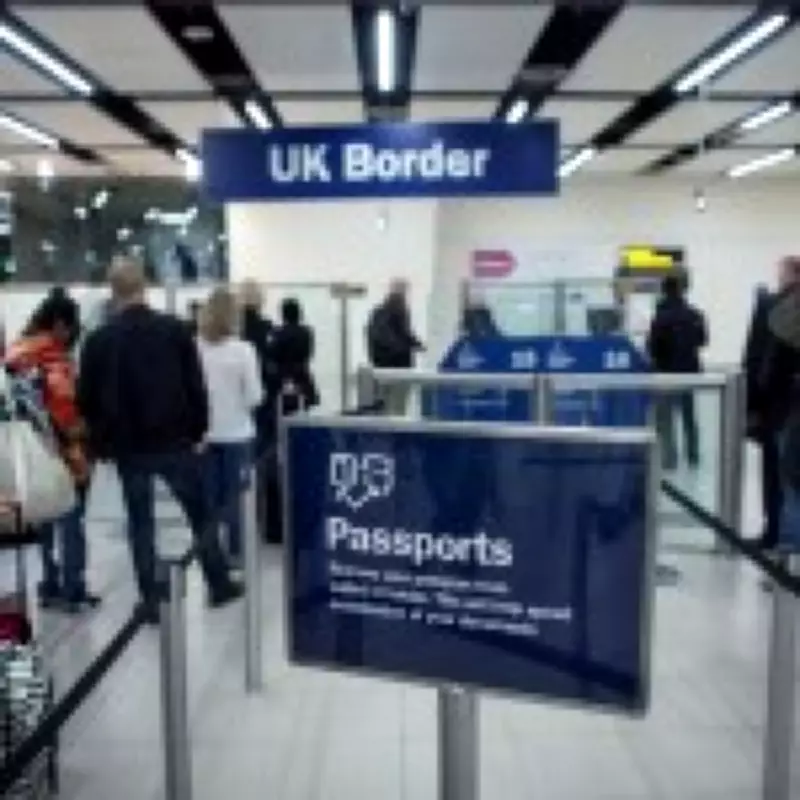
If you are heading on your summer holidays in the coming months, there is a big change coming to major UK airports that you should be aware of. Holidaymakers have already had to deal with the chaos of the new biometric entry and exit checks rolled out last month, causing significant delays. However, in a welcome change, this new rule should make navigating airports a little easier.
Age Requirement Lowered for E-Gates
For the first time, the age requirement for passport e-gates will be lowered, meaning children as young as eight years old will be able to use them. Previously, children had to be 10 to use e-gates, after being lowered from 12 years old in 2023. Families with younger children were forced to have their passports checked manually by border officers. Now, this change could see as many as 1.5 million more children able to use the electronic system, as part of an effort by the government to cut border queue times.
Implementation Date and Requirements
The new age limit will be implemented on July 8, just ahead of the school summer holidays, which begin on July 21. Eight-year-olds using the scanner must be at least 3 feet 11 inches tall (120 cm), although it is not clear whether they will be measured prior to using the gate. They must also be travelling with an adult. This lowered age limit will be open to passengers and their children who are EU nationals or citizens of Australia, Canada, Iceland, Japan, Liechtenstein, New Zealand, Norway, Singapore, South Korea, Switzerland, or the United States.
Benefits and Statements
The Home Office said using e-gates takes just minutes and expanding access to younger children will speed up airport waiting times. You can expect to see these changes at airports like Heathrow, Gatwick, Birmingham, Manchester, and more, as over 290 e-gates in various UK and overseas travel hubs are involved. Karen Dee, Chief Executive of Airports UK, the trade body for UK airports, said: 'This is a welcome development as it will give more families the ability to take advantage of this technology, speeding up the border process and reducing waiting times for many.' Minister for Migration and Citizenship Mike Tapp added: 'By expanding e-gate access, more families can experience a swifter and smoother journey home – freeing up precious time this summer holiday season.' He stressed it would also aid efforts to keep 'our borders safe and secure.'
Past Issues and Additional Context
While e-gates are typically very efficient, they have been hit with problems in the past. Back in 2024, UK airports faced lengthy delays when the gates were plagued with a technical problem. More than 270 e-gates failed, with arriving passengers having to be manually processed as a result. Concerns around summer travel plans have also stemmed from the jet fuel crisis triggered by the war on Iran. However, the British government is now introducing legislation that should prevent last-minute flight cancellations for passengers. Airlines around the world have been scrapping routes and rolling out extra charges, but the transport secretary has stepped in with new rules that will allow airlines to ditch empty flights and tweak their timetables to make better use of their fleets. They will also be able to merge identical services operating on the same day, meaning passengers could be moved from their original booking to a similar one to save fuel. The Civil Aviation Authority (CAA) states that compensation for delays or cancellations must be given if they occur with less than 14 days' notice; 'good time' indicates that passengers will be informed of any adjustments before this threshold. A government spokesperson confirmed to Metro: 'If it is less than 14 days, passengers are entitled to significant compensation, so there is no incentive for airlines to cancel under 14 days.'