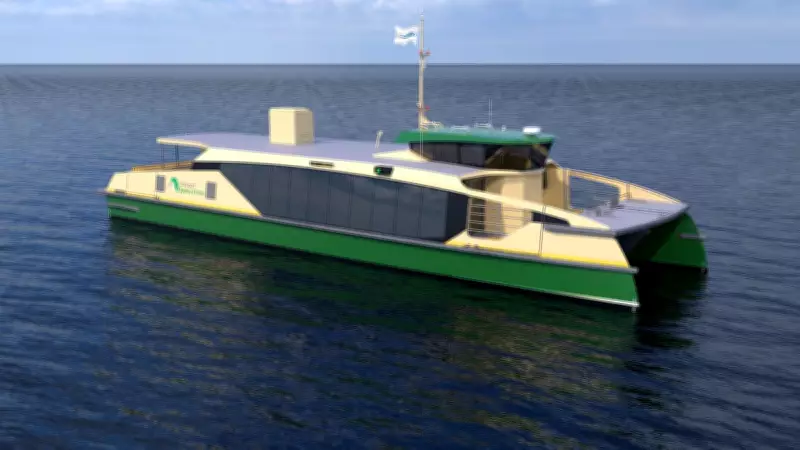
The New South Wales government has announced that contracts have been signed for a new 24-metre battery electric ferry, which will undergo a 12-month trial starting in 2028. This trial comes two years later than originally planned and will inform the transition of Sydney's entire ferry fleet from diesel propulsion, originally slated for 2035.
Details of the Trial
The electric ferry, designed by Sydney-based naval architects Incat Crowther and built by Tasmanian shipyard Richardson Devine Marine, is expected to operate on a new Sydney fish market route when it enters passenger service in 2029. The transport minister, John Graham, stated that the Australian-built ferry will provide a quieter ride and cleaner air on the harbour.
Background and Delays
In 2024, the Minns government announced plans to replace Sydney's fleet of 40 diesel-powered ferries with Australian-made electric or hydrogen-powered vessels by 2035. However, the start date of the electric trial is two years later than the project's proposed start date of early 2026. Despite the target, the government says no decision has been made about investing in additional electric ferries, which will depend on the success of the trial conducted by Transport for NSW and private ferry operator Transdev.
Testing and Infrastructure
The Transport for NSW coordinator general, Howard Collins, said testing will look at the vessel's reliability and charging systems, to be installed at Barangaroo wharf, in real-world conditions. This will include passenger and crew feedback. Construction on the trial vessel will begin later this year by Richardson Devine Marine, which built the seven Parramatta River class ferries launched since May 2024. The new electric battery ferry is modelled on the same design as the River Class vessels, which currently run on diesel but are designed to be converted to electric propulsion.
Broader Context
The new Sydney fish market opened at the start of this year, but no ferry service is yet available. In January, the Sydney Morning Herald reported that marketgoers would have to wait at least a year to travel there by ferry, with plans for a $30m wharf still in the design stage. The government has committed to net zero emissions across its public transport operations by 2035. Last month, it announced that all-electric bus, train and light rail services would run on fully renewable energy from next year under a new $1.9bn deal. However, fossil fuels are still used on most of the state's public buses, as well as on diesel-powered ferries and intercity and regional trains.
Electric Bus Rollout
The government has ordered more than 500 electric buses, of which hundreds are already in operation, with 7,500 more expected to fully replace the 8,000-strong fleet of diesel-powered vehicles. In March, the NSW anti-slavery commissioner found Transport for NSW had not taken reasonable steps to engage with groups affected by the potential use of forced labour in Xinjiang in China and the Democratic Republic of Congo in supply chains for lithium-ion batteries.