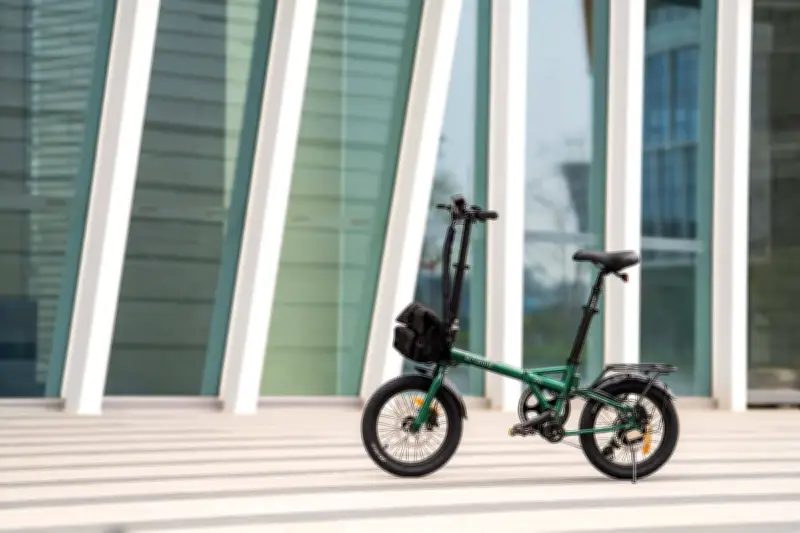
The ENGWE ZIP folding electric bike has entered the market as a cost-effective solution for urban commuters seeking an alternative to public transport or cars. Priced at £899, it undercuts many competitors while offering a 250W motor and a 36V battery that claims a range of up to 50km (31 miles) on a single charge. After rigorous testing on London streets, the bike proves to be a practical choice for flat terrain but struggles with steep inclines.
Design and Build Quality
The ENGWE ZIP features a lightweight aluminum alloy frame that folds down to a compact size, making it easy to store in small apartments or carry onto trains. The bike weighs approximately 22kg (48.5lbs), which is manageable for lifting but may be heavy for some users. The folding mechanism is straightforward, with quick-release levers on the frame and handlebars. The bike comes with 20-inch wheels, which provide a stable ride on paved roads. The build quality is solid for its price point, with welds that appear clean and components that feel durable. However, the suspension fork offers limited travel, and the saddle is basic, which may affect comfort on longer rides.
Performance and Battery Life
Powered by a 250W rear hub motor, the ENGWE ZIP provides pedal assistance up to 25km/h (15.5mph), complying with UK e-bike regulations. The motor delivers smooth acceleration on flat roads, and the five levels of pedal assist allow riders to choose their desired effort. During testing, the bike maintained a steady speed of 20-22km/h on flat terrain with moderate pedaling. The 36V, 13Ah lithium-ion battery is integrated into the downtube and can be removed for charging. In real-world conditions, the battery lasted approximately 35-40km (22-25 miles) on the highest assist level, short of the claimed 50km. On lower assist levels, the range extended to around 45km (28 miles). Charging takes about 4-5 hours from empty.
Hill Climbing and Braking
One of the main drawbacks of the ENGWE ZIP is its performance on hills. The 250W motor lacks torque for steep gradients, and riders must pedal hard to maintain momentum. On a 10% incline, the bike slowed to 10km/h even on maximum assist. The mechanical disc brakes provide adequate stopping power in dry conditions, but they require more lever force compared to hydraulic systems. In wet weather, braking distances increased noticeably. For flat cities like London or Cambridge, the bike is adequate, but it is not recommended for hilly areas.
Features and Accessories
The ENGWE ZIP includes a basic LCD display that shows speed, battery level, distance, and assist mode. It has a built-in headlight and taillight, which are useful for visibility but not particularly bright. The bike comes with mudguards and a rear rack, adding practicality for commuting. The tires are 20 x 1.95 inches with a semi-slick tread, suitable for paved surfaces. The bike does not have a throttle mode, as it is pedal-assist only to comply with UK law. The overall fit and finish are acceptable, but some cables are loosely routed, which could be improved.
Value for Money
At £899, the ENGWE ZIP is one of the most affordable folding e-bikes on the market. It compares favorably with models like the Carbo Model X (€2,990) or the Brompton Electric (from £2,595). However, buyers should be aware of the trade-offs in power, range, and comfort. According to bike reviewer Mark Sutton, "The ENGWE ZIP is a great entry-level e-bike for flat urban commutes, but don't expect it to conquer hills." For those on a tight budget, it offers a viable way to switch to electric cycling without breaking the bank.