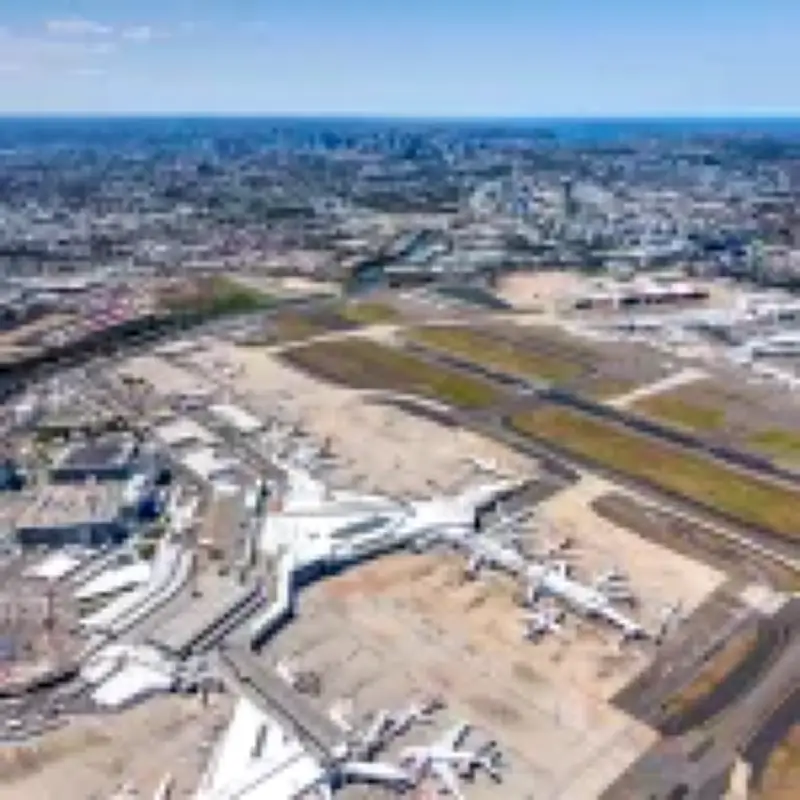
Australia's busiest airport, Sydney Kingsford Smith Airport, has received official government approval for a £3.1 billion expansion project that will stretch over 20 years, potentially transforming the historic site into a significantly larger travel hub. The ambitious 'Master Plan 2045' aims to increase annual flight capacity from 75,000 to 130,000 and boost passenger numbers to over 72 million per year by 2045.
Approval and Key Details of the Expansion
The plan, which had been in public circulation since a preliminary draft was released in September 2025, has now been formally approved by the Federal Minister for Infrastructure, Transport, Regional Development and Local Government, allowing work to commence. Sydney Airport, which first opened in 1919 and is one of the world's oldest international airports, currently serves around 16 million passengers annually and is the official base for Qantas, the country's largest airline.
According to the plan, international passenger numbers are projected to grow to 36.4 million per year, while domestic and regional passengers are expected to reach 36.2 million. The expansion is also forecast to generate approximately £51 billion in annual economic activity and increase direct on-airport employment to more than 105,000 jobs.
Terminal Upgrades and Technological Improvements
Three terminals—T1, T2, and T3—will undergo substantial refurbishment to enhance passenger experience and operational efficiency. Improvements include better connections between terminals, additional parking stands, advanced security screening technology, and other modern amenities. Some technological upgrades are slated for completion by the end of this year, including a £104 million update to the T2 domestic terminal featuring new security scanners and self-service bag drops.
The airport's plans align with a broader trend of smart technology adoption in aviation. For instance, Hamad International Airport in Doha, in partnership with Qatar Airways and technology firm SITA, recently introduced facial recognition for passengers, billed as one of the 'largest biometric passenger rollouts of its kind in the Middle East, and globally'. That system connects 700 'touch points' across the airport, enabling travellers to move through check-in, security, lounges, and boarding without repeated document checks. Similarly, Emirates launched its own biometric check-in in Dubai in November 2025.
While Sydney's Master Plan does not explicitly mention facial recognition, recent data indicates growing traveller acceptance of such technology. The 2025 IATA Global Passenger survey found that half of passengers (50%) have used biometrics at some point in their airport journey, with 85% of those users reporting high satisfaction levels.
Additional Facilities and Economic Impact
Beyond terminal upgrades, the Master Plan includes construction of additional hotels and 'accommodation facilities', as well as new shops, cafés, restaurants, and bars. Sydney Airport CEO Scott Charlton commented: 'Approval of Sydney Airport Master Plan 2045 provides a clear pathway to plan for future demand and invest in the infrastructure Sydney will need over the next two decades.' He added: 'As Australia's international gateway, this plan ensures we can continue supporting tourism, trade, investment and jobs while delivering the capacity needed for future generations.'
The approval marks a significant step for the airport, which has served as a key transport hub for over a century. With the expansion set to unfold over the next two decades, the airport aims to meet growing demand while cementing its role as a major gateway for international travel and commerce.