Oxford Street Pedestrianisation: Funding Shortfalls and Local Discontent Emerge
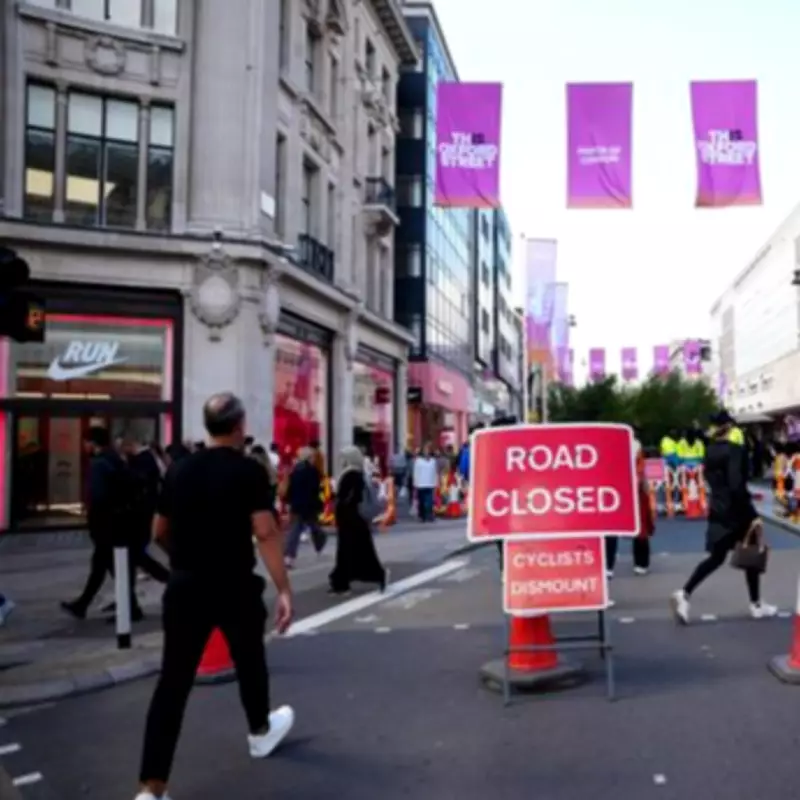
Mayor of London Sadiq Khan has given final approval to transform Oxford Street into a pedestrian-friendly zone, aiming to restore its status as a global shopping and leisure destination. The plan, set to remove traffic between Great Portland Street and Orchard Street, is progressing despite significant hurdles that threaten its implementation.
Consultation Transparency Questioned by Assembly Members
Recent scrutiny from the London Assembly Budget and Performance Committee has highlighted concerns about how local voices are being heard in the pedestrianisation process. Around 2,700 responses were received in the second consultation, with TfL officials stating they conducted deep analysis on 14,000 individual comments. However, Conservative group leader Susan Hall raised alarms about the lack of postcode-level analysis, arguing this prevents understanding of how residents directly affected by the changes truly feel.
"We're hearing loud and clear from residents that they're very unhappy about this," Hall stated during the committee hearing. "Having granular detail of people within a half a mile radius would give us some indication of just how unhappy local people are."

TfL's Helen Cansick defended the approach, citing confidentiality concerns and the need to consider all stakeholders, not just local residents. "Our priority is to understand the collective view of what people feel about our proposals," she explained, noting that analyzing at postcode level risks revealing individual identities when only one or two responses come from a particular area.
Commercial Funding Remains Elusive
Perhaps the most pressing challenge facing the Oxford Street transformation is the absence of commercial sponsors. Despite earlier confidence from the Mayor's office that partnerships would cover "most of its budget," OSDC Chief Finance Officer Adam Barret revealed no commercial partners have been secured. The corporation hopes advertising could generate up to £25 million annually, but warned of potential emergency talks with the Mayor if funding falls short.
"There are elements in the capital spend where there's scope to scale up or down in terms of the urban design of Oxford Street," Barret acknowledged, suggesting the project's scope might need reduction if commercial funding doesn't materialize.
Mayor Khan defended the development corporation's progress, noting they were only incorporated at the start of the year and remain "still quite an infant organization." He expressed confidence in the three-year budget plan but faced questioning from committee chair Neil Garratt about why substantive work hasn't advanced since plans were first announced in September 2024.
Two-Year Trial Period Ahead
Even with final approval granted, the pedestrianisation scheme will undergo a transitional trial period that could extend until 2028. OSDC Chief Executive Officer Nabeel Khan explained this time will be used to "test what works" and verify design assumptions before implementing permanent changes.
"We're keeping it flexible at this moment in time," he said regarding the exact timeframe. "But once the final designs are confirmed, we'll be very clear about the exact time scale." This approach allows for adjustments based on real-world performance during the trial phase.
Local Concerns About Practical Impacts
Beyond the consultation process, residents have raised specific logistical concerns about the pedestrianisation plan. Susan Hall highlighted questions about bus route relocations, disabled access to local stores, nighttime safety measures, and mitigation of rough sleeping issues. She characterized these as genuine challenges that locals understand better than outside supporters of the plan.
"Local residents' views on the challenges the plan poses are just an obstacle in the Mayor's way," Hall claimed, suggesting the administration is prioritizing legacy-building over practical considerations. The debate continues as the project moves forward, with funding, local representation, and implementation details all requiring resolution before Oxford Street's transformation becomes permanent.