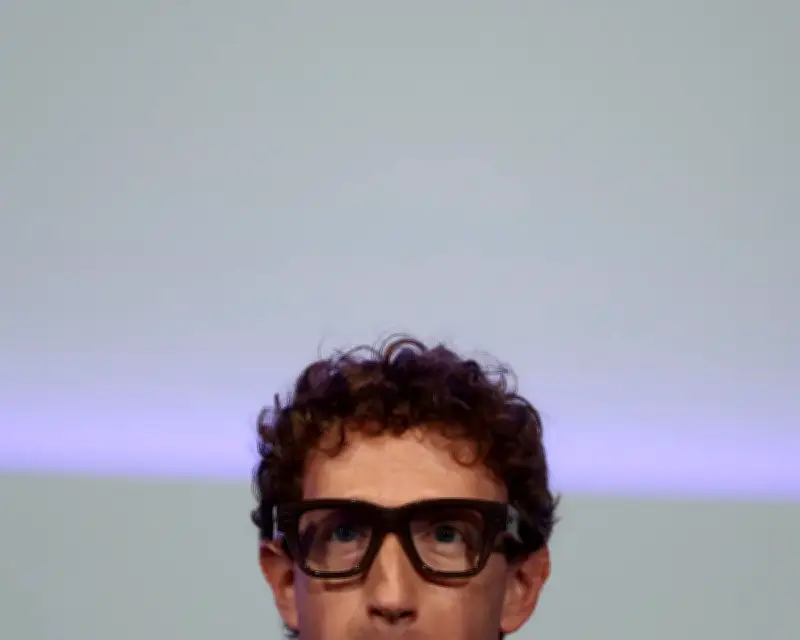
Smart glasses are already out there – around nine million from Meta alone – scanning streets, capturing content, and blurring the line between real and virtual. According to Guardian columnist Jonathan Liew, these devices are undermining not just public spaces but the very nature of being human, and the only solution is merciless mockery.
The pervert glasses problem
Liew, writing in the Guardian, says he has not been tempted to buy a pair of Ray-Ban Meta glasses, partly due to his own head shape, but also because of the ethics. He points out that Meta's product keeps requiring patches and updates to prevent people from using it to do "degenerate things to women," suggesting the company should have walked it back to research and development.
Meta, however, has shown no intention of doing anything so responsible. The possibility that users might film people covertly and without consent appears not to have occurred to the tech giant. Nor the possibility that owners might disable the LED that indicates recording. Instead, the company has embarked on a publicity blitz, reassuring the public that privacy is a priority.
Beyond surveillance: the erosion of trust
Unlike security cameras, smart glasses are mobile, arbitrary, and largely unregulated. They raise questions deeper than technology or regulation, into how we treat each other and how societies function. What happens to shared public spaces when we face the presumption that we are all being filmed, broadcast, and processed? What happens to trust, bonds, and relationships with fellow humans?
Current concern has focused on creeps, perverts, changing room voyeurs, and school bullies. But nefarious intent is not a prerequisite to harm. The very act of filming someone without permission is a form of violation, even theft. It asserts one person's liberty over another's, expresses an asymmetry of power, and mines the unsuspecting individual for content.
Why legislation lags behind
We have long been aware of surveillance: traffic cameras, security cameras, personalised ads. But Kylie Jenner isn't posing on the A46 to sell a speed camera. Wearables straddle fashion and culture, making them the perfect vehicle for reimagining the public panopticon as a chic lifestyle choice.
Legislative fixes are inevitably reactive. Denmark recently introduced a copyright law granting citizens ownership of their own likeness, covering deepfakes and AI imitations. But who has the time to trawl the internet for illicit content? By the time it's up, it's up. Tech giants operate under a praxis of launching first and dealing with fallout later.
The power of social stigma
Social stigma remains one of the most powerful weapons. The term "pervert glasses" is a decent start, but other slurs remain unclaimed: Stalker Specs, Nonce Goggles, Depraviators. The ridicule must be merciless and unstinting, a ritual shaming in proportion to the deviance.
Even if society kills the Meta glasses, others will follow. Samsung and Google are launching their own glasses later this year. Apple's effort will likely emerge in 2027. And few have considered who – except the partially sighted, hard of hearing, or those needing assistive technology – asked for any of this. If smart glasses are the answer, what was the question? Perhaps there was none, just the lavishly funded persistence of a tech sector intent on manufacturing consent.
This may turn the high street into an unwitting hub of surveillance. A society fearful of itself, paranoid and mistrustful. A public sphere exposed and reduced to constituent pixels. Where there is no longer a right to be anonymous, inattentive, forgotten, or left alone. Where the human gaze has been reimagined as an item of transaction.