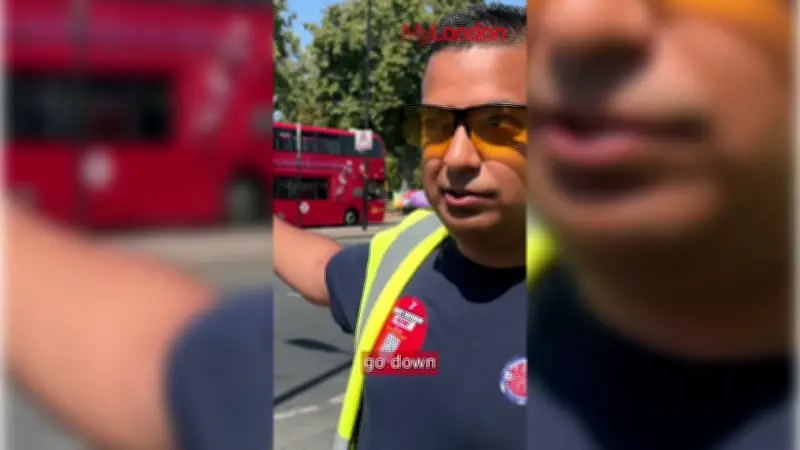
Bus drivers in London are being forced to urinate in bottles on board their vehicles because of a lack of toilet facilities along certain routes, according to a campaigner. Muhsin Manir, who has driven across the south and east of the capital for 18 years, said workers often have to pay out of pocket to use facilities at cafes or restaurants, and during early morning or late night shifts, there may be nowhere at all. He accused Transport for London (TfL) of making a "political choice" not to invest in adequate provisions for drivers.
Campaign targets routes 115 and 58
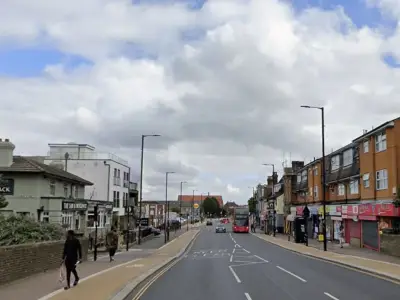
Mr Manir has launched a campaign to force TfL to provide accessible toilet facilities for drivers on routes 115 and 58, which stop at East Ham Central Park. However, he noted that the issue is London-wide, especially during a heatwave when drivers need to take in lots of fluids.
"There are some businesses locally, but they'll charge us to use the facilities," he told the Local Democracy Reporting Service (LDRS). "If I don't have cash, if I don't have money in my account, how am I going to use the facility? It's quite embarrassing to get refused, especially if you don't have money. So sometimes, especially when they're closed down, sometimes we have to use a bottle, or you have to go to the park."
Dignity and health concerns
Mr Manir described the situation as "unacceptable," adding: "There's nowhere to wash your hands as well. It's embarrassing. Your dignity is exposed, you know?" He recounted finding bottles of Lucozade left on buses, saying: "Sometimes when I come in the morning to start my shift on the 158 - I used to find in the morning a bottle of Lucozade lying around, open, and on the floor, sticky. Or sometimes I would find them by the back of the cab seat, hidden. Drivers don't dispose [of] it, or didn't know where to. They're either probably using it on the bus [as a toilet], or somewhere in the park or somewhere else. We shouldn't be in these kind of situations."
If a cafe or restaurant is open and available during a break, it often comes with a cost, which Mr Manir says hits particularly hard during the cost-of-living crisis. He wants TfL to ensure toilets are installed along routes where public facilities are not available.
Data and campaign support
Previous data from the GMB Union identified at least 175 bus routes that lack dedicated driver toilet facilities at one end of the journey, meaning drivers have to rely on commercial or private establishments. Mr Manir's campaign for the two specific routes has over 300 signatures, and he suggested that members of the public are now starting to understand the plight of drivers.
"Buses are delayed because drivers don't have proper facilities. That makes people late for work, or miss their appointment, job interviews and stuff like that," he said. He also claimed that the reason TfL hasn't acted is financial: "They're shying away from the truth because it costs money. They don't want to spend the money, and it's a political choice. They can make that choice to invest in bus drivers. It's unfair, because we come and start our shift early in the morning, leave our families, do unsocial hours, work long hours, long days, sometimes 13 days straight. We have weather where we are exposed to dehydration. We get treated with no toilet facilities. This is unacceptable."
The campaigner also backed MyLondon's own campaign to enshrine five rights, including the entitlement to adequate toilet facilities. "When I heard MyLondon is actively supporting us bus workers, and they have a campaign, I fully support it - thank you for the Back Our Bus Drivers campaign," he said.
TfL response
A TfL spokesperson said: "We take driver welfare seriously and it’s vital that bus drivers are able to access toilet facilities while working. There is ongoing work on a range of measures to improve health and wellbeing for bus drivers, as well as providing safe and usable welfare facilities for our staff to use during their breaks. In the past eight years, 154 locations have had a brand-new toilet building installed or had existing welfare facilities fully refurbished. The vast majority of routes have suitable toilet facilities at their termini and we are determined to improve provision where possible."