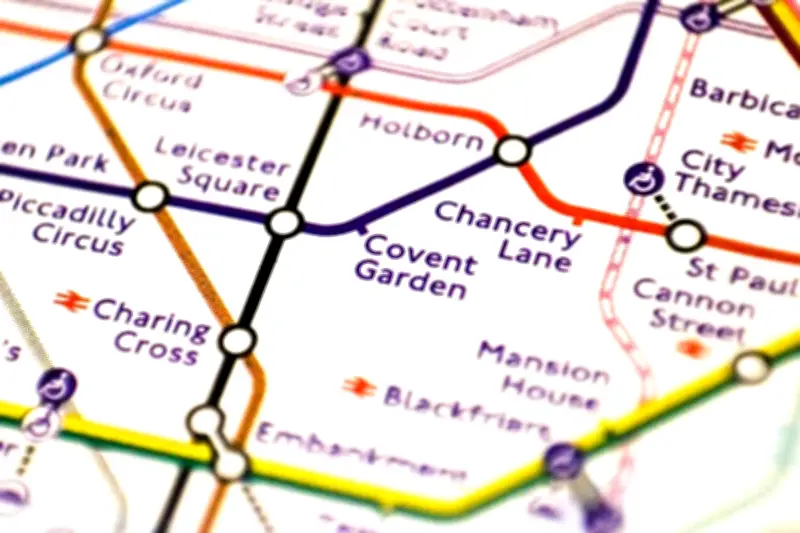
London's Tube map is famously complex, with straight lines, circular routes, and numerous branches. But for many passengers, the most puzzling feature is the existence of stations that belong to two fare zones simultaneously. Earl's Court, Notting Hill Gate, Hampstead, and Stratford are all dual-zone stations, meaning they straddle two of Transport for London's (TfL) fare zones.
TfL's zones determine the cost of every Tube journey, so the question arises: how are passengers charged when they enter or exit at a station that is in both zone 1 and zone 2? The answer is straightforward: TfL automatically applies the cheaper fare based on where the passenger tapped in or out.
How dual-zone stations save you money
Travelers using dual-zone stations benefit from automatic savings without needing to take any action. TfL's system calculates the lowest possible fare for each journey. For instance, a passenger traveling to Earl's Court (zone 1/2) from zone 3 will be charged the zone 2 price of £2.50 during peak hours or £2.30 off-peak. Conversely, a passenger traveling from central London to Earl's Court will pay the zone 1 to zone 1 fare of £2.70 to £2.80, rather than the more expensive zone 1 to zone 2 fare of £3.60 (peak) or £3.10 (off-peak).
This automatic discount applies to all dual-zone stations, ensuring passengers never overpay for their journeys. The savings can be significant for regular commuters, especially those traveling during peak hours.
Full list of dual-zone stations
TfL has designated several stations across London as dual-zone. The full list includes:
Zone 1/2: Earl's Court, Vauxhall, Notting Hill Gate, Elephant & Castle, Kennington
Zone 2/3: Turnham Green, Manor House, North Acton, Bromley-by-Bow, East Putney, North Greenwich, Willesden Green, Willesden Junction, Hampstead, Archway, Clapham South, Stratford, West Ham, Canning Town
Zone 3/4: Bounds Green, Leytonstone, East Ham, Kew Gardens, Hendon Central, South Wimbledon
These stations are spread across the network, covering central, inner, and outer London areas. The dual-zone designation is particularly useful for passengers traveling between different parts of the city, as it provides flexibility in fare calculation.
Practical implications for passengers
For passengers, the key takeaway is that dual-zone stations offer a financial advantage. When planning a journey, travelers can choose to alight at a dual-zone station to potentially reduce their fare, especially if they are traveling from a higher-numbered zone. However, the automatic fare calculation means passengers do not need to make any special arrangements; the system handles it seamlessly.
This feature is part of TfL's broader effort to simplify fare structures and encourage public transport use. By ensuring passengers pay the lowest possible fare, TfL aims to make the network more accessible and affordable for all Londoners and visitors alike.