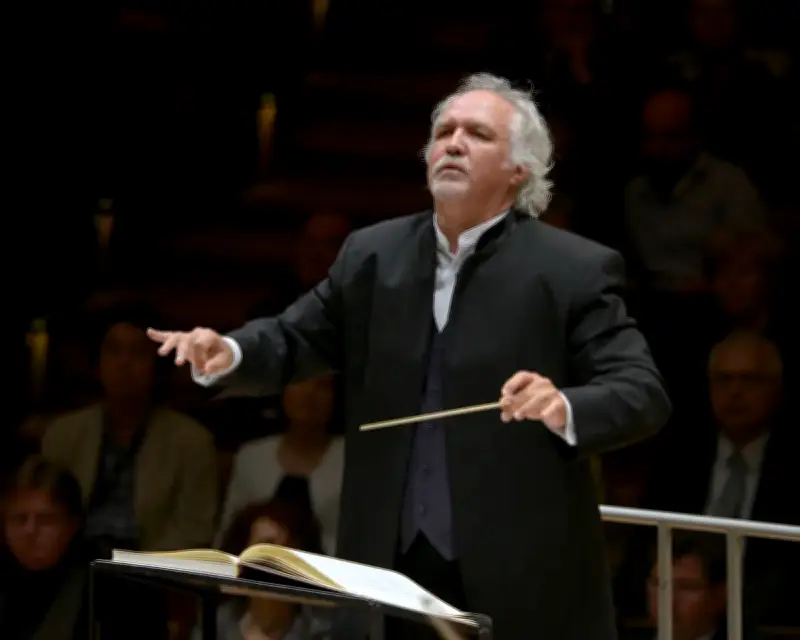
The BBC Scottish Symphony Orchestra, under former chief conductor Donald Runnicles, delivered a resplendent and clear-sighted performance of Mahler's early cantata Das Klagende Lied at the Usher Hall in Edinburgh. The concert, part of the Edinburgh Festival, made a strong case for the original three-movement structure of a work that collides comedy and tragedy at every turn.
A Fairytale of Fratricide and Wedding Disaster
Das Klagende Lied, composed when Mahler was in his late teens, fuses opera, symphony, oratorio, lieder, part-song and even church music. The cantata's plot, adapted by Mahler himself from a Grimms' fairytale, reaches its most remarkable moment towards the end, when an offstage wind band continues cheerfully as a wedding goes disastrously wrong with the revelation that the bridegroom won his bride by murdering his younger brother.
This conjunction of high tragedy and light amusement was noted by Sigmund Freud when he met Mahler in 1910, suggesting it was fixed in the composer's mind following a childhood trauma. The performance, incorporating Mahler's later revisions, highlighted this juxtaposition of complex and contrasting moods with clarity.
Vocal and Choral Contributions
Kathleen O'Mara, Catriona Morison, John Findon and Nicholas Brownlee formed an eloquent quartet of storytellers, with Brownlee's rich bass-baritone projecting particularly well. The Edinburgh Festival Chorus's first entries were tentative, but they came into their own in extended passages. The girls of the National Youth Choir of Scotland, singing from memory, were outstanding in appearances as the murdered brother's ghostly voice.
Mahler withdrew the first movement, Waldmärchen, and its manuscript remained unavailable until 1969. Performing all three movements, the BBCSSO rendered the composer's complex instrumental textures with clarity and conviction, with horns, led by Chris Gough and gifted the finest music, proving resplendent.
First-Half Schubert Symphony
The concert opened with Schubert's "Unfinished" Symphony, which, like Mahler, often abruptly juxtaposes contrasting moods. Runnicles, dispensing with a baton and with strings reduced to chamber-orchestra proportions, achieved delicate pianissimos and highlighted both movements' dance-like character. The performance sensitively balanced classical and romantic aspects, though marked broadening of tempi at junctions and tightly stretched skeins of string sound were reminders that Wagner's Lohengrin lay barely 20 years in the future.