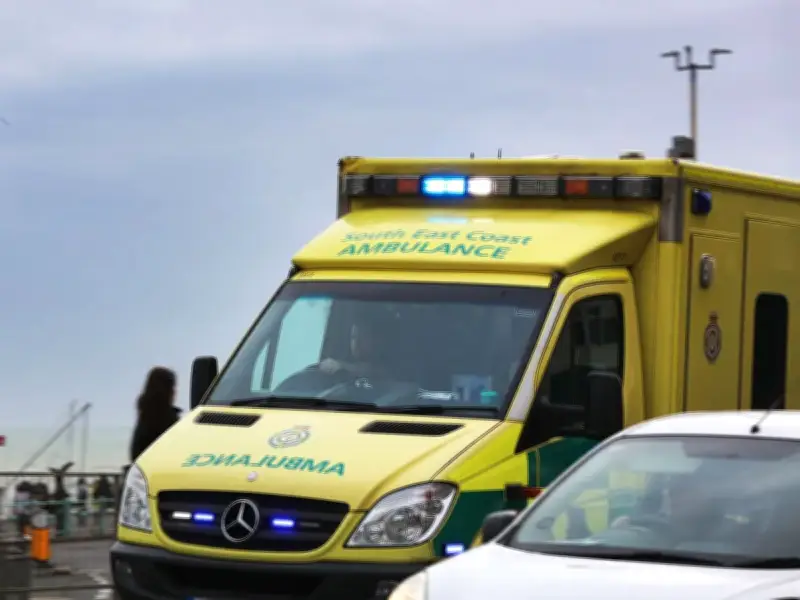
Motorists who jump a red light to let an emergency vehicle pass could be prosecuted and face a fine of up to £1,000 and three penalty points on their licence, according to the South East Coast Ambulance Service. The warning comes as part of the Blue Light Aware Campaign, which aims to help drivers react safely when they see or hear emergency vehicles.
What to Do When an Emergency Vehicle Approaches
The South East Coast Ambulance Service, which covers a busy region including the M20 corridor connecting the Ports and Channel Tunnel to London, advises that drivers should take action to let emergency vehicles pass but must do so safely and legally. The service states: "You should take action to let the emergency vehicle pass, but you must do so safely and legally. If you jump a red light to make space or enter a bus lane or a yellow box junction, you’ll be breaking the law and could be prosecuted."
The recommended course of action is to move to the side of the road and come to a controlled stop, if space allows, without putting other road users or pedestrians at risk. Stopping in the middle of the road is rarely the best option, as emergency vehicles would then have to weave around the stationary car. Drivers should manoeuvre towards the side of the road and slow down to a stop, leaving bus lanes clear for emergency vehicles to use.
Legal Obligations and the Highway Code
Under the Emergency Workers (Obstruction) Act 2006, it is an offence to obstruct or hinder emergency services vehicles. However, the ambulance service clarifies: "That doesn’t mean you should commit a driving offence to do so." The Highway Code states that drivers should "consider the route of such a vehicle and take appropriate action to let it pass, while complying with all traffic signs."
Rule 219 of the Highway Code specifically addresses emergency vehicles. It advises drivers to look and listen for ambulances, fire engines, police, doctors, or other emergency vehicles using flashing blue, red, or green lights and sirens. When one approaches, drivers should not panic but consider the route and take appropriate action to let it pass while complying with traffic signs. If necessary, pull to the side of the road and stop, but avoid stopping before the brow of a hill, a bend, or a narrow section of road. Drivers should not endanger themselves, other road users, or pedestrians, and should avoid mounting the kerb or braking harshly on approach to a junction or roundabout.
Penalties for Jumping a Red Light
The RAC clarifies that passing the white stop line when the traffic light has turned red or amber is an offence, punishable by three penalty points and a fine. A Notice of Intended Prosecution (NIP) will be sent to the registered owner of the vehicle, asking them to name the offending driver within 28 days. In most cases, the notice will ask for an admission of guilt and payment of a fixed penalty fine.
While drivers have the right to appeal a penalty notice if they believe they had mitigating circumstances, the RAC notes that there are "very few" such circumstances. As a "strict liability" offence, drivers cannot simply insist they "didn’t intend" to run the light if photographic evidence proves otherwise. Possible defences include proving the driver did not go through the red light or that there was a defect with the light or related signage. Courts may consider special reasons and re-assess punishment, but it is unlikely drivers will be let off for allowing an emergency vehicle to pass.
The RAC adds that road laws still apply when encountering an emergency vehicle. Entering a bus lane, stopping in a yellow box junction, or driving through a red traffic light could result in heavy fines. With CCTV cameras increasingly used to fine motorists for such offences, especially in city centres, getting out of the way for an ambulance does not exempt drivers from fines. For example, jumping a red light—even at low speed to let an emergency vehicle pass—can result in a fixed penalty notice of £100 and three penalty points. If the police deem the matter particularly serious or dangerous, the case may go to court, where a stiffer penalty, including a fine of up to £1,000, could be imposed.