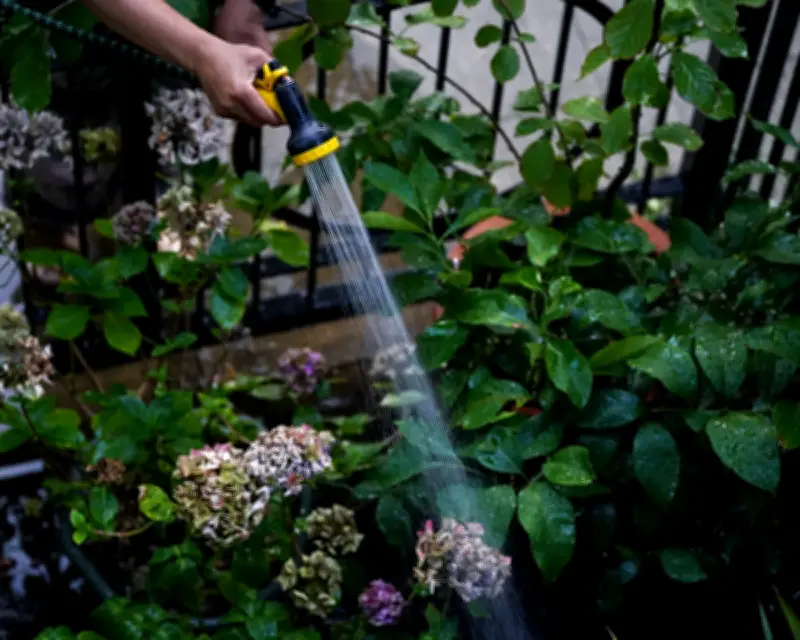
Thames Water became the latest water company to announce a hosepipe ban on Tuesday, affecting more than 10 million customers across London and the Thames valley. This move brings the total number of people under hosepipe restrictions in England and Wales to about 23 million, as the region edges closer to drought status.
Water companies impose bans across southern England
South East Water extended its ban on Monday, covering 2.4 million customers in Sussex, Surrey, Hampshire and Berkshire, after previously restricting Kent. Five other water companies—Affinity Water, Anglian Water, Cambridge Water, Southern Water and South West Water—have already imposed bans. Thames Water's ban officially begins on Thursday, but the company urged customers to cut water use immediately. South East Water's extension takes effect on Saturday.
Dry weather and record heat deplete supplies
Months of dry, hot weather, including three heatwaves and the driest spring on record for England and Wales, have severely depleted water supplies, especially in the south and south-east. The National Drought Group (NDG), which brings together the government, water companies, forecasters, farmers and conservationists, said eight areas in England are in “prolonged dry weather”—the stage before drought. These areas are East Anglia; the West Midlands; Devon, Cornwall and the Isles of Scilly; Lincolnshire and Northamptonshire; Hertfordshire and London; Wessex; Thames; and Solent and the South Downs.
Rainfall and demand statistics highlight severity
Thames Water reported that its region received only 40% of usual rainfall during spring, while water demand was 10% higher than normal in the Thames valley and home counties, and 7% higher in London. The company said the 100 million litre-a-day (22 million gallons-a-day) increase in demand is equivalent to adding the entire city of Manchester to the network. “We would not be taking this step unless it was necessary to protect water supplies for everyone and the environment,” said Nevil Muncaster, Thames Water's director of strategic resources.
Environmental and agricultural impacts
The extreme weather is affecting not only water companies but also the environment and food production. Only 13% of rivers are at normal levels for the time of year, and national reservoir storage is at 78.8%, about 5% lower than the long-term average. Paul Tompkins, deputy president of the National Farmers’ Union, said: “Farmers and growers across the country are working around the clock to harvest crops which have come early, keep fruit and vegetables watered, and care for their livestock. For many arable farmers, this could be another difficult and expensive harvest after extreme weather impacts in both 2024 and 2025, which saw both drought and flood.”
Additionally, 53 wildfires have occurred across the country, including on prime agricultural land and protected sites. Rob Gazzard, who advises the Forestry Commission on wildfires, explained: “Our soils and vegetation have lost so much moisture in this heat that any natural resistance to a fire has significantly reduced. Not only does it make vegetation more likely to burn, but it increases the intensity of fires once they start. This means fires take hold and spread quickly and are difficult to suppress.”
Outlook: little respite expected
Temperatures have cooled from the record-breaking heat spell, but no significant rainfall is expected. Will Lang, chief meteorologist at the Met Office, said: “Much of England has experienced a notably warm and dry first half of summer, with July particularly dry and some locations recording little or no rainfall so far this month. There are some signs of more changeable weather at times into early August, which may bring rain to some areas. However, confidence in the detail remains low, and any rainfall, particularly across southern parts of the UK, is unlikely to be widespread or substantial.”