Richmond Council Approves Exclusive E-Bike Contract with Forest, Banning Lime
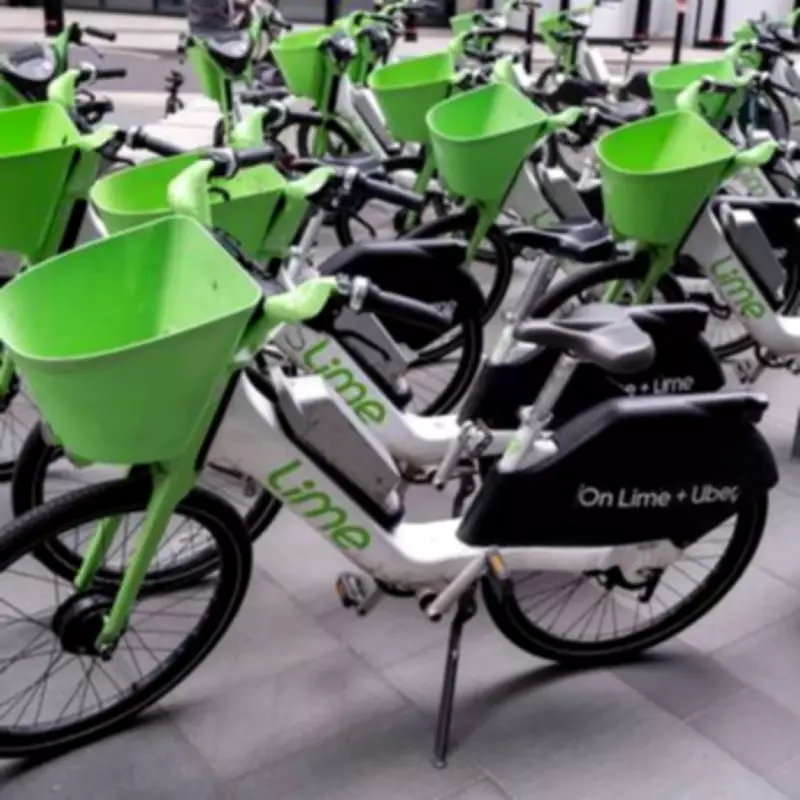
Richmond Council has made a decisive move in the competitive world of shared e-bikes, approving plans to switch providers from Lime to Forest. The council's Transport Committee agreed on Monday, March 16, to award exclusive operating rights for e-bike services to Forest, effectively banning Lime bikes from being hired or parked in the South West London borough.
A Major Shift in Borough Transport Policy
This decision marks a significant change for Richmond, where Lime has been the sole provider of e-bikes since the council entered into a contract with the firm in 2021. Last year saw more than 1.5 million e-bike trips in the borough, representing a 50 per cent increase from the previous year, demonstrating the service's popularity among residents.
A Lime spokesperson expressed extreme disappointment with the decision, telling the Local Democracy Reporting Service that while the council could technically allow people to ride Lime bikes through Richmond, this wouldn't be viable for the company since most trips in the borough either start or end there. It's likely that Lime bikes will simply stop working when entering Richmond once the changeover takes place, though this hasn't been officially confirmed.

Council's Rationale for the Switch
The move comes after extensive consultation with residents and a thorough bidding process. The council investigated making changes to the service following feedback from residents, with many expressing a desire for the service to continue but under greater control. The committee agreed the service should continue and that the cap on e-bikes should increase from 250 to 750, with an option to rise to 1,000 overall.
Additionally, the council plans to increase the supply of e-bike parking bays from 65 to at least 150 to reduce the number of bikes left blocking pavements, addressing a common complaint about shared micro-mobility services.
Competitive Bidding Process
The council invited bids from operators to provide e-bikes for the next three years as part of an improved service. They received proposals from Lime, Forest, and Voi. Council officers considered two scenarios: one operator with a fleet cap of 1,500 e-bikes, or two operators with a fleet cap of 750 e-bikes each.
A report by council officers indicated that Forest scored highest in both scenarios for pricing plan and overall ranking, although the quality scores for all operators were similar. Officers ultimately ruled that Forest as a single operator had the "best overall proposal."
Resident Concerns and Council Response
Despite the council's confidence in their decision, residents raised concerns at the March 16 meeting. Resident Ian Stevens argued that removing Lime bikes from Richmond would create problems for residents and commuters who would have to ditch their bikes when travelling into the borough.
"From a residents' perspective, it's difficult to see how this move serves the public interest," Stevens said. "E-bikes have become an essential alternative in a time when the District line and our local rail services are frankly unreliable."
He further noted that Lime is London's largest e-bike provider, used across all other boroughs, questioning how removing that option from Richmond helps with London's interconnectivity.
Council's Vision for Integrated Service
Councillors countered these concerns by emphasizing that the move would give riders full access to neighbouring boroughs Kingston and Hounslow, where Forest is already the designated e-bike provider. Liberal Democrat councillor Alexander Ehmann, Chair of the Transport Committee, explained that the plans aim to replace current provision "with a single operator with all neighbouring boroughs being accessible and a larger fleet than is presently available."
Ehmann added: "It's really important to recognise, as per some of the comments that have been made from residents, that we want integrity of service and we want to see service delivery that fosters greater take-up of these services, not reduced take-up."

Lime's Response and Broader Context
Lime responded strongly to the decision, stating: "We submitted a strong bid that the council rated highest for quality. Shared e-bike schemes should prioritise maintaining high-quality, popular cycling options in London over unsustainable, and often short-term financial commitments from companies, or risk reducing cycling and undermining the city's net-zero goals."
The company noted that since 2021, they've served tens of thousands of Richmond residents each week, building what they describe as a "hugely popular service that connects the borough to the rest of London."
Lime's spokesperson further argued: "Fewer than one in 10 Lime trips in Richmond are currently ride-through only journeys. Most trips start or end there because of its outer-borough geography. Restricting access this way would simply trigger a second 'Checkpoint Charlie' with neighbouring boroughs such as Hammersmith & Fulham and Wandsworth."
The company also pointed out that almost all London boroughs are moving toward systems with at least two operators, giving residents a choice of shared e-bike services, making Richmond's decision to limit choice particularly disappointing.
London-Wide Micro-Mobility Trends
Richmond's decision follows similar moves elsewhere in London. Hounslow Council ended its partnership with Lime in August after selecting Forest and Voi as its preferred providers, meaning Lime bikes no longer work in that borough. Meanwhile, Brent Council had threatened to ban Lime from the borough over abandoned vehicles but later agreed to allow them to continue operating after dozens of new parking bays were established.
In another development, Islington Council has put both Lime and Forest on a "last warning" over abandoned bikes, indicating that regulatory pressure on micro-mobility providers is increasing across the capital.
The council said it would work with both operators to ensure a smooth transition to the new arrangement, with details of when the contract will begin to be confirmed in due course. This decision represents a significant moment in London's evolving approach to shared micro-mobility services, with implications for how boroughs balance resident choice, service quality, and operational control.