The Liberal Democrat candidate for Mayor of London, Sarah Olney, has called on Transport for London (TfL) to publish interim guidance on dockless e-bikes before new licensing powers come into force. She argues that Londoners cannot afford to wait for legislation to catch up with the rapid growth of the schemes.
E-bikes now account for a tenth of daily cycling journeys
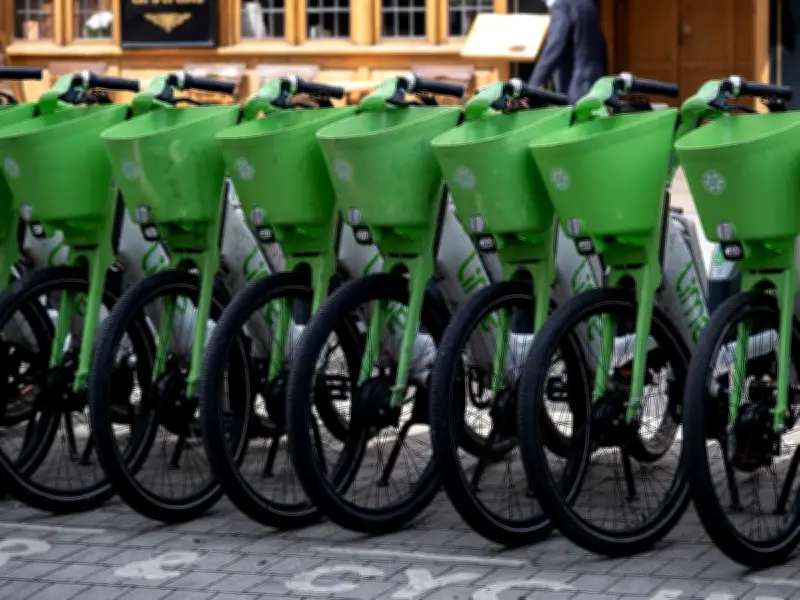
According to TfL estimates, dockless e-bikes account for a tenth of the 1.5 million daily cycling journeys made in London. However, campaigners have repeatedly raised concerns about irresponsibly parked vehicles that block pavements and reduce space for pedestrians, particularly those with mobility or sight issues.
Ms Olney, who has declared her interest in running for City Hall under the Liberal Democrat banner, told the Local Democracy Reporting Service (LDRS) that the Mayor does not need to wait for every piece of legislation to be signed off before acting. She suggested that City Hall could publish guidance today on parking standards, accessibility and enforcement, which providers could sign up to until the legislation is in force.

Seizures up 23% compared to 2025
Local authorities across the capital have seized 3,393 hazardously parked or abandoned e-bikes this year, a figure already 23 per cent higher than the number seized during the whole of 2025. Councils currently operate under individual Memorandums of Understanding with each operator, but these are not legally binding, leading to clashes between operators and boroughs.
For example, Voi has refused to stop activities in Ealing, despite missing out on a contract from the borough. The English Devolution and Community Empowerment Act, passed earlier this year, hands sweeping licensing powers to TfL to create a single city-wide regulatory framework for dockless e-bike operators.
Secondary legislation still needed
The Act empowers TfL to legally licence e-bike operators, potentially cap the number of bikes on London’s streets, dictate where bikes can be parked, and fine operators who fail to comply with parking or safety standards. However, secondary legislation is still needed to bring these measures into force, and in June the Mayor admitted that the Act would not have an impact on Londoners until early 2027.
“The problem is a lot of the powers we would get flow from the need for secondary legislation,” the Mayor told the London Assembly. “The good news is this can be done through committee rather than the full floor of the House. No need for primary legislation; it can be secondary. Our officials speak to the Department for Transport about what we would like to see in the secondary legislation - as she will be aware, once it is published it is very difficult to amend it - we are trying to get involved in influencing our experience in London in relation to this.”
Olney: Every month of delay means more blocked pavements
Ms Olney said that publishing guidance now would give operators, boroughs, businesses and commuters certainty and allow them to plan ahead. “Every month of delay means more bikes blocking pavements, more blind and disabled Londoners unable to get around safely, and a missed opportunity to get ahead of the problem instead of just reacting to it,” she told the LDRS.
She added that a single, London-wide approach, sharing best practice across all 32 boroughs rather than leaving each to fend for itself, is exactly what operators like Lime say they need to justify further investment. “The Mayor can and should give them that certainty now,” she said.
A spokesperson for the Mayor of London responded: “The Mayor welcomes the government's plans to give cities powers to better manage dockless e-bike schemes - something he’s been calling for since 2017 when the first schemes arrived in London. TfL and the Mayor are working closely with the Department for Transport on the secondary legislation required to implement these much-needed controls as quickly as possible.
“Dockless e-bike services are helping thousands more Londoners to cycle, but it is vital that stronger rules on safety, data sharing and parking are at the heart of any future regulation to ensure the industry can continue to thrive. The Mayor continues to urge all dockless operators to fully engage with London boroughs and TfL to ensure their services work well for all Londoners.”