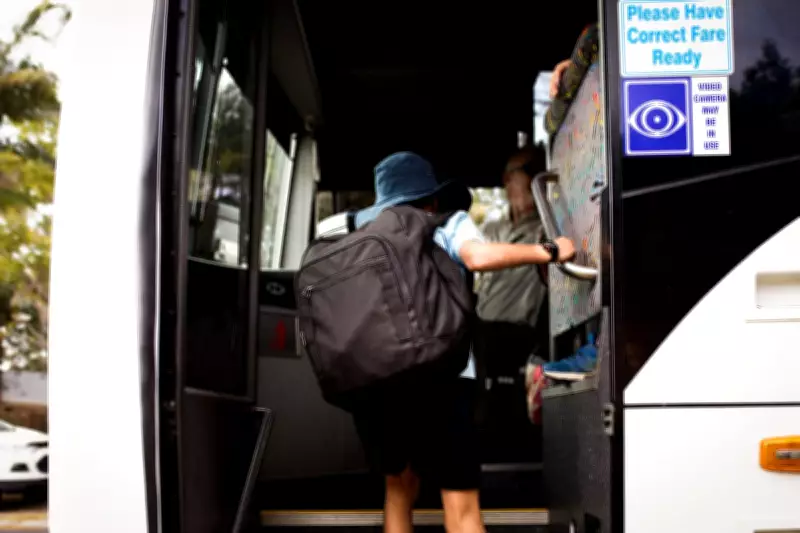
The Northern Territory government's controversial decision to deploy armed Police Public Safety Officers on buses has ignited a fierce debate, with Indigenous leaders and legal services condemning the move as "inherently dangerous and unnecessary."
First Nations Legal Service Issues Stern Warning
The North Australian Aboriginal Justice Agency has strongly opposed the new policy, arguing that introducing firearms onto crowded buses will disproportionately impact Aboriginal Territorians. Chief Executive Ben Grimes emphasized that there is absolutely no evidence supporting the need for armed officers on public transport.
"Many people have told NAAJA that the presence of guns on buses will make them feel less safe, rather than more safe," Grimes stated. "Bringing guns onto crowded and confined buses is inherently dangerous and unnecessary. Situations on public transport should be managed through skilful de-escalation, not through use of force."
Indigenous Politicians Voice Grave Concerns
Labor MLA and shadow attorney-general Chansey Paech delivered a scathing critique of the Country Liberal Party government's approach, accusing them of "reading the Trump playbook." The Arrernte and Gurindji man expressed deep alarm about the policy direction.
"Giving people guns is not the answer to overcoming social challenges and problems in our community," Paech declared. "We are not America. The government should instead focus on the root causes of crime and antisocial behavior."
Independent MLA Yingiya Mark Guyula, a Yolngu man, warned that arming transit and public housing officers would only "intimidate, harass and create widespread fear" among Aboriginal communities. He specifically cautioned Indigenous people about potential targeting by the new armed officers.
Government Defends Safety Initiative
The NT government maintains that community safety remains their top priority, with the first squad of 24 Police Public Safety Officers beginning their 18-week training program in February. Officials note that half of these recruits are already working as Public Housing Safety Officers, Transit Safety Officers, or police staff.
"This gradual transition means services will continue without disruption, while strengthening the work already being done to address antisocial behavior and public drinking," a government spokesperson explained.
An NT police representative added that the new officers would create "safer public spaces through a highly visible and readily engaged police capability" in Darwin, Palmerston, Katherine, and Alice Springs beginning in June.
Critics Point to Better Alternatives
Opponents of the armed officer program argue that more effective, culturally appropriate solutions exist. Grimes suggested several alternatives that could address antisocial behavior more successfully:
- Increased visible support staff at key locations
- Expansion of Aboriginal night patrol worker programs
- Culturally safe engagement strategies
- Enhanced youth outreach services in drop-in centers
Grimes also raised concerns about consultation processes, noting there had been "no meaningful consultation with Aboriginal communities" before the legislation passed last September. This is particularly significant given Aboriginal people's disproportionate representation in death in custody statistics.
Broader Social Issues at Play
Paech highlighted deeper socioeconomic factors driving crime in the Northern Territory, pointing to widespread poverty as a fundamental contributor to antisocial behavior. "Lots of people in the Northern Territory are living below the poverty line," he observed, "and that is seeing an increase in crime."
Guyula echoed these concerns, noting that many community members struggle with mental health issues and substance abuse problems. "Instead of helping people to address the underlying problems," he lamented, "they are filling the jails, making bail impossible to get and increasing the number of guns to be used against us."
The debate over armed officers on NT buses continues to intensify as the June deployment date approaches, with Indigenous communities and their advocates preparing for what they fear will be increased surveillance and potential conflict on public transportation systems.