Transportation Security Administration (TSA) employees have been issued back pay, providing relief after weeks of financial strain during a partial government shutdown. The payments, covering at least two full paychecks, were distributed on Monday following an executive order signed by former President Donald Trump.
Impact on Airport Operations
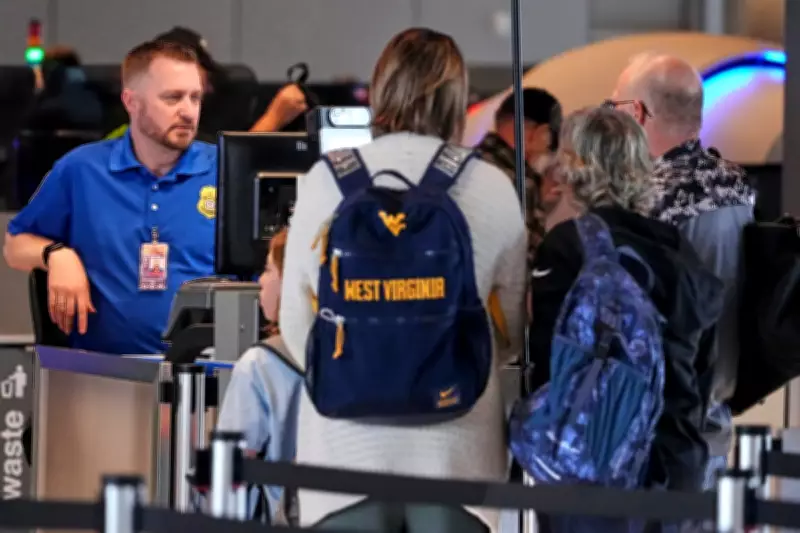
The retroactive paychecks have significantly alleviated congestion at airport security checkpoints across the United States. Over the past two weeks, major air hubs experienced hours-long lines, but wait times have now shortened. Official websites for Hartsfield-Jackson Atlanta International Airport, George Bush Intercontinental Airport in Houston, and Philadelphia International Airport all reported reduced delays at TSA checkpoints on Monday afternoon.
Government Response and Statements
Lauren Bis, the acting assistant secretary of public affairs at the Department of Homeland Security (DHS), confirmed that most TSA employees received their back pay. She stated, "TSA officers are grateful to President Trump and Secretary Markwayne Mullin for their leadership to put money back into the pockets of TSA employees who worked without pay during the ongoing Democrat DHS shutdown." Bis added that the agency is working aggressively to issue a third half-paycheck owed to employees.
Trump's executive order, signed last week, directed the DHS to use funds with a reasonable nexus to TSA operations to cover salaries. This intervention came amid a prolonged congressional deadlock over funding the DHS, which oversees TSA, Immigration and Customs Enforcement (ICE), and the border patrol.
Political Standoff and Funding Issues
The shutdown stems from a budget impasse in Congress, where Democrats have refused to support a key funding bill for the DHS unless Republicans agree to impose restrictions on immigration enforcement operations. These demands include ceasing the use of masks by officers and requiring judicial warrants for entries into homes and businesses.
Last week, the Senate passed legislation to fund the DHS while excluding money for ICE and other immigration-related agencies, with expectations that Republicans would address these in a separate reconciliation bill. However, House Republicans rejected this measure, instead passing a bill to fund the entire DHS for two months, which Senate Democrats quickly opposed. With both chambers on recess, a resolution to the standoff appears unlikely in the near term.
Broader Implications and Worker Exodus
The financial hardship during the shutdown forced more than 500 TSA officers to leave the agency, with thousands others calling out due to inability to work without pay. The back pay initiative aims to stabilize the workforce and prevent further disruptions to airport security operations.
As the political battle over DHS funding continues, the immediate effect of the back pay has been a noticeable improvement in airport efficiency, though the long-term resolution of the shutdown remains uncertain.