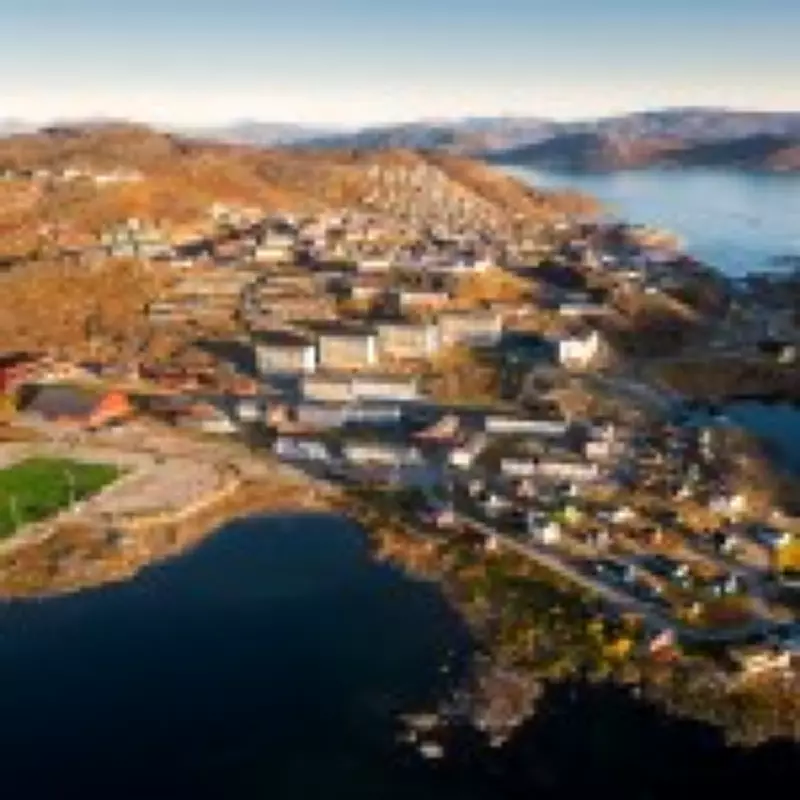
New Airport Connects Travelers to Greenland's Remote Southern Region
A significant development in Arctic tourism has occurred with the opening of a new airport in Qaqortoq, Greenland. This infrastructure project makes one of the world's most remote and culturally rich regions far more accessible to visitors seeking unspoiled landscapes and deep historical connections.
Transforming Access to South Greenland
Previously, reaching Qaqortoq from Greenland's capital Nuuk involved a challenging 306-mile journey that could take two days by ferry or require complex air and sea transfers. The new airport reduces travel time to just 75 minutes by air, fundamentally changing accessibility to this remarkable region.
South Greenland is renowned for its striking natural beauty, including the spectacular Tasermiut Fjord with its soaring peaks, often called the 'Patagonia of Greenland.' The area also holds significant historical importance as the settlement site of Erik the Red over 1,000 years ago, preserving both Inuit and Norse heritage alongside living farming traditions.
Flight Operations and Tourism Impact
Air Greenland has announced it will operate approximately two daily direct flights between Nuuk and Qaqortoq throughout the year, increasing to as many as 17 weekly services during the summer months. Additionally, Icelandair plans to launch four weekly summer flights connecting Keflavík to Qaqortoq starting June 2.
Anne Nivika Grødem, director of Visit Greenland, emphasized the significance of this development: 'South Greenland offers a rare combination of powerful nature and a living culture shaped over generations. Improved access allows us to welcome visitors with greater intention – encouraging travel with curiosity and offering more meaningful experiences for our guests.'
Broader Airport Infrastructure Development
The Qaqortoq airport opening represents part of a comprehensive upgrade to Greenland's flight network. Recent renovations to Nuuk Airport in the capital have been completed, while a major expansion of Ilulissat Airport is currently underway.
The Ilulissat project, subsidized by the Danish Government with DKK 2.1 billion (over £244 million), was originally scheduled for completion in 2024 but has been delayed to October 2026. Upon reopening, the northern hub will feature a new terminal and an extended 2,200-meter runway capable of accommodating larger jet aircraft for direct international flights from Europe and the Americas.
Greenland's Growing Tourism Sector
Greenland's tourism industry remains relatively small compared to other Nordic destinations, which contributes to its appeal as an unspoiled Arctic experience. Visitors are drawn to vast Arctic landscapes, iceberg-filled fjords, whale watching opportunities, hiking trails, dog sledding adventures, and authentic encounters with living Inuit culture.
Despite its remote nature, Greenland has seen growing interest from travelers, with online searches increasing by 48.39% over the past twelve months. The country has been strategically focusing on attracting higher-value, lower-impact tourism that respects local communities and environments.
Interestingly, recent international attention has contributed to this growth, with one travel operator noting that political discussions have 'really put Greenland on the map once again.' Hotels have reported a 46% increase in foreign guests, predominantly from the United States.
Travel experts describe Greenland as a unique destination, with Metro travel editor Alice Murphy stating 'there's nowhere like it on Earth,' while travel writer Jeanine Barone praises Nuuk as 'a buzzy, savvy city with contemporary art, design, architecture, cuisine and fashion.'
The opening of Qaqortoq airport marks a pivotal moment in Greenland's tourism development, balancing improved accessibility with preservation of the region's distinctive cultural and natural heritage.