Rugby's Codebreakers: Athletes Mastering Union, League, and Sevens
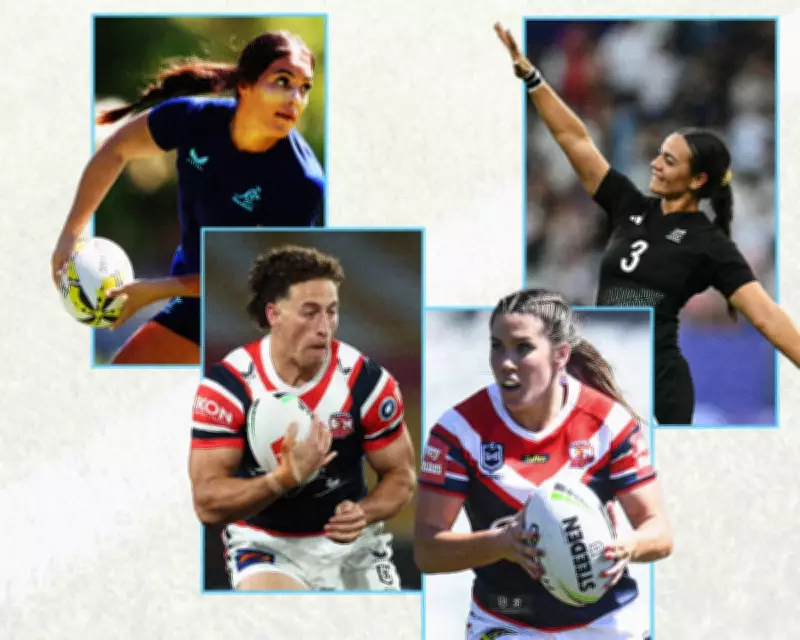
In the dynamic world of rugby, a new breed of athlete is emerging: the codebreaker. Male and female players are increasingly willing and able to switch between rugby union, rugby league, and rugby sevens, with some even excelling in all three formats. This trend is reshaping careers and challenging traditional sporting boundaries.
The Rise of the Code Agnostic Athlete
Charlotte Caslick, a 31-year-old Australian star, epitomizes this code agnostic approach. With 328 appearances for Australia in rugby sevens, including Olympic gold, Commonwealth gold, and a Sevens World Cup, she has also played rugby union for her state and country, and rugby league in the NRLW, the world's largest women's club competition. Caslick attributes this versatility to childhood experiences.
"It probably comes down to the way we grow up," says Caslick. "We play so many different sports all year round, changing between them. Boys will play school rugby on Saturday then club rugby league on Sunday for as long as they can. More girls are starting to do that as well. Throw in touch or oztag, and we have so many opportunities. It challenges athletes to find where they are best suited. Until you get exposed to different formats, you don't know which one is for you."

Women Leading the Charge
For an increasing number of elite women, the answer is all three codes. Australia's sevens captain, Madison Ashby, played league and union while growing up. Her teammate, Maya Stewart, played league and touch as a kid, then union for Australia, and has now joined the sevens tour this season. Women's rugby is moving towards a model similar to cricket, where countries and T20 franchises compete for elite talent.
Clubs in the recently expanded NRLW are targeting union internationals, Women's Super League players, and sevens talent from the Pacific. Logic suggests that their financial resources will soon extend to the Women's Premiership. Ellie Kildunne, who played league in her youth, competed at the Olympics for Great Britain in sevens, and won the World Cup with England's union team last year, now expresses interest in testing herself in the NRLW.
Australian and Kiwi stars are flocking to the NRLW. Since Dominique du Toit signed for Cronulla Sharks after winning the Sevens World Cup with Australia, the trickle has become a wave. Australia union players Layne Morgan and Arabella McKenzie are heading to the Eels and Dragons, respectively; Canterbury Bulldogs have signed Daynah Nankivell from Japanese union champions Yokohama TKM and Tamika Jones from the union club Western Force; Sydney Roosters have signed Tatum Bird from union side NSW Waratahs and former sevens player Keighley Simpson. After 12 years of success in union, New Zealand legend Michaela Blyde switched codes last year to play in the NRLW.
Monetizing Talent Across Codes
The world's best female players are leveraging their skills and the rugby economy to play in blocks, similar to T20 cricketers: a few months of league in the NRLW, then a sevens series, followed by a switch to union for the World Cup. "Stacey Waaka did NRLW into a sevens season into a World Cup and she still performs at a really high level at each different code," says Caslick. "It's been brilliant to see players take advantage of their skills in different ways. The Kiwis really seem to be getting that right at the moment. I'd love to see Australia lean into that as well."
However, the NRLW's move to 12-month contracts raises questions about code switching. "It's hard," says Caslick. "For the girls who just want to play rugby league, the upside is it gives them more stability in their day-to-day life. I can see why the players' association was pushing for that stability. But, for players who aren't quite at that level yet, if they have the luxury to still play both, a contract might prevent that development."

Men's Rugby and Code Switching
In men's rugby, code switching is more common in the southern hemisphere. Angus Crichton moved from league to union, lured by the prospect of playing at a home World Cup next year. The 30-year-old, who was picked to represent Australia at union as a teenager before committing to league, started all three matches for Australia when they beat England in the autumn, scoring two tries at Wembley in the opening Test. Zac Lomax also switched codes but under different circumstances, having been blackballed by the NRL after committing to the Rugby360 rebel competition and seeking refuge at union club Western Force.
Young players are increasingly mixing codes rather than feeling obligated to stick with one. After playing union for Australia in his teens, Darcy Feltham has taken his talents to league with South Sydney and Penrith Panthers. "I don't swing one way at the moment and want to keep playing both," he says. "Whatever opportunity comes up, I'll just take my chances." Mark Nawaqanitawase played all three codes within weeks in 2024, though he is only halfway to matching Wendell Sailor, who represented Australia at union, league, 10s, nines, sevens league, and sevens union.
Challenges and Opportunities
Current players, unencumbered by the sporting apartheid that once divided rugby, are free to play what they were taught at school, what their mates play, what they watch, and what they are best at. But conquering more than one code requires rare sporting prowess. "I found the transition to rugby league easier than I did to 15-a-side rugby," says Caslick. "Outside backs predominantly do a lot of yardage carries in league. You just take the line on and don't have to think too much about what everyone else in the team is doing. In sevens, opportunities are always coming your way. Whereas in 15s, everything in the back line has to go perfectly for stuff to pay off. I found that a bit more challenging. And sometimes you spend a lot of the time without the ball. You really have to grind it out."
Sevens also poses unique format challenges. League and union professionals spend a week building up to an 80-minute game, while sevens tournaments, like the HSBC SVNS tour, involve multiple short matches over a weekend. "That's probably the most challenging part about sevens: having to cool down and then warm back up, as well as managing the emotions," says Caslick. "Sevens can be quite stressful at times and the emotions that you go through within just that 14-minute period can really vary. It's quite difficult to stay balanced all weekend."
Future Prospects and Talent Scouting
Becoming world class in both league and union remains relatively rare, though players like Joseph Suaalii, Brad Thorn, Jason Robinson, Sonny Bill Williams, Semi Radradra, Israel Folau, and Lote Tuqiri have achieved it. Antoine Dupont's sevens glory in Paris last year may not lead to a stampede for the LA Olympics in 2028, but young sevens players are increasingly seeking jobs and more money in league, often under coaches who understand code crossing.
Sam Burgess, who represented England in league and union, signed former England sevens international Alfie Johnson for Warrington Wolves. Declan Murphy adapted to Super League with ease after playing sevens and union, signing for world club champions Hull KR just two years after playing union for Harpenden in the sixth tier. Jason Demetriou, the London Broncos coach, expects to find similar gems as he scouts the south-east of England for athletic talent. "I want to get to some rugby games and try to identify a few players," he says. "We can offer short-term contracts to players to try their hand at rugby league. In a city of nine million people, it would be crazy not to."
As rugby continues to evolve, the codebreaker trend highlights a shift towards versatility and opportunity, with athletes maximizing their potential across multiple formats in an increasingly interconnected sporting landscape.