Pat O'Brien has worked with hundreds of patients with dementia. She's been smacked, punched and abused, and she's comforted tearful and distressed elderly people as they struggle to accept the basic but vital support they need. She's also witnessed firsthand the heartbreaking reality of children providing their parents' personal care for the first time.
"There are people who have had a long day at work, and they are dreading going home, because they know they have to wash the intimate areas of a parent, something they never imagined they would have to do in their wildest dreams. It is demanding, challenging and very upsetting," says Pat, from Cambourne in Cornwall.
With 31 years' experience as a physiotherapist working with people with dementia and other neurological conditions, she knows how difficult something as simple as bathing can be. The experience can leave patients frightened, humiliated or cold, despite carers' best efforts.
An Essential Task
"If you don't wash somebody properly, they're going to start to smell, and you can get skin breakdown and painful infections," Pat explains. "Keeping on top of somebody else's hygiene needs is really important for their dignity and respect – it's a basic human right."
Unfortunately, the act of undressing someone can often trigger their fight or flight system. And for bed-bound adults, carers often struggle to keep patients comfortable, dignified and warm using only towels and soapy water – or worse, a quick wet wipe wash – triggering distress and aggressive behaviour, says Pat, 66.
"With dementia, it's about keeping people in a calm emotional space, rather than agitating them by trying to remove their clothes to give them a wash. It's about being sensitive to the person and working out why they are resisting."
Pat recalls one gentleman who refused care until she realised the wardrobe door was open. He had been in the army, and the lack of order unsettled him. Another wandered the corridors saying he "didn't know where to put it" – until Pat realised he was searching for the toilet.
"Understanding these small idiosyncrasies allows you to build a genuine connection. They are often faced with having their intimate areas washed by people they perceive as strangers, and before long they are labelled as 'difficult', when actually their behaviour is understandable."
"There's very little you can do to preserve the dignity of a large 80-year-old man who needs to be washed in bed using nothing more than a towel. How are carers meant to keep that person warm and dignified with just that? It drove me to despair. I used to think – how is it that in the 21st century we can put a man on the moon, but not solve this problem?"
Creating a Solution
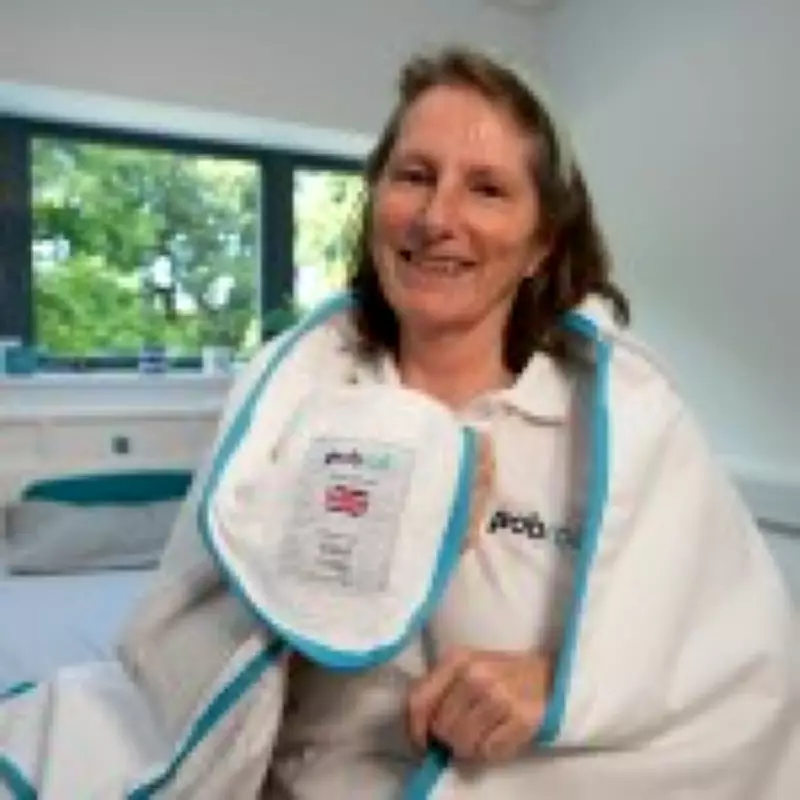
So, in 2018, Pat developed her own solution and created a rectangular, sleeping bag-like towel the size of a single bed. A patient could be rolled onto it, staying warm and covered while carers wash one part of the body at a time, and it is totally waterproof, to keep the sheets and mattress dry. Calling it the Pobroll, after her own name, the idea was for it to help patients feel contained, whether at home or in care.
"It creates a warm environment which helps prevent distress. It also reduces embarrassment," says Pat, who was a member of the first-ever women's rugby squad to play a club match at Twickenham. "It's simple, but it allows carers to engage more calmly. If behaviour is triggered by embarrassment, cold or the experience of undressing, then it's about reducing that. The idea is that they are swaddled like a baby and feel safely held."
A friend of hers, whom she calls "Debbie" to protect her family's privacy, asked Pat for her new creation when her mother was diagnosed with Alzheimer's disease. Debbie and her sister had promised to keep their mother at home, but found bathing increasingly difficult, as their mum would resist, pulling her clothes back on.
"The situation became overwhelming. Both sisters were extremely distressed, and worst of all, it was damaging their relationship with their mother. All three of them would end up in tears, and their mum began to see them as a threat," remembers Pat. "They were close to deciding they would need to move her into a care home to preserve their relationship – then they remembered the Pobroll I'd given them."
It proved transformative – their mother remained calmer, and the sisters felt more in control, says Pat. "Debbie later told me she was able to care for her mum at home until she died three months later. They were incredibly grateful."
A Significant Impact
Pat began introducing her creation to private homes and care providers in 2020 after delays caused by the pandemic. She saw its potential early on while caring for a challenging patient with complex needs.
"He was very vulnerable, and attempts to carry out personal care would trigger panic," Pat remembers. "He could become physically aggressive and so distressed that he would vomit. It was extremely challenging for everyone involved. Some carers were reluctant to work with him because they felt unsafe. He was often being physically held during care, which is distressing for everyone."
"So one day, I decided to try the Pobroll. We wrapped him in it, and although he reacted at first, very quickly he calmed down and lay still. A nurse said to me she felt safe for the first time and that he wasn't hurting himself. It was a turning point."
Knowing that dementia is a cruel and unrelenting disease, Pat offers simple but important advice for those supporting a loved one with the condition. "It is very hard for families. Often, there is a tendency to correct or challenge – for example, if someone doesn't recognise a person in a photograph. But that can increase anxiety and remind them of what they are losing. Instead, distract, reassure and be gentle. People can sense genuine kindness," she says.
"It's about meeting the person where they are – not where you want them to be. Letting go of Mum or Dad 10 or 20 years ago is incredibly difficult, but essential. If you treat people with kindness, gentleness and respect, you won't go far wrong. It will still be painful, but it will be better. In the face of a disease that only moves in one direction, acceptance is key. Focus on how the person is today, and try to create the calmest, most comfortable space you can for them."