France's Rugby Revolution: A Blueprint for the Sport's Future
The world of rugby union presents a fascinating paradox: a sport that can simultaneously thrive at elite levels while struggling commercially in its domestic foundations. This contradiction was never more apparent than during the 2026 men's Six Nations tournament, which delivered record-breaking scores and television audiences alongside concerning documentaries about player welfare and stories highlighting the financial difficulties facing club rugby.
The Marketing Formula Modern Rugby Has Resisted
Marketing sport in today's landscape follows a relatively straightforward formula, though executing it successfully remains challenging. The blueprint involves creating genuine stars who command attention beyond their athletic performance, building spectacular events that offer more than just the final score, prioritizing skill and creativity on the field, allowing athletes authentic self-expression, crafting compelling narratives that draw supporters closer, and crossing traditional boundaries into music, entertainment, and fashion.
Yet rugby has historically resisted this modern marketing playbook. The sport's DNA has traditionally valued collective effort over individual brilliance, systematic play over spontaneous flourishes, and modesty over theatricality. Personality within rugby's ecosystem has often been viewed with suspicion, as evidenced by the polarized reactions to emerging England star Henry Pollock, whose style has divided opinion about what the sport should represent.

France's Transformational Approach
While other nations hesitate, French rugby has embraced modernity with the same improvisational creativity that characterizes their play on the field. France has transformed match days at the Stade de France into spectacular theatrical productions, complete with galloping horses during pre-game ceremonies that rival American football's most elaborate stadium shows.
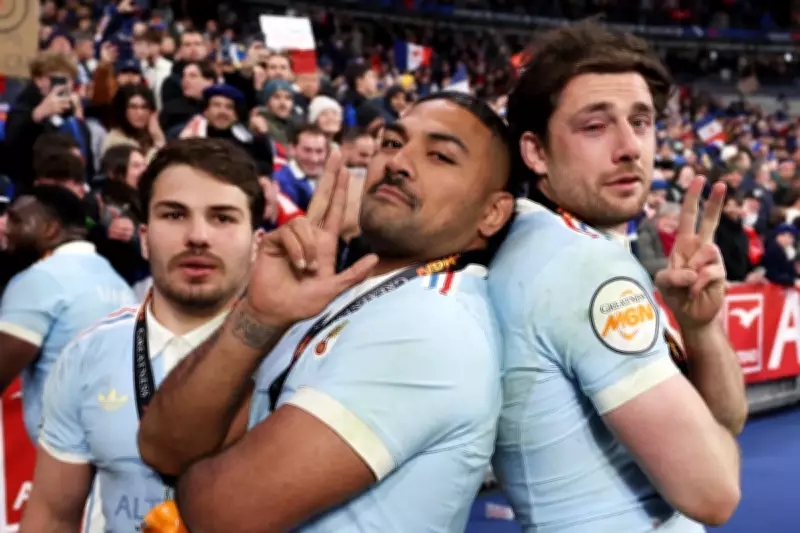
Their secret weapon lies in both cultivating and unleashing genuine superstars like Antoine Dupont and Louis Bielle-Biarrey, athletes whose gravitational pull extends beyond traditional rugby audiences. These players have become individual icons while maintaining their team-first mentality, demonstrating that star power and collective success need not be mutually exclusive.
Crossing Cultural Boundaries
France's most innovative move has been their successful foray into fashion. Their limited edition 120th anniversary 'Le Crunch' kit sold out within hours, attracting not just rugby supporters but sports enthusiasts worldwide. This strategy, borrowed from Paris Saint-Germain and other elite European football clubs, represents rugby's most promising crossover into broader cultural conversations.
The results speak for themselves: television audiences for the French national team now regularly compete with football viewership in France, an achievement that seemed improbable just a few years ago. Beneath this international success, France's domestic structure comfortably supports two professional leagues, while many other nations struggle to maintain even two fully professional clubs.
A Reluctant Industry Playing Catch-Up
Rugby's attempts at modernization have often carried an air of reluctance. The Netflix series Six Nations: Full Contact was meant to be rugby's equivalent to Formula One's wildly successful Drive to Survive, but instead felt like knocking on a door that was only partially open. Limited access and rationed candor meant the stories never achieved the authenticity that modern audiences demand.
Former Scotland player Jim Hamilton recently reiterated his frustration with rugby's marketing lag behind other major sports. His criticism highlights an industry-wide challenge that France has successfully addressed through their comprehensive approach.
The Proven Blueprint
Les Bleus have created and tested a blueprint in Paris that any rugby nation can study: celebrate your stars authentically, invest seriously in creating spectacle, tell better and more genuine stories, and meet audiences where they already consume entertainment. French rugby no longer feels like a sport in retreat but rather one discovering its modern identity, proving that rugby can thrive commercially without sacrificing its essential character.