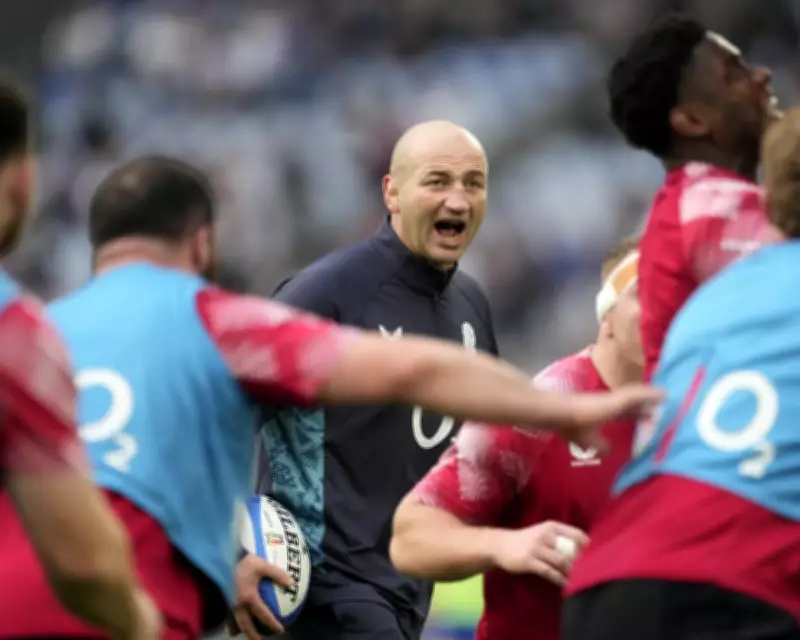
England's Attack Too Cautious Under Borthwick, Needs Paris Revival
Steve Borthwick has allowed England to become far too cautious in their attacking approach, creating a predictable and stagnant side that struggles to capitalize on opportunities. This criticism comes as England prepares for a crucial Six Nations finale in Paris, where they must overturn significant odds to salvage their campaign.
The Gameplan Problem
The inquest into England's disappointing Six Nations performance has begun prematurely, indicating serious underlying issues. While various theories circulate about what's wrong with the team, the fundamental problem appears to be their restrictive gameplan. This isn't merely a reaction to recent defeats but a pattern that emerged during autumn victories where England tightened their approach despite winning matches.
The contrast with previous performances is stark. During the 2024 tournament, after losing to Scotland, England deliberately threw off attacking shackles during their fallow week in York. This strategic shift paid immediate dividends, injecting new energy into their play. That energy was evident when Marcus Smith kicked the winning drop goal against Ireland and during the narrow defeat against France in Lyon the following week.

Lost Expression and Invention
England displayed not just physical energy during that period but genuine expression in their play. Supporters responded enthusiastically to this approach, demonstrating that expression and invention are qualities fans will always invest in emotionally. This attacking flair resurfaced during last summer's tour of Argentina, where England played scintillating rugby against a strong Pumas side while the British & Irish Lions dominated attention elsewhere.
Blindside flankers linked play creatively, second rows tipped on passes, and England scored diverse tries against quality opposition. The natural question became: what could this team achieve when supplemented with senior players returning from Lions duty?
Stagnation Despite Results
November brought a regression despite positive results. While England achieved a clean sweep of autumn victories, their gameplan showed no progression. The autumn internationals serve as assessment periods where southern hemisphere nations analyze northern hemisphere developments and adapt accordingly. Rugby evolves rapidly, and England have failed to keep pace with these changes.
England now employ a rigid approach to entering the opposition 22, lacking the polished execution needed to convert possession and territory into points. The expression and invention evident two years ago has disappeared, replaced by predictable patterns that opponents easily read.
The Chasing Game Paradox
A crucial question emerges: would England have better chances in matches they've lost with a more attacking mindset focused on ball movement? This is difficult to answer definitively since England found themselves behind early against both Scotland and Ireland. However, evidence suggests England can produce threatening attacking patterns when forced to chase games.
We witnessed this capability at Murrayfield, against Ireland, and during the final minutes against Italy. When England play heads-up rugby, actively seeking space rather than following predetermined patterns, they become genuinely dangerous. The frustration lies in why they must trail in games before unleashing this attacking potential.
The Paris Challenge
England faces an incredibly difficult task in Paris. Playing France under lights at Stade de France represents one of rugby's toughest challenges. The non-negotiable requirement is that England play for each other with collective commitment. This has been a challenging week for Steve Borthwick and his squad, with the short competition feeling unexpectedly long given their struggles.
Staying away from home might prove beneficial, allowing the team to build the cohesive mentality needed to confront France. England began the championship as favorites with genuine optimism about next year's World Cup prospects, but that bubble has burst. There are limits to how often a team can bounce back from disappointment, making the Paris match particularly crucial.

Simplified Solutions Needed
The coaching staff has undoubtedly analyzed extensive data seeking solutions, but sometimes simplicity proves most effective. The "eye test" matters: what do observers see when watching England play? Multiple theories complicate finding fixes, but as Borthwick acknowledged this week, the response must begin with senior players stepping up.
If England hopes to compete in Paris, their experienced players must rise to the challenge presented. Unleashing their attacking capabilities could transform their prospects, turning predictable patterns into dynamic rugby that capitalizes on their genuine talent and potential.