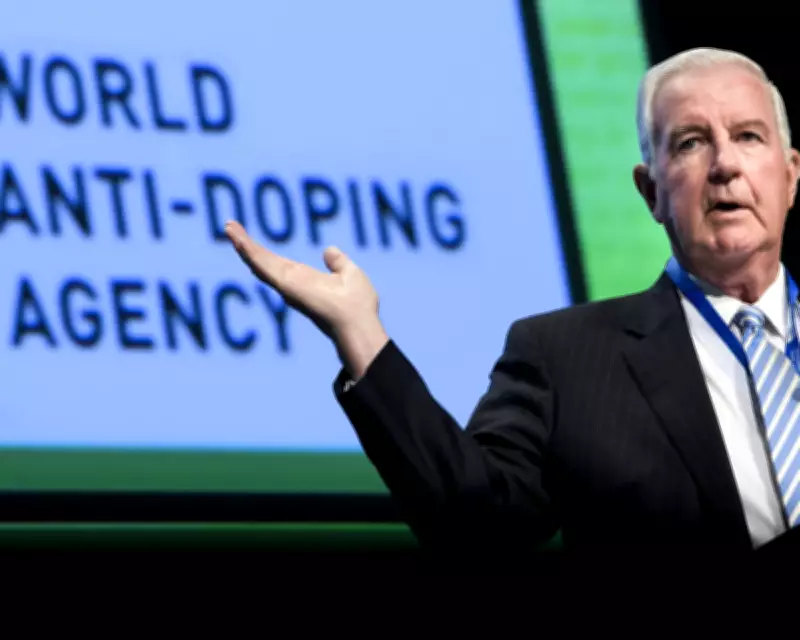
Sir Craig Reedie, Olympic Administrator Who Secured London 2012, Dies at 84
Sir Craig Reedie, the distinguished Olympic administrator whose diplomatic skills and strategic vision were instrumental in securing the 2012 Games for London, has died at the age of 84. As a pivotal member of the London Organising Committee for the Olympic Games from 2005 to 2013, Reedie formed a remarkably effective partnership with bid leader Sebastian Coe, working tirelessly behind the scenes to build political support and secure crucial delegate votes.
A Formidable Partnership with Sebastian Coe
Coe, who considered Reedie a long-time mentor, acknowledged that without the older man's diplomatic expertise and influential presence within the Olympic and Paralympic movement, London might never have won the right to host the 2012 Games. Reedie had previously developed this influence as chair of the British Olympic Association (BOA) from 1992 to 2005, a position that gave him deep connections throughout international sports governance.
His Olympic credentials extended globally through his membership on the International Olympic Committee (IOC) beginning in 1994, culminating in his service as vice-president from 2012 to 2016. Throughout his career, Reedie remained a passionate advocate for drug-free competition, famously stating, "There's no point in any of it if the sport is not clean."
Leading Global Anti-Doping Efforts
This commitment to clean sport led Reedie to become a founding board member of the World Anti-Doping Agency (WADA) in 2000, eventually rising to serve as its president from 2014 to 2019. During his five-year tenure, he became a persistent thorn in the side of those seeking unfair advantage through performance-enhancing substances, most notably clashing with Russian authorities over state-sponsored doping programs.
Reedie repeatedly argued that Russia should be excluded from Olympic competition once evidence emerged of systematic, state-sponsored doping. Although the IOC allowed some Russian athletes to compete at the 2016 Rio Olympics, Reedie refused to relent. His persistence paid off when WADA ultimately ruled in 2019 that the Russian Federation should be banned from all international competition, though some athletes were permitted to participate under a neutral flag.
From Badminton Champion to Sports Administrator
Reedie's uncompromising stance on doping stemmed partly from his background as a competitive athlete. In his youth, he excelled as a badminton player and began his sports administration career with the International Badminton Federation, eventually serving as its president. He made his initial mark by successfully campaigning for badminton's inclusion in the Olympic program, a goal achieved in 1985 when the IOC approved the sport for the 1992 Games.
Born in Stirling, Scotland, in 1941, Reedie discovered badminton at age 10 in a church hall while also developing skills in golf and rugby. He studied history and law at Glasgow University, where he continued playing competitive badminton. It was during a 1962 match against Queen's University Belfast that he met medical student Rosemary Biggart, whom he married five years later. The couple had two children, Colin and Catriona.
A Life of Voluntary Service to Sport
Despite maintaining a career as a financial consultant in Glasgow, Reedie devoted countless hours to sports administration on a voluntary, unpaid basis. After serving as secretary and later president of the Scottish Badminton Union, he guided the International Badminton Federation through a turbulent period when internal conflicts threatened to split the organization. He also helped modernize the sport by allowing players to retain prize money and establishing what would become the BWF World Tour.
His administrative work in badminton led to appointments with the General Association of International Sports Federations, which positioned him for the BOA chairmanship. Following Manchester's unsuccessful bid for the 2000 Olympics, Reedie joined the London 2012 organizing committee, where his contributions proved decisive.
Personal Qualities and Legacy
Those who worked with Reedie described him as tough, shrewd, and formidably well-informed—a man who knew his own mind and wasn't afraid to voice opinions. Yet beneath this formidable exterior lay a witty, charming individual who was unfailingly helpful to those seeking his counsel. His leisure time was often spent honing his golf game as a single-figure handicapper and member of the Royal and Ancient Club of St Andrews.
Honored with a CBE in 1999, knighthood in 2006, and elevation to knight grand cross in 2018, Reedie's legacy includes Scotland's national badminton hub in Glasgow being renamed the Sir Craig Reedie Badminton Centre in 2014. One of his proudest moments came during the pre-2012 Olympic torch relay when he carried the flame past St Andrews' Old Course, a place where he had spent countless hours pursuing his passion for golf.
Sir Craig Reedie is survived by his wife, Rosemary, and their two children. His death marks the passing of one of Britain's most influential sports administrators, whose contributions to the Olympic movement and fight against doping will be remembered for generations.