F1 Grapples with Safety Crisis After Bearman's Narrow Escape at Suzuka
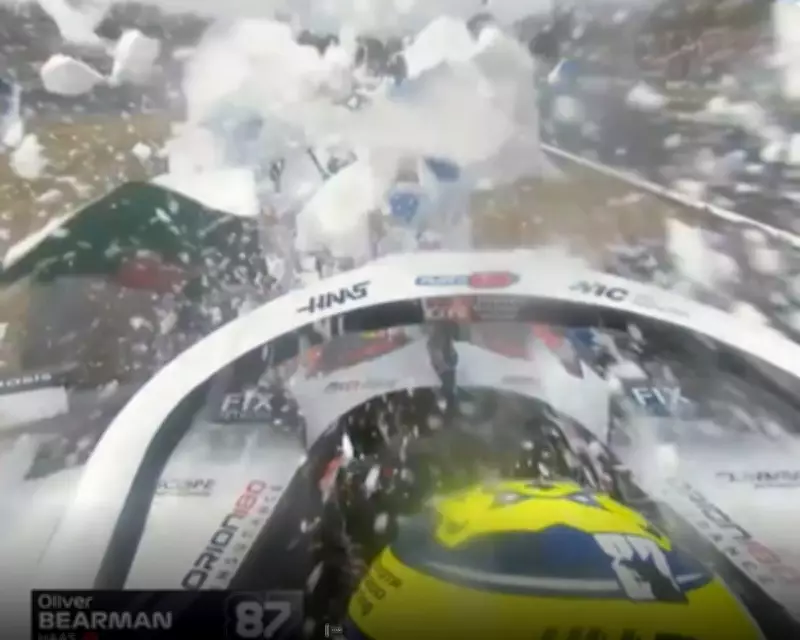
Oliver Bearman's emergence unhurt from a massive crash at the Japanese Grand Prix has been hailed as a lucky escape, but it has thrust Formula One into a pressing safety crisis. With five weeks until the next race in Miami, the sport faces a race against time to address a hugely complicated problem rooted in its new energy regulations.
The Incident That Sparked Alarm
Bearman's Haas car was traveling at a staggering 307kph (191mph) when he encountered the slower-moving Alpine of Franco Colapinto. The closing speed between the two vehicles was 50kph, a terrifying differential that forced Bearman to veer off-track to avoid a collision. He then slammed into the barriers with a 50G impact, miraculously walking away with only bruises, though his car was destroyed.
Team principal Ayao Komatsu labeled it a fortunate outcome, noting that a direct rear-end hit could have catapulted Bearman into the air, risking severe injuries for both drivers. Williams driver Carlos Sainz pointed out that the wide run-off areas at Suzuka likely prevented a worse outcome, raising concerns about high-speed circuits like Baku, Singapore, or Las Vegas, where walls are dangerously close.
Underlying Causes and Warnings
The crash scenario had been predicted by many before the season even began. With the deployment and recovery of electrical energy now integral to F1, Bearman was using boost mode while Colapinto was in energy recovery, creating a significant speed gap. There was no foul play; Colapinto held a defensive line without cutting across, but Bearman's rapid approach left him no choice but to swerve.
This incident underscores a broader issue with the new engine regulations, which have divided the sport. The complex interplay of energy management means changes in one area can ripple through others, affecting performance and safety. Teams employ varied strategies for energy use, adding layers of difficulty to finding a uniform solution.
The Search for Solutions
The FIA has been actively monitoring the regulations, prioritizing safety, but as McLaren team principal Andrea Stella noted, "I don't think a simple solution exists." Komatsu echoed this, calling for calm, collective discussion within the F1 community. Proposals include adjusting energy recovery rates during super-clipping to reduce speed differentials, but this could slow cars and impact racing dynamics.
More radical ideas, like shifting the power distribution from a near 50-50 split between internal combustion and hybrid energy to a 70-30 ratio, face hurdles. Such a change would require increased fuel flow, larger tanks, and car redesigns, potentially delaying implementation until next season. It also risks alienating engine manufacturers like Audi and Honda, who were attracted by the current formula.
Pressure and Progress
Despite the challenges, there is a unified will to address the safety concerns, especially after Bearman's crash. The competitive atmosphere of F1 has given way to focused collaboration among the FIA, teams, manufacturers, and drivers. However, the sport must adapt in real-time as each race presents new tests, with immense pressure to prevent future incidents rather than rely on luck.
As the countdown to Miami begins, F1's sharpest minds are tasked with navigating a labyrinth of technical and regulatory complexities to ensure driver safety without compromising the sport's essence. The stakes are high, and the world will be watching to see if they can turn this crisis into a catalyst for meaningful change.