
Pochettino's Painful Past Informs USMNT's Present Pressure
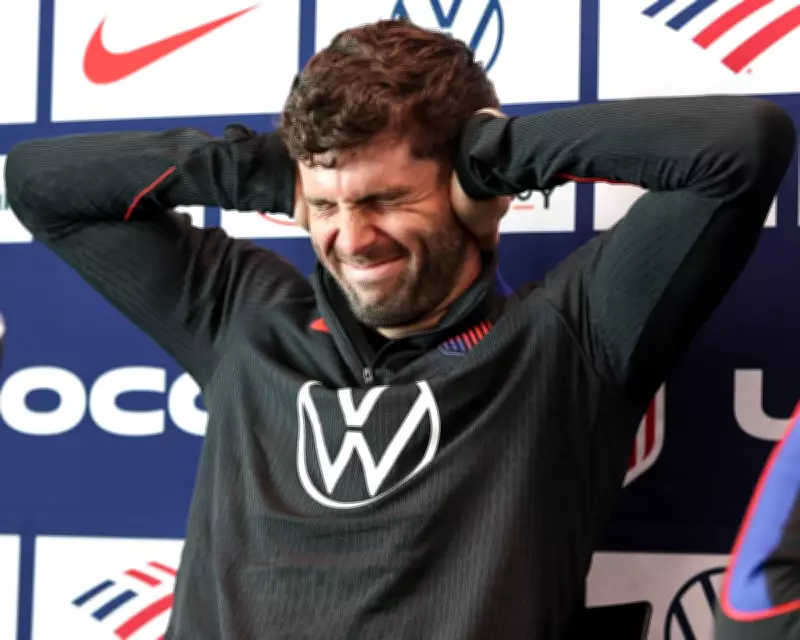
"You guys want me to feel the pressure, that's for sure," Christian Pulisic remarked with a knowing laugh during Friday's media session in Atlanta. The comment came as the US Men's National Team prepares for friendlies against Belgium and Portugal, with the looming specter of the 2026 World Cup casting an ever-lengthening shadow over every training session and press conference.
From Argentina's Agony to American Aspirations
Head coach Mauricio Pochettino understands national team pressure in ways few of his current players can comprehend. The Argentine defender experienced football's ultimate heartbreak firsthand when he finally made his World Cup squad in 2002 after missing previous tournaments. That year, Argentina arrived in South Korea and Japan as tournament favorites, carrying the hopes of a nation mired in unprecedented economic crisis.
"Argentine people feel the pressure," Pochettino told reporters Friday. "Football is a battle to survive. It was really an energy that was so heavy, and we didn't deal with that."
The 2002 campaign proved catastrophic for La Albiceleste. Despite being coached by Marcelo Bielsa and featuring legends like Juan Sebastián Verón and Gabriel Batistuta, Argentina crashed out in the group stage for the first time in fifty years. After their final draw against Sweden, most players sank to their knees weeping, refusing to leave the pitch in denial of their monumental failure.
A Different Kind of Pressure Emerges
Nearly a quarter-century later, Pochettino guides a US team facing different but equally significant expectations. While American soccer doesn't carry the life-or-death stakes of Argentina's football culture, the 2026 World Cup represents unprecedented pressure for this generation of players. As co-hosts with Mexico and Canada, the tournament marks the closest most USMNT players will come to experiencing that crushing international weight.
"There's pressure for us, the coaching staff," Pochettino acknowledged. "But we have a desire that our players perform, sending good energy – not to create something where you say 'it's a tragedy if you lose.' Because when you're free, you perform. When you feel happy, you perform. You don't need to feel the pressure. Because the pressure is a thing that if you don't deal perfectly with it, it can be heavy."
Pulisic Embraces the Captain America Role
No American player feels this burden more acutely than Christian Pulisic. The Chelsea star, nicknamed Captain America, represents arguably the most talented player in US soccer history and serves as the program's highest-profile figure. His image dominates Atlanta's landscape on billboards and bus shelters, while fans and social media maintain constant conversation about his role and expectations.
"There's pressure, it's a World Cup, it's not because of my position in the team or anything," Pulisic explained. "I'm used to this, I wouldn't want to be in any other position, I'm lucky to be in this position. There's pressure, I can feel it, yes, it's there, but it's nothing I can't handle. I'm going to attack it head on. I don't need to do it myself, that's the beauty of it. I have the whole team behind me, the staff, a country of fans and I'm just going to do the best I can do."
Pochettino's Motivational Methodology
The Argentine coach faces multifaceted pressure as the highest-paid manager in American soccer history. Beyond results, he must motivate a squad some critics have labeled as lacking grit and intangible qualities. By most accounts, he's forged strong relationships with players through his unique approach that blends emotional connection with motivational techniques.
"I think the motivation begins from the first day you meet someone," Pochettino said in Spanish. "It's vital energy that you have within yourself, where you prepare your body, your mind, your being, so that you can enjoy what you're doing. Words, a lot of the time, are empty. I can give you a motivational speech right here that's incredible. But if I don't create an emotional bond with you, it's impossible that you'll be motivated by my words. If it doesn't affect you in your heart, it's very hard."
Why Not Us? The American Dream
Pochettino's positivity might grate jaded US fans familiar with the program's historical struggles, but it carries infectious optimism rooted in patriotic belief. Earlier this week, he punctuated a squad speech with a simple question: "Why not us?"
"Dreams inspire reality," Pochettino declared Friday. When asked why he believes the US can compete for World Cup glory, he responded simply: "because we are American."
"What I am saying is that I am here because I believe that we can win. I can tell people that I really believe that. Whether that happens or doesn't happen, there are too many factors in the middle. But the most important piece is that we believe that we can perform and to compete and that we can earn what we want."
As training sessions continue at Atlanta United's facilities with players trading jokes during rondos and small-sided games, this USMNT squad appears uniquely equipped to handle external stressors. With Pulisic, Weston McKennie, and their teammates displaying visible ease alongside their coach during extended media interactions, the foundation for managing World Cup pressure seems firmly established through Pochettino's painful past and present optimism.