
Leeds United Manager Defends Crystal Palace Teenager's Controversial Celebration
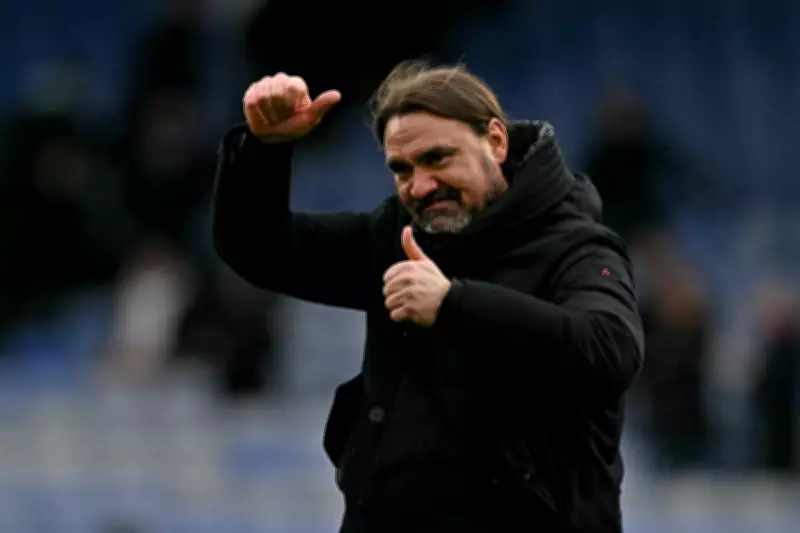
Leeds United manager Daniel Farke has publicly defended Crystal Palace defender Jaydee Canvot after the teenager faced significant backlash for celebrating a red card shown to Leeds player Gabriel Gudmundsson during their Premier League clash at Selhurst Park on Sunday afternoon.
Controversial Moment Sparks Social Media Outrage
The incident occurred just before halftime when referee Thomas Bramall showed Gudmundsson a second yellow card, though the official appeared to hesitate as if forgetting the Leeds defender had already been booked earlier in the match. As Gudmundsson received his marching orders, cameras captured 19-year-old Canvot passionately celebrating the opposition being reduced to 10 men.
The celebration immediately drew criticism from Leeds United supporters, with many branding the young defender as "embarrassing" on social media platform X. The reaction created significant controversy around what many considered unsportsmanlike behavior from the Crystal Palace teenager.
Farke Calls for Understanding Rather Than Criticism
When questioned about Canvot's celebration after the match, Farke surprised many by defending the Palace player and effectively calling off what he described as a "witch hunt" against the young defender. The Leeds manager demonstrated remarkable sportsmanship in his response to the controversial incident.
"I haven't seen the celebration myself," Farke stated. "But I think it was perhaps just emotional during the game. I wouldn't blame any Crystal Palace player or someone from the bench. I don't think it was out of intention - it was just instinctive. No negative comments from my side."
Questionable Red Card Decision Influences Match Outcome
Farke expressed significant frustration with the actual red card decision itself, questioning whether either of Gudmundsson's challenges warranted yellow cards. The Leeds manager provided detailed analysis of the controversial officiating decision that left his team playing with 10 men for the entire second half.
"I'm not sure if they are really yellow cards," Farke argued. "Everyone in the stadium and watching on television had the same view. It was even doubtful if it was a foul. There was no pace in the tackle, it wasn't a tactical foul, and it wasn't even close to a yellow card."
The manager continued his criticism of the officiating, noting that referee Bramall seemed surprised by his own decision: "He had forgotten this player was even on a yellow card. He was himself surprised that this decision meant a sending off."
Match Context and Implications
Despite playing with a numerical advantage for the entire second half, Crystal Palace failed to capitalize against the relegation-threatened visitors. The London club's best opportunity came from a disallowed Jefferson Lerma header, but they ultimately couldn't secure the three points.
For Leeds United, the hard-fought draw proved valuable, lifting them three points clear of the relegation zone. Farke emphasized how the red card significantly impacted the match dynamics: "When you have one player less, it's 10% more or less. It was a huge disadvantage in the second half and has influenced the game a lot."
The manager contrasted Gudmundsson's challenges with a second-half incident involving Crystal Palace's Brennan Johnson, noting what he perceived as inconsistent officiating: "When you compare this foul with the second half when Brennan Johnson was there - a tackle with more pace, that was a clear tactical foul - for me this is not even a yellow card."
Broader Implications for Sportsmanship
Farke's defense of Canvot represents a notable moment of sportsmanship in what has become an increasingly intense Premier League relegation battle. By refusing to criticize the young opponent and instead focusing on the officiating decisions that affected his own team, the Leeds manager set a professional example that contrasted with the initial social media outrage.
The incident highlights the emotional nature of professional football and raises questions about how young players should navigate high-pressure situations. At just 19 years old, Canvot found himself at the center of controversy for what Farke characterized as an instinctive, emotional reaction rather than a calculated display of poor sportsmanship.
As both teams continue their Premier League campaigns, Farke's measured response serves as a reminder that managers can influence not just tactics and results, but also the tone and sportsmanship of the competition itself.