The 2026 World Cup is the largest tournament ever, featuring 16 venues across the United States, Mexico, and Canada. Each stadium has a unique story, from retractable roofs to historic moments. Here is everything you need to know about the host cities and their stadiums.
Vancouver
BC Place boasts the world's largest cable-supported retractable roof, a legacy of the 2010 Winter Olympics. The roof will likely stay closed to protect the natural grass. The stadium hosted the 2015 Women's World Cup final, where Carli Lloyd's hat-trick led the US to victory.
Seattle
Lumen Field is known for its unique architecture, including a partial roof and the Hawk's Nest bleachers. It has recorded crowd-induced seismic activity, notably during Marshawn Lynch's 'Beast Quake' run and Taylor Swift concerts. The Sounders won the 2022 Concacaf Champions League here.
Bay Area
Levi's Stadium in Santa Clara replaced Candlestick Park. It features eco-friendly design but has faced heat-related issues due to sun exposure. It hosted the 2016 Copa América Centenario opener and two Super Bowls.
Los Angeles
SoFi Stadium cost $5 billion and features a semi-clear canopy. It will host the 2028 Olympics swimming events. The 2023 Gold Cup final drew 72,963 fans. The stadium had to remove seats to meet FIFA pitch standards.
Guadalajara
Estadio Akron resembles an erupting volcano from the outside, with a grass-covered hill. It set an attendance record for a Canelo Álvarez boxing match. Javier Hernández scored the first goal here in a friendly between Chivas and Manchester United.
Mexico City
Estadio Azteca is the most iconic venue, hosting two World Cup finals (1970, 1986) and the 'Hand of God' match. It seats 83,000 and sits at 7,200 feet elevation. Recent renovations updated the stadium for 2026.
Monterrey
Estadio BBVA offers stunning views of Cerro de la Silla mountain. Its cantilever roof helps cool the hot climate. Lionel Messi and Inter Miami lost here in the 2024 Concacaf Champions Cup.
Houston
NRG Stadium was the first NFL stadium with a retractable roof. It hosts the Houston Livestock Show and Rodeo annually. The 2010 MLS All-Star Game drew 70,728 fans.
Dallas
AT&T Stadium has the largest capacity (94,000) and massive video boards. It will host the semi-final. The first event was a 2009 Gold Cup match. The retractable roof is expected to stay closed.
Kansas City
Arrowhead Stadium is the oldest US World Cup venue (1972). It is known for its passionate Chiefs fans and has hosted six AFC championship games. The stadium removed seats to fit a FIFA-approved pitch.
Atlanta
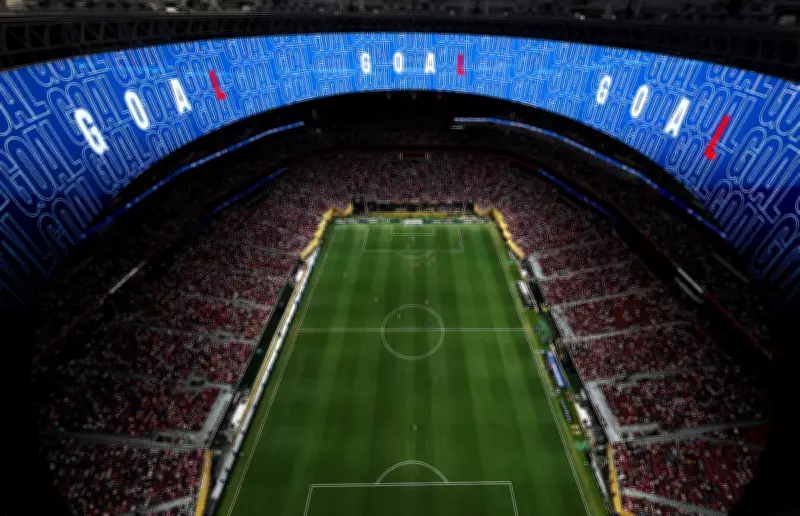
Mercedes-Benz Stadium features a pinwheel retractable roof and affordable concession prices. It hosted Super Bowl LIII and Atlanta United's MLS Cup win in 2018.
Miami
Hard Rock Stadium has undergone extensive renovations, adding a canopy. It has hosted six Super Bowls, the Miami Open tennis, and the 2024 Copa América final, which was marred by crowd chaos.
Toronto
BMO Field originally had 20,000 seats but expanded to 45,000 with temporary additions. It hosted the 2016 Grey Cup and Toronto FC's MLS Cup wins in 2016 and 2017.
Boston
Gillette Stadium replaced Foxboro Stadium and features a lighthouse structure. It was the site of the 2002 'Tuck Rule' game and the 2002 MLS Cup.
Philadelphia
Lincoln Financial Field has an Eagles Nest seating section and hosts the Army-Navy game. The first event was a 2003 friendly between Manchester United and Barcelona.
New York/New Jersey
MetLife Stadium will host the 2026 World Cup final. It has no roof and is shared by the Giants and Jets. It hosted Super Bowl XLVIII and the 2016 Copa América final.