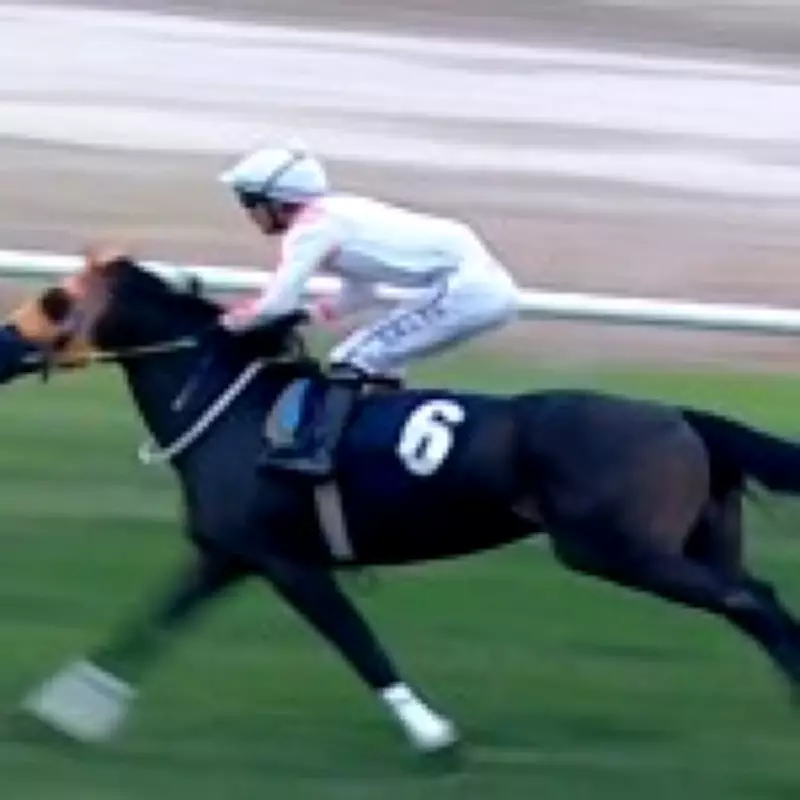
English Racehorse Served in Turkish Soup Kitchen Triggers Criminal Investigation
A shocking criminal investigation has been launched in Turkey following the discovery that an injured English racehorse was killed and served at a soup kitchen. The incident came to light after Turkey's Ministry of Agriculture and Forestry conducted tests on a 'foreign object' found in a stew served at a soup kitchen in Mersin last month.
Electronic Chip Reveals Tragic Fate
Laboratory analysis confirmed the foreign object was an electronic identification chip belonging to Smart Latch, a four-year-old English mare who had won three races during her career and earned £19,200 in prize money. Further testing revealed the meat came from 'single-hoofed animals' and 213 kilograms of it was subsequently destroyed due to being unsuitable for human consumption.
Horse slaughter for meat is strictly banned in Turkey, and authorities have now filed a criminal complaint against the company that provided the meat to the kitchen. The investigation centers on how the racehorse ended up in the food supply chain despite legal protections.

Owner's Heartbreaking Account
Smart Latch's owner, Suat Topcu, expressed profound distress over the incident, telling Turkish newspaper Milliyet: "Unfortunately, such an unfortunate incident happened to us. We have been doing this business for three generations, and nothing like this has ever happened to us before. I am more upset than anyone else."
Topcu explained that Smart Latch had not raced since last October after suffering a minor leg fracture. Unable to continue racing and deemed unsuitable for breeding due to a uterine collapse diagnosed by veterinarians, the owner decided to donate her to a farm in Osmaniye where children could learn to ride.
"We brought this horse to the farm after racing her to make her a mother," Topcu recounted. "When we took her for veterinary checks to make her a breeding horse, the veterinarian said, 'this horse cannot be used for breeding because she has a uterine collapse, even if she gets pregnant, a healthy birth cannot occur.'"
Systemic Failures and Emotional Bonds
The owner described his standard practice of finding homes for retired racehorses, noting he had previously sent horses free of charge to educational institutions including Cukurova University Equestrian Club, Kadirli Vocational School, and the Veterinary Faculty in Elazig.
"We breeders try to find homes for our beloved horses after their racing careers end," Topcu emphasized. "No one who races horses at any of the racetracks in Turkey would ever abandon a horse. There's no one like that at the racetracks."
Topcu believes his mistake was donating the horse without formally transferring ownership through official channels. "Perhaps my mistake was donating or giving away the horse without selling it or transferring ownership," he reflected. "The owner's name is written in the horse's pedigree. My mistake was not transferring ownership, may God not let anyone fall into such a situation."
Industry Response and Tracking Systems
Eray Hazar from the Turkish Racehorse Breeders and Owners Association commented on the tragedy, stating: "We try to find owners for our horses whose racing careers have ended, precisely to prevent them from getting involved in such incidents. We are careful not to give our horses to just anyone who asks."
Both Topcu and Hazar emphasized the importance of electronic identification chips implanted in racehorses' necks by the Ministry of Agriculture and Forestry. These chips allow authorities to track horses' movements and whereabouts throughout their racing and breeding careers, even without pedigree records.
"Just like humans, horses also have identities," Hazar noted. "All their information can be traced thanks to a chip implanted in their necks. These chips enable us to communicate with these horses in every way."
Calls for Systemic Reform
Topcu contrasted Turkey's system with practices he observed while racing horses in England, where retired racehorses are formally handed over to racing authorities who ensure appropriate adoption. "There, when a horse's race is over at the racetrack, you take it to the racing authority – pay a certain fee, and hand over your horse in exchange for a document," he explained.

The owner has demanded thorough investigation and accountability, telling authorities: "I even told my colleagues at the Provincial Directorate of Agriculture, 'if you don't take this to court, I will.' I mean, whoever is guilty must be found. Anyone who harms an animal harms a human."
Topcu concluded with a plea for systemic reform: "A system needs to be put in place for this. No power other than the state can stand against evil." The case continues to develop as Turkish authorities pursue their criminal investigation into how the champion racehorse ended up being served to soup kitchen patrons.