The Sandhill Ashes: Cricket's Role in Healing a Bushfire-Ravaged Community
As Australia faces another intense bushfire season, with record-breaking heatwaves and challenging blazes across the south-east, the resilience of rural communities is once again tested. This situation powerfully recalls how cricket played a pivotal role in rebuilding efforts following the catastrophic 2019-20 wildfires, particularly in the small Victorian towns of Sarsfield and Clifton Creek.
Devastation and the Path to Recovery
The 2019-20 bushfire season, often referred to as the "black summer," was a period of immense loss, burning 19 million hectares of land, claiming 33 lives, and impacting an estimated 3 billion animals. Cricket, like all aspects of life, was disrupted, with matches cancelled and players enduring hazardous conditions, such as the Sheffield Shield game described by spinner Steve O'Keefe as akin to "smoking 80 cigarettes."
In Sarsfield and Clifton Creek, the fires were devastating, destroying homes and displacing families. John Kinniburgh and his wife Carol were among 80 families in Sarsfield who lost everything. "We had a cedar house with decks all around, and once it got started it just exploded," Kinniburgh recalls. "It was certainly a shock. There was lots of devastation and drama." The community initially focused on survival, then gradually shifted to recovery, with Kinniburgh involved in a local group planning for the future. "The whole process was very positive," he notes, highlighting how new residents arrived, others rebuilt, and connections strengthened.

The Birth of the Sandhill Ashes
The idea for a cricket match to unite the two fire-affected communities originated with the local fire brigade. Volunteer Phil Schneider salvaged tea tree wood from a peat paddock fire that had burned for weeks and collaborated with a wood turner in Lake Tyers to create the Sandhill Ashes urn, named after a hill between Sarsfield and Clifton Creek.
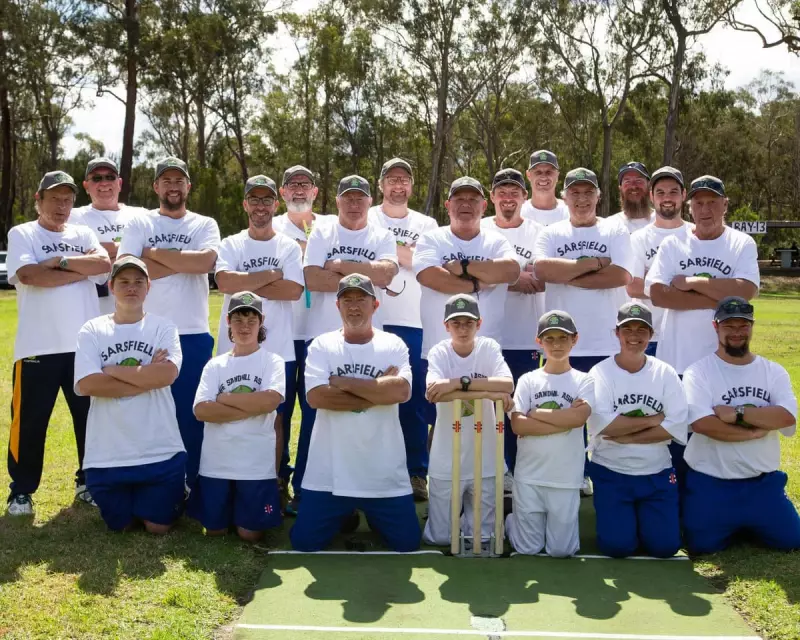
The inaugural match in January 2021 generated significant excitement, with sponsored shirts and shorts, and both communities practicing diligently. It attracted support from the Australian Cricket Foundation, including former players Merv Hughes and Greg Matthews, who conducted a clinic alongside the game. Kinniburgh fondly remembers the day: "There was something like 20 people a side – a few were really athletic, some could barely hit the ball, a couple of super catches were taken, and most of the runs were hit through square leg. There were lots of laughs and a big crowd of spectators drinking and eating from the food trucks." Sarsfield won by a narrow margin of just one run.
Community Impact and Club Revival
The Sandhill Ashes match proved transformative, reaching individuals who had withdrawn from community activities post-fire. "Mostly men who just stuck to themselves, doing it tough," says Kinniburgh. "But some of them got involved in the cricket and the benefit was significant. One man told me that he'd had a fantastic time, and the match had made a real difference to how he was feeling about himself."
Subsequent events have been smaller, but the Ashes have been contested twice more, with Clifton Creek currently holding the title and the next match scheduled for 2027. Inspired by this initiative, the Sarsfield Cricket Club, which had folded in 1999, was reborn. The club now plays at Sarsfield Oval, maintained by local volunteers, and has achieved success in the Bairnsdale C Grade competition, winning last year and with player Craig O'Brien earning season honours for his 339 runs and eight wickets.
Ongoing Challenges and Climate Concerns
Today, Sarsfield and Clifton Creek remain on high alert as Victoria experiences extreme temperatures, with Waleup reaching 48.9°C recently. Kinniburgh, now in a new house built with less flammable materials and surrounded by deciduous trees, watches warily, with the nearest blaze 50km away. He expresses frustration over climate change skepticism: "I'm a bit nonplussed as to why conservative people think climate change is a con. It seems so obvious from here. It's not just fire, it's temperature, it's number of days of heat, it's floods, it's more hot north winds, more extreme events."

Reflecting on personal losses, including cricket memorabilia like caps and trophies destroyed in the fire, Kinniburgh maintains a phlegmatic attitude. "You don't miss them as such, you have the memory of them," he says, adding with a grin that the number of lost trophies may have been exaggerated over time.
This story underscores how sport, particularly cricket, can serve as a powerful catalyst for community healing and resilience in the face of environmental disasters, fostering connections and hope amidst ongoing challenges.