Chaotic shifts in US federal homelessness policy under the Trump administration are sowing widespread fear and confusion, with internal documents warning that up to 117,000 people nationwide could be forced back onto the streets. The changes target the Department of Housing and Urban Development's (HUD) flagship Continuum of Care (CoC) programme, a bipartisan initiative that has housed over 100,000 Americans.
A Lifeline Under Threat
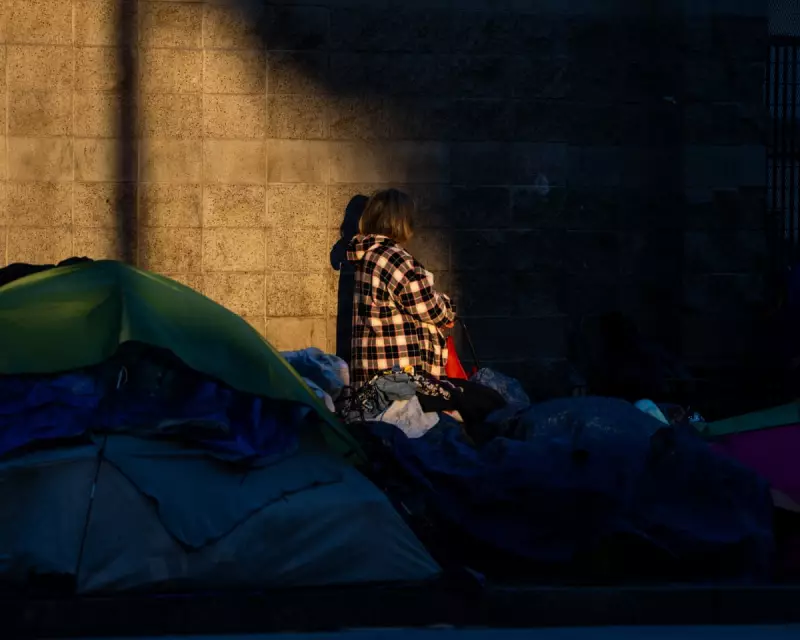
For Shawn Pleasants, 58, the CoC programme was a lifeline. After a decade living on the streets of Los Angeles' Koreatown, he and his husband received a housing voucher that secured them an apartment, where they have lived for six years. The programme is built on the 'Housing First' principle, which prioritises providing permanent, stable housing as a foundation for addressing other challenges like health and employment.
"That feeling of, you could never be safe – there's no more future," Pleasants said, recalling the chilling moment he learned of the potential policy overhaul. He now advocates for others through the Los Angeles Homeless Services Authority, fearing he and thousands more could face eviction. "I can't think of anything more damaging than to take people that are on the path to having their lives under control again and place them back on the street," he added.

Policy Chaos and Confusion
In November, HUD announced a dramatic redirection of federal funds, proposing to limit spending on permanent housing to just 30% of grants, down from approximately 90%. The move, described by HUD spokesperson Matthew J Maley as stopping a "Biden-era slush fund," would have prioritised temporary shelters and mandated treatment for recipients.
The policy also initially penalised jurisdictions employing harm-reduction strategies or recognising transgender individuals. After legal challenges, these restrictions were rolled back in December, and court orders temporarily blocked the funding overhauls. However, the "stops and starts" have created a "massively chaotic and disruptive" environment, according to Amanda Wehrman of the non-profit Homebase.
Jonathan Russell, who oversees Alameda County's $60m CoC application, spent months scrambling to cover a $33m shortfall. "It's been really chaotic both in terms of the stops and starts, the uncertainty about funding, the inability to think strategically about what comes next," Wehrman confirmed.
The Evidence for Housing First
Experts are emphatic that the proposed shift away from Housing First is misguided. Dr Margot Kushel, director of the Benioff Homelessness and Housing Initiative at UCSF, called the idea "just silly, counterintuitive and dangerous." Her comprehensive research identifies a lack of affordable housing as the root cause of homelessness, not the failure of Housing First policies, which were codified into federal law in 2009.
Russell argues that permanent supportive housing is not only more humane but significantly more cost-effective. In California, it costs $20,000-$25,000 per person annually, compared to $40,000-$50,000 for a shelter bed. The cost of leaving someone with complex needs on the street can soar to $80,000 a year due to emergency service use.
"Blaming housing first for not solving homelessness is like blaming alternative energies for failing to mitigate climate change when it's actually just the scale at which we've done it that's the problem," Russell stated.
The human cost of instability is profound. Angel Smith, a 61-year-old educator who stayed briefly in a Marin County shelter, described an environment akin to prison, with sleep impossible due to constant checks. For Pleasants, the street was a place of profound loss, where he held makeshift funerals for those who died "unremembered." With many CoC grants set to expire in early 2026, the uncertainty continues, leaving vulnerable individuals and the agencies that support them in a perilous limbo.