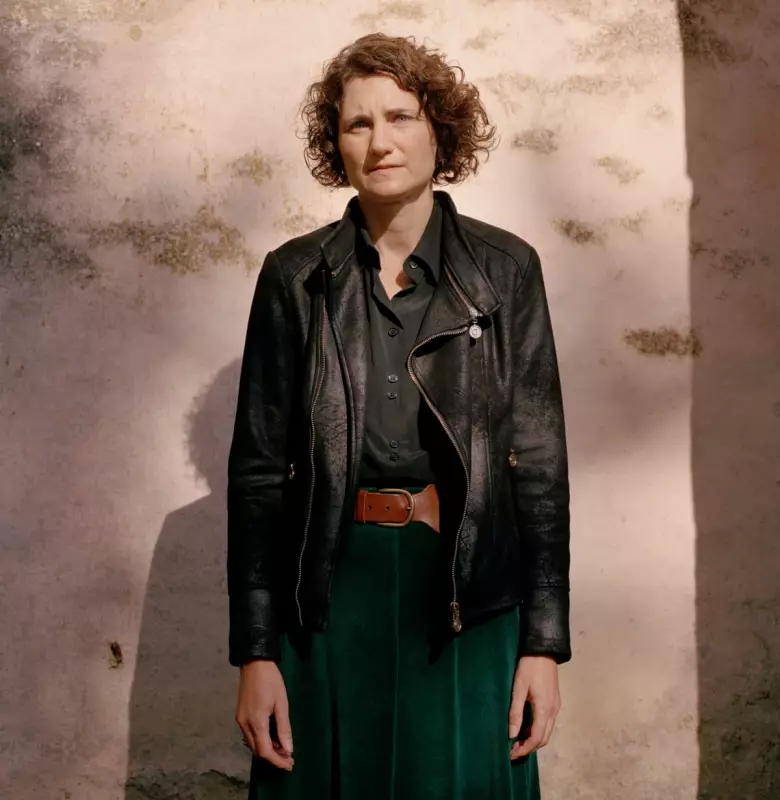
When author Lara Feigel embarked on her divorce, a friend warned her that her children would be "ripped in half." What she discovered in the family courts was an eye-opening and brutal process where, she argues, mothers are systematically judged and vilified. Her personal experience, and subsequent observation of other cases, reveals a system she believes can exacerbate conflict and unfairly penalise women.
A Personal Descent into a Legal Nightmare
Feigel's own case began during the pandemic winter. After moving to the countryside with her two children, she wished to stay. While her ex-husband agreed for their two-year-old daughter to remain, he contested custody of their eight-year-old son. Naively hoping to avoid lawyers and treat the judge as a mediator, Feigel quickly realised she was being scrutinised not just as a mother, but as a woman. The cross-examination in the witness box haunted her for months, with a barrister's insinuating voice questioning her motives and character.
"I came away from court feeling I had been held to account by standards I had mistakenly believed feminism to have eradicated," she writes. The court's final decision separated the siblings, with her son living mainly with his father and her daughter with her. She was shocked less by the outcome than by the successful arguments used to vilify her, concluding she lived in a culture where independently minded women could have their children taken away.

Courtroom Observations: A Pattern of Vilification
In the years following her case, Feigel returned to court as a journalist. In one East London case, she observed a stark power imbalance. A wealthy European businessman fought his ex-wife, a former immigrant sex worker, for greater custody of their daughter. The father, eloquently represented, was portrayed as reflective and loving. The mother, evasive and financially dependent, was painted as hostile and unilateral.
Her mistakes—enrolling the child in a local nursery without consent, producing intimate photos in a previous hearing—were held against her. Despite her evident fierce protectiveness and the child's distress at handovers, the judge ruled in the father's favour, restricting the mother's time to just four nights a fortnight. Her core crime, Feigel suggests, was her hatred for the father—a common feature of divorce that the system seems designed to stoke.
The Controversial Role of 'Parental Alienation'
In an Oxford case, Feigel witnessed the long shadow of the controversial concept of parental alienation. Two adolescent girls, resistant to their father, were the subject of a five-year battle. A court-appointed expert, Trish Barry-Relph, diagnosed that the girls were "unwittingly serving their mother’s unconscious needs." She recommended a six-month transfer to the father, involving full-time boarding school.
Feigel notes that Barry-Relph was previously criticised by a High Court judge in a 2023 case for an approach that "bordered on the inhumane." In the Oxford hearing, the mother's exemplary parenting was taken as a given and thus not examined, while her failure to co-parent and her animosity became the entire focus. The father's own actions—like unilaterally booking an international flight for his daughter during a dispute—were minimised. The final judgment ordered the boarding school transfer, with the mother granted only brief, supervised monthly contact.
Glimmers of Hope and Systemic Failure
Feigel highlights that change is being campaigned for, particularly where domestic abuse is involved. The 2020 Harm Panel report criticised the weaponisation of alienation claims against abuse allegations. The government has since announced plans to repeal the clause in the Children Act 1989 that presumes contact with both parents is always beneficial.
Most promising, she finds, are the Pathfinder courts, pilot programmes in Dorset and north Wales since 2022. These "problem-solving" courts focus on early intervention and out-of-court resolution, reducing the adversarial winner/loser dynamic. After visiting the Bournemouth Pathfinder, Feigel felt hopeful that such an approach might have prevented the drastic outcomes she witnessed elsewhere.

Reflecting on her own situation four years on, Feigel notes that time has healed some wounds. Co-parenting has improved as the shadow of the courtroom recedes. Yet her journey into the history and present of custody battles, from 19th-century figures like George Sand and Caroline Norton to modern-day mothers, underscores a tragic constant: the child's body "carries the venom of the courtroom within it for ever." Her account is a powerful plea to reduce conflict and give children genuine agency in a system that too often fails them.