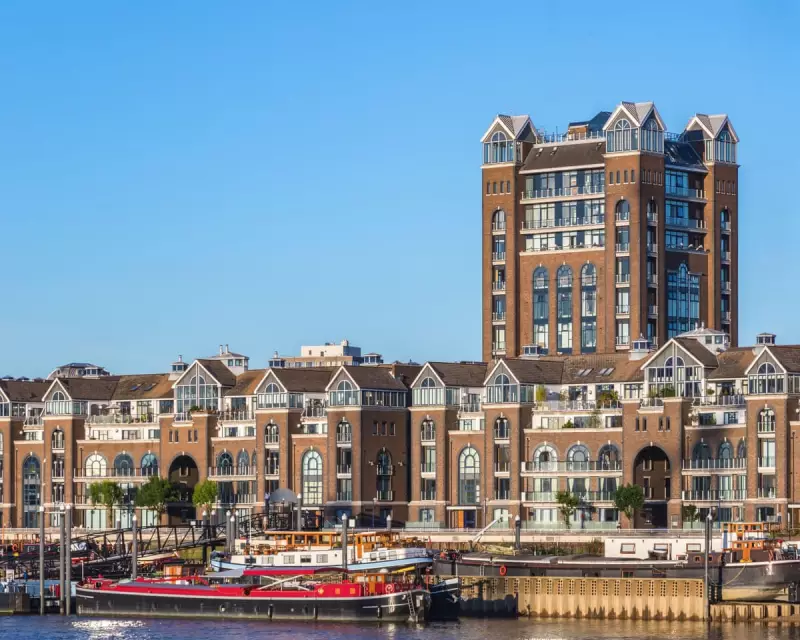
Leading US private equity firms and institutional investors could significantly increase their activity in the UK's new-build housing market following a proposed American ban, stoking concerns over rent increases and housing affordability.
US Policy Shift Threatens to Redirect Investment Flood
Former US President Donald Trump announced last week his intention to ask Congress to ban institutional buyers from purchasing single-family homes. This move aims to address a severe affordability crisis where the median property price reached $410,800 (£305,000) last year. Analysts now predict this restriction may prompt giants like Blackstone—owner of Madame Tussauds—to double down on Britain as an alternative investment destination.
While these corporate entities argue they provide quality, managed housing, their profit-driven model often focuses on maximising rental returns. This fundamental conflict places them at odds with tenants' needs for secure, affordable homes.

Tenant Unions Sound Alarm Over Investor Landlords
Housing activists have issued stark warnings about the potential consequences of increased institutional investment. Ruth Gilbert, a spokesperson for Scotland's Living Rent union, stated unequivocally: "Major investors and private equity have no place in the UK housing market."
She elaborated that reliance on such firms "will only exacerbate this housing crisis, as they cut corners and increase rents, forcing people out of their homes to satisfy shareholders’ dividends." Gilbert called for a collaborative "mass programme of public housing" across UK governments.
Echoing this sentiment, Jae Vail of the London Renters Union highlighted the disconnect between luxury build-to-rent developments and local need: "While millions of us struggle to pay our rent... overseas investors chase short-term profits with expensive... developments that price out local people." The union advocates for rent controls and major investment in council housing.
UK Market Presents a Different Model for Investors
The UK investment landscape differs from the US post-2008 model, where firms like Blackstone bought tens of thousands of existing foreclosed homes. In Britain, investors typically purchase multiple units in new developments rather than competing directly with individual buyers for existing stock.
Marcus Dixon of Jones Lang LaSalle explained that UK policy has actively encouraged large institutional landlords over smaller buy-to-let investors, making a similar ban unlikely here. "Conversely, the ban in the US could drive activity in the UK," he noted. "With a number of US investors already active... they could divert funds here instead."
Active US firms in the UK include Blackstone, Kennedy Wilson, KKR, and Nuveen (which manages $1.4tn in assets). Blackstone's real estate arm alone oversees $320bn (£240bn) globally. The firm defended its role, stating investment supports housing supply. Its UK portfolio company, Sage Homes, claims to be the nation's largest provider of newly built affordable homes, creating over 20,000 since 2017.
However, Sage faced criticism last year when the housing ombudsman found it failed to adequately address residents' concerns, including those of a disabled tenant. The company apologised and brought services in-house.
Scale of Investment and Future Outlook
Despite high-profile deals, the scale of institutional ownership remains relatively small. In the US, such investors own just 0.5% of single-family homes. In the UK, only 0.2% of privately rented homes are operated by institutional investors, rising to 0.4% when including developments under construction.
Recent major transactions underscore the trend. In late 2023, Blackstone-backed providers partnered with housebuilder Vistry in an £819m deal to acquire around 2,900 new homes. Similarly, in 2024, Kennedy Wilson and Canada's CPP Investments committed £213m to deliver 900 rental homes.

As political pressure mounts in the US, the UK's build-to-rent sector, particularly single-family housing, is increasingly viewed as a "compelling proposition" for global capital. This potential influx raises critical questions about who the housing market is designed to serve and how to ensure affordability for residents amidst growing corporate ownership.