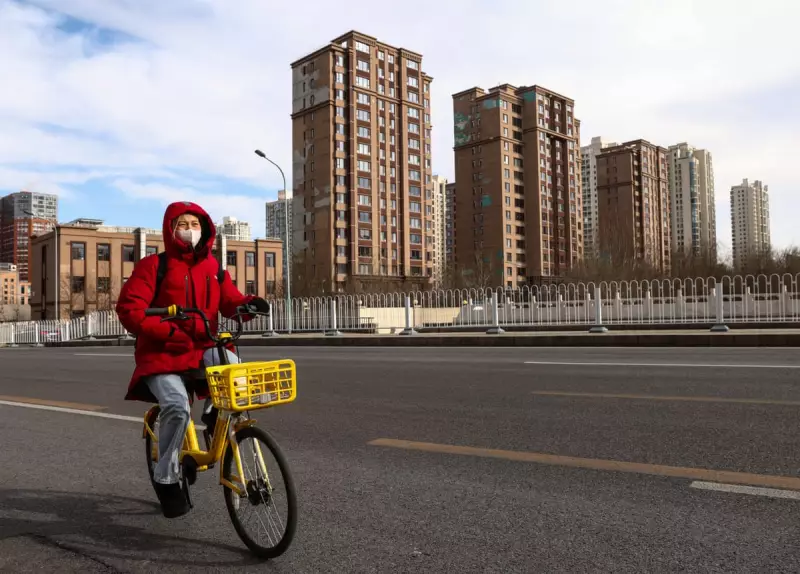
China's economy has successfully met its official growth target for 2025, expanding by 5.2% despite facing significant headwinds from a renewed US trade war and an ongoing domestic property sector crisis. The announcement, made by the National Bureau of Statistics, confirms the world's second-largest economy navigated a turbulent year to achieve its stated objective.
Navigating Dual Challenges: Trade Tensions and Property Slump
The reported growth of 5.2% for the full year 2025 comes against a backdrop of considerable external and internal pressure. A major factor was the aggressive trade policy pursued by the administration of former US President Donald Trump, who returned to office in January 2025. His government swiftly re-imposed and escalated tariffs on a wide range of Chinese goods, reigniting a significant US-China trade war that disrupted global supply chains.
Simultaneously, China continued to grapple with a profound crisis in its real estate market. The sector, which once contributed massively to economic expansion, has been mired in debt defaults and falling prices since the high-profile collapse of developer Evergrande. This domestic property crisis has severely dampened consumer confidence and investment, creating a substantial drag on growth.
Government Stimulus and Shifting Economic Drivers
To counteract these powerful negative forces, the Chinese government, led by President Xi Jinping, deployed a series of targeted stimulus measures. Authorities focused on boosting manufacturing output and increasing investment in high-tech industries and infrastructure projects. This strategic pivot aimed to reduce the economy's historical reliance on property-driven growth and debt-fuelled expansion.
Key areas that showed resilience and contributed to the overall figure included:
- Advanced manufacturing, particularly in electric vehicles and green technology.
- Strategic infrastructure spending on projects like renewable energy grids.
- A modest recovery in consumer spending in the latter half of the year, though it remained cautious.
However, analysts caution that the headline figure masks underlying vulnerabilities. The growth is widely seen as having been heavily supported by state-led investment, while private sector confidence remains fragile. Furthermore, the persistent weakness in the property market continues to pose a serious threat to local government finances and household wealth.
Global Implications and Future Outlook
China's ability to hit its growth target has significant ramifications for the global economy. As a primary engine for worldwide demand and a key link in manufacturing supply chains, stable Chinese growth helps avert a deeper global slowdown. The outcome suggests a degree of resilience in the face of protectionist American policies, though the long-term impact of sustained trade barriers remains a major uncertainty.
Looking ahead to 2026, economists predict the Chinese government will maintain a similar growth target, around the 5% mark. Achieving it will likely require continued, substantial fiscal support. The central challenges of the property market correction and strained international trade relations, particularly with the United States and Europe, are not expected to dissipate quickly. The path forward points to a Chinese economy increasingly driven by state-directed industrial policy and technological self-sufficiency, rather than the old model of rampant construction and export-led growth.