Toronto's Tow Truck Wars: How Organized Crime Fuels Violence on City Streets
When Cameron relocated his family to a serene suburb north of Toronto last year, neighbors assured him it was one of the safest streets in the region. The picturesque road featured cream-brick houses with perfectly manicured lawns. Children played freely between driveways during summer months and constructed elaborate snow tunnels in winter. However, this idyllic setting was violently disrupted when a house directly across from Cameron's residence became the target of four separate shooting incidents within just five months.
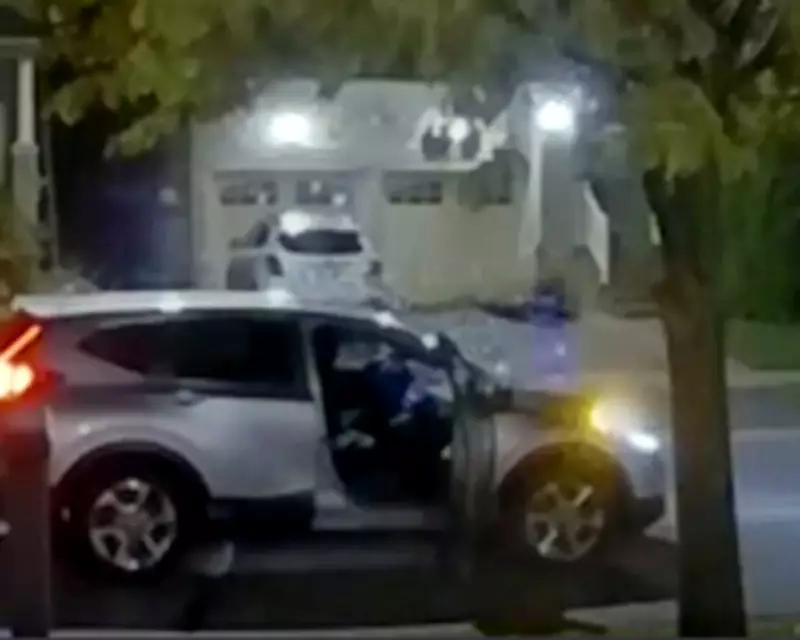
The most recent attack occurred in early February as Cameron prepared to leave for work. Mere moments after his children had departed for school, gunfire erupted, tearing into his neighbor's garage as a dark SUV sped away into the morning light.
"Whoever was doing this was trying to send us a message, and they did," Cameron revealed, cautiously peering from his garage. "This street is now empty, like a ghost town."
Police Investigation Uncovers Organized Crime Links
Toronto police have confirmed that this daylight shooting represents the latest in a disturbing series of violent incidents directly connected to the city's towing industry. This sector has long been plagued by persistent allegations of organized crime connections and aggressive territorial disputes.
This year alone, nearly two dozen vehicles have been deliberately set ablaze during coordinated attacks on tow truck repair facilities. In June of last year, Toronto police investigating a sophisticated towing network known as "The Union" filed more than 100 criminal charges, including serious allegations of drug trafficking, extortion, and an astonishing 52 counts of conspiracy to commit murder.
In the neighboring municipality of Peel, located northwest of Toronto, investigators seized more than $4 million in assets connected to these operations. The confiscated items included bulletproof vests, 586 rounds of ammunition, and 18 tow trucks.
Police Corruption Probe Reveals Disturbing Connections
A recent police corruption investigation, codenamed Project South, has raised alarming allegations of collusion between serving officers and organized crime figures with direct ties to towing networks and drug trafficking operations. Investigators allege that police officers leaked sensitive information to hired hitmen and even assisted in planning the murder of a corrections officer at a maximum-security prison facility.
This extensive investigation also provided crucial context for the shooting incidents on Allison Ann Way. Court records indicate that a civilian charged in the probe, Elwyn Satanowsky, stands accused of orchestrating the shootings on that residential street and recklessly discharging a firearm.
Lead investigators have stated that Satanowsky, who maintained connections within the towing industry, obtained confidential information from police officers to facilitate criminal activities. Sonya Shikhman, Satanowsky's legal representative, declined to comment regarding the specific charges her client faces or his alleged affiliation with the towing sector. On March 6, a judge denied Satanowsky bail. It is important to note that none of these charges have been tested in court proceedings.
The Business Model That Fuels Violence
Police confirmed that the house targeted in the Allison Ann Way attack had connections to Alexander Vinogradsky, a prominent towing operator and alleged crime boss who was fatally shot in a North Toronto shopping plaza in 2024. Vinogradsky himself had been accused of ordering targeted assassinations against business rivals.
This cascade of allegations has intensified scrutiny of the regulations governing accident towing operations. Experts argue that the current system makes this business particularly attractive to organized crime elements. What begins as a simple race to accident scenes has evolved into an elaborate pipeline involving inflated repair contracts, fraudulent insurance claims, and systematic extortion, ultimately fueling violence that extends far beyond roadside incidents.
Throughout much of the greater Toronto area, accident towing continues to operate on a "first on scene" basis. Securing first access to a collision can generate thousands of dollars in revenue, creating intensely fierce competition as rival organizations monitor emergency communications and dispatch "chasers" to accident locations. This dangerous race sometimes causes secondary collisions, and physical altercations at crash scenes have become increasingly common.
Financial Incentives and Criminal Tactics
Doug Murray, a veteran tow operator with decades of experience, explained that a single call can be worth more than $10,000 once storage fees, repair work, and insurance claims are secured.
"The more money involved, the more aggressive the competition becomes," Murray emphasized. This aggression has manifested in arson attacks, physical assaults, and multiple murder allegations.
Investigators also allege that unscrupulous towing operators have systematically defrauded insurance companies by staging collisions in collaboration with complicit auto-body repair shops. According to data from insurance provider Aviva, the number of staged crashes across Canada increased by nearly 400% in 2025 compared to the previous year.
The initial tow represents just the beginning of a complex chain of fees and illicit kickbacks. Unsuspecting drivers, still disoriented from their accidents, are frequently directed toward specific repair facilities, car rental agencies, personal injury lawyers, and even physiotherapy clinics. Each recommendation can generate substantial referral fees for the towing operator, Murray explained.
Ultimately, ordinary motorists absorb these costs through dramatically inflated insurance premiums.
Regulatory Reforms and Their Limitations
Another company owner, speaking on condition of anonymity, revealed that criminal organizations operate with coordinated radio networks and ruthless internal hierarchies, often outmaneuvering legitimate service providers.
"As long as 'first on scene' remains the system, the violence will persist," Murray stated unequivocally.
Efforts to reduce this violence have concentrated on reforming how towing assignments are distributed. On Ontario's major controlled-access highways, however, business operates under a different model. Recent legislation mandates that the province contracts exclusively with accredited providers dispatched through a carefully vetted system, effectively limiting competition at collision points.
Industry experts acknowledge that while these regulatory reforms have reduced clashes on provincial highways, the violence has condensed into urban areas where collision towing remains significantly less regulated.
The Human Cost: Youth Recruitment and Community Impact
Gary Vandenheuvel, executive director of the Professional Towing and Recovery Association of Ontario, asserted that the highway model demonstrates how stricter oversight can help reduce criminal infiltration.
"The current system clearly isn't working. We need to make it safer for towers and members of the public," Vandenheuvel emphasized.
Vandenheuvel described the majority of Toronto's towing operators as legitimate businesspeople, suggesting that the violence is driven by a relatively small number of "bad actors."
Yvon Dandurand, a criminologist specializing in international organized crime, noted that the dynamics observed in the greater Toronto area are "far from unique." He pointed to similar patterns in Melbourne, Johannesburg, and Cape Town, where towing operators have become engulfed in shooting campaigns and systematic intimidation.
In the United States, cities including Detroit, Miami, and New York have experienced comparable territorial conflicts. In a notable 2021 case, three former New York City police officers pleaded guilty to accepting bribes from towing operators and using confidential databases to direct businesses to accident victims.
Young People Caught in the Crossfire
In Toronto, however, the consequences are not evenly distributed throughout the community. Police officials and community advocates warn that young people are increasingly being ensnared by these criminal networks.
Among those arrested during Project South were two individuals under eighteen years old. Additionally, on March 24, a twenty-one-year-old was apprehended in connection with a separate territorial conflict after evading authorities for nearly ten months following a mass shooting at a local pub. All ten suspects in that incident were aged between fifteen and twenty-two.
Within towing gangs, the roles of enforcers and "chasers" are frequently filled by teenagers operating at the lowest levels of criminal hierarchies.
Marcell Wilson, a former gang member and founder of the One by One Movement—an organization dedicated to supporting young people affected by street violence—stated that young people are treated as expendable labor within organized crime groups. Wilson suggested that Project South exposed what many consider a "well-known secret" within affected communities.
In an official statement, a Toronto Police Service spokesperson noted: "It's always a concern for police when young people become involved in criminal activity. Organized crime groups often target young people because they are more vulnerable to manipulation, may be seeking money or belonging, and are sometimes perceived by offenders as less likely to attract the same level of scrutiny or consequences as adults."
Wilson emphasized that the connections between police corruption, organized crime, and youth violence have long been visible to those working directly with affected communities.
"Guns are not manufactured in the projects," Wilson observed pointedly. "Follow the chain—how does it get there?"