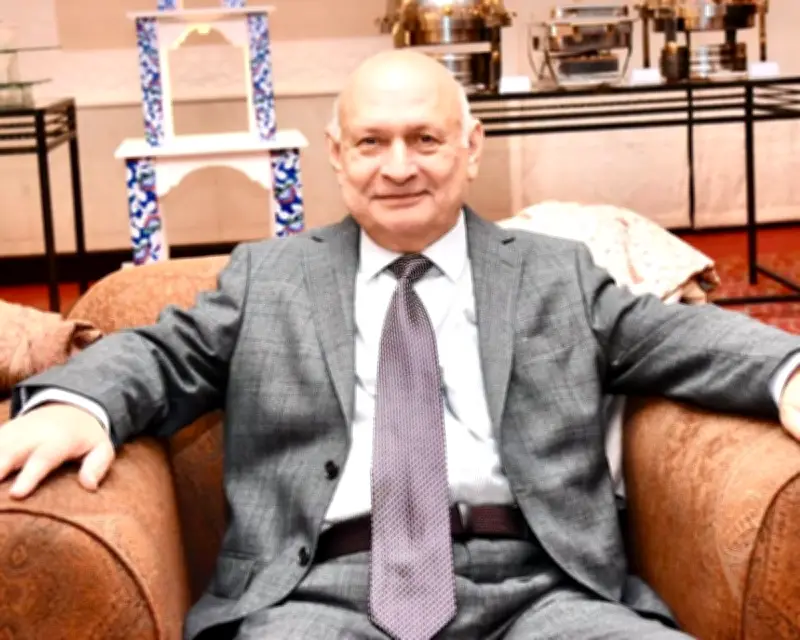
Manzoor Hussain, a senior lecturer in engineering who became the first Muslim councillor in Watford, Hertfordshire, and played a key role in building the town's first mosque, has died aged 88.
Early life and arrival in the UK
Born in Nala Musalmana, a village on the edge of the Pothohar plateau in Punjab, then British India and now Pakistan, he was the first person from his village to attend university, earning a degree in maths and physics from Gordon College in Rawalpindi. He arrived in the UK in 1960 and later obtained an HND in electronic engineering from Luton College of Technology, qualifying as a chartered engineer. He worked for various firms across the south-east of England before moving into teaching.
Teaching career
In 1972 he decided to pursue teaching, gaining a certificate of education from Victoria University of Manchester (now University of Manchester) in 1973. He also earned a degree in electronic engineering from Oxford Polytechnic (now Oxford Brookes University) in 1979. By 1982 he was a senior lecturer in engineering at Acton Technical College, which later became part of Ealing Tertiary College. He became head of its engineering department in 1992 and retired in 1996.
Community and political contributions
Manzoor served as Labour councillor for Vicarage ward in Watford from 1984 to 1988, becoming the town's first Muslim councillor. He was an executive committee member of Watford Community Relations Council (1982-86), a governor of Watford Grammar School (1990-94), and chair of Watford and District Fabian Society (1984-94). He also helped build Watford's first mosque and provided educational and welfare guidance to the Muslim community.
Legacy in Pakistan
Manzoor did not forget his home village. With his brother Muhammad Aslam and other family members, he successfully lobbied for a permanent road to Nala Musalmana and electrification of the surrounding area. He also raised funds for a girls' high school, a clinic, and a hospital in the village.
Family and values
He supported many relatives who arrived in the UK, helping them settle. He appreciated the UK for its rule of law, egalitarian and altruistic values, and was proud that later generations succeeded in fields such as medicine, dentistry, pharmacy, law, IT, and teaching. In 1966 he married Mubarik Begum, a teacher, who survives him along with their sons Faisal and the author, and five grandchildren.