
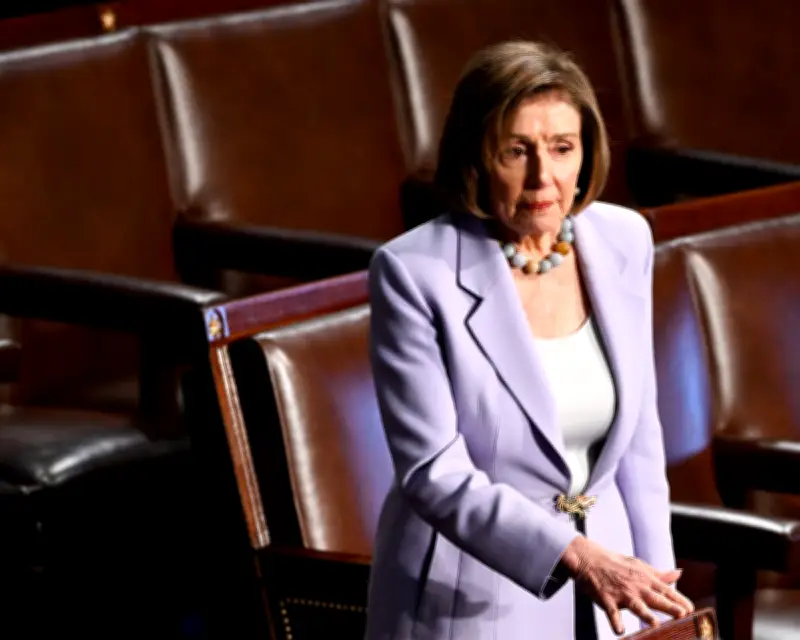
More than 100 House Democrats voted on Wednesday to strip $3.3bn in security assistance to Israel, marking a significant break from the long-standing bipartisan consensus on unconditional military aid. The amendment, introduced by Kentucky Republican Thomas Massie, failed 314-104, but 103 Democrats—nearly half the caucus—supported it, including former Speaker Nancy Pelosi.
Leadership divides exposed
House Minority Leader Hakeem Jeffries had urged Democrats to reject the amendment, but his second-in-command, Minority Whip Katherine Clark, publicly voted in favor. The defection highlights a deepening rift within the party that can no longer be managed behind closed doors. Pelosi, a longtime defender of the US-Israel relationship, called the amendment “ill-conceived” but supported it “for the message that it sends.”
Republican strategy backfires
Republican leaders allowed Massie’s amendment to reach the floor, likely to force politically uncomfortable votes for Democrats ahead of the midterms. However, every GOP member except Massie voted against cutting aid, aligning them with a position increasingly at odds with public sentiment. According to the Institute for Global Affairs, only 16% of US adults think unrestricted aid to Israel should continue, dropping to 9% among adults under 30.
Growing bipartisan criticism
The vote comes amid broader scrutiny of Israel’s actions, including accusations of genocide in Gaza by international human rights bodies, settler violence in the West Bank, and military operations in southern Lebanon. Even some Republicans, like JD Vance, have criticized Israeli influence over US foreign policy, a shift that would have been unthinkable a few years ago.
Future battles ahead
A more consequential legislative fight looms with the US-Israel Defense Technology Cooperation Initiative, part of this year’s National Defense Authorization Act. The initiative would deepen defense-industrial integration between the two countries. Senator Bernie Sanders has warned it would move toward unprecedented integration with little congressional scrutiny. Representatives Massie and Ro Khanna tried to remove the provision but were blocked in the House Rules Committee.
Generational shift in primaries
Democratic primaries this year have elevated candidates who ran against the old consensus, including progressives in New York, New Jersey, Colorado, Pennsylvania, and Illinois who campaigned on cutting aid and criticizing AIPAC influence. These winners, representing solidly Democratic districts, head to Washington with mandates opposing the position Jeffries defended. The bipartisan floor on Israel aid, stable for 50 years, is now buckling from both directions.




