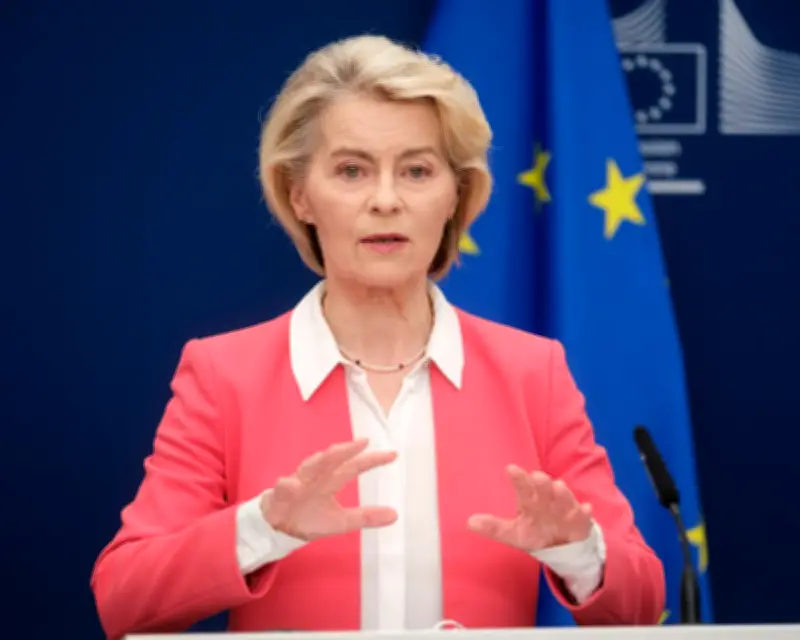
European Commission President Ursula von der Leyen has announced plans for an EU-wide social media ban for children, following a report from an expert panel that recommended age-appropriate restrictions. Speaking to reporters after the report's publication, von der Leyen stated: "It is clear we need age-appropriate restrictions to platforms." She added: "This is not about whether children can access social media. It is about whether and when social media can access our children," referring to what she called "predatory algorithms."
Draft law expected in autumn
Von der Leyen promised a draft law in the autumn but did not specify a minimum age, though she found the panel's "staged approach" to internet use—recommendations by age group—"very convincing." The panel, co-chaired by German child and adolescent psychiatrist Jörg Fegert and French epidemiologist Maria Melchior, called for an EU-wide delay to "social media plus" for under-13s. This term includes platforms with similar features, such as video games or AI chatbots. Member states could opt for higher "precautionary" age restrictions on social media use.
EU member states' actions
At least 10 EU countries have announced plans for bans for children. France has pledged to ban social media for under-15s, Spain wants restrictions for under-16s, and Greece will enforce curbs for under-15s from 1 January 2027. Estonia stands alone against the measures, arguing for a focus on regulating platforms because children will find ways around bans. Australia became the first country globally to ban minors from social media, preventing under-16s from accessing platforms like Facebook, Instagram, YouTube, X, SnapChat, and TikTok.
Safe by design approach
EU officials emphasise that the internet should be safe by design. Von der Leyen remarked: "We do not expect children to design their own seatbelts. We do not expect parents to fit airbags at home." The European Commission has already concluded preliminary indictments against Meta and TikTok in cases that could force changes to the "addictive" nature of their apps. The commission said Meta failed to tackle risks of addictive design on users, having reached a similar conclusion against TikTok in April. Both companies have rejected the findings, and investigations continue.
Expert recommendations on social media use
The experts' recommendations are based on a safe internet. They said from age 13, "adolescents should benefit from evolving autonomous use of age-appropriate and safe social media and other digital services." One expert explained that ages 10 to 13 are a "very vulnerable phase," with US research showing "quite a lot of harm" from social media use, especially among girls regarding body image. "The earlier you start, the higher [impact] the addictive features are," they said. The expert suggested EU member states could take precautionary restrictions beyond 13, but there is "not a lot of sound data" to determine a cut-off point. A second expert noted risks of addictive behaviours and emotional problems until age 25 as the brain develops. "We certainly are not saying that after age 13 children should be using social media plus," they said.
Age-specific guidelines
The report also noted that ages 13 to 15 represent "the peak of vulnerability to mental health problems," with heightened sensitivity to social comparison, feedback, and exclusion creating vulnerabilities for social media plus users. The panel recommended no screen use under three, except for limited activities like video calls or viewing family photos. It raised concerns about AI-enabled toys and voice-based devices for babies and toddlers, as they may stimulate a response "without genuine reciprocity or emotional attunement" from a human carer. For ages three to 12, the group recommended time-limited internet use with a carer or teacher, with supervision gradually decreasing.
Next steps for EU legislation
The EU draft law will need approval from a weighted majority of European member states and the European Parliament.