Canadian Leader Asserts National Identity in Response to US President's Comments
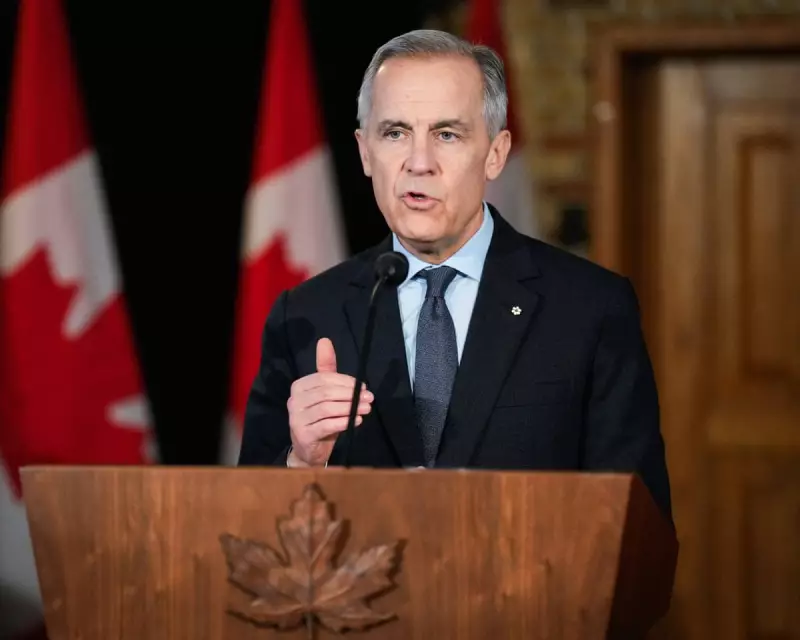
In a robust defence of Canadian sovereignty and values, Prime Minister Mark Carney has delivered a significant national address from the historic Citadelle of Quebec, directly countering remarks made by former US President Donald Trump at the World Economic Forum in Davos. The speech, characterised by its firm tone and patriotic themes, emphasised Canada's independent spirit amidst global geopolitical shifts.
Direct Rebuttal to Trump's Davos Assertions
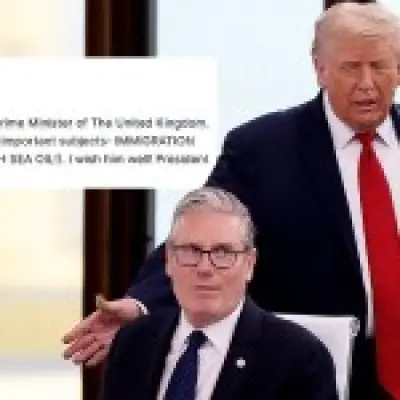
The prime minister's comments served as a pointed response to Trump's suggestion during his Davos appearance that Canada's economic wellbeing stems primarily from American generosity. "Canada lives because of the United States," Trump told attendees, specifically addressing Carney with the remark: "Remember that, Mark, next time you make your statements."
Carney acknowledged the deep partnership between the neighbouring nations, noting their integrated economies, security agreements, and shared values. However, he firmly asserted: "Canada doesn't live because of the United States. Canada thrives because we are Canadian. We are masters of our home. This is our country."

The 'Carney Doctrine' and Global Positioning
This Quebec address followed Carney's earlier speech at Davos, which commentators have dubbed the 'Carney Doctrine'. That international presentation lamented the disintegration of rules-based global order amid rising great power competition and economic coercion. The Quebec speech, while narrower in scope, expanded on these themes within a national context.
Speaking from a fortress originally built to defend against potential American invasion, Carney outlined his vision for Canada's role in a rapidly changing world. "Canada cannot solve all the world's problems, but we can show that another way is possible," he stated. "The arc of history isn't destined to be warped towards authoritarianism and exclusion, it can still bend towards progress and justice."
Domestic Challenges and National Unity
Beyond international positioning, Carney addressed pressing domestic concerns, pledging to move "fairly and fast" to accelerate major infrastructure projects and tackle the sustained cost-of-living crisis affecting Canadian households. His government faces significant internal challenges, including potential sovereignty referendums in Alberta and Quebec.
"When we are united, unity grows. When we are Canadian – inclusive, fair, ambitious – Canada grows," Carney emphasised, highlighting national cohesion as critical amidst these pressures.
Historical Reflection and Contemporary Realities
The prime minister acknowledged Canada's complex historical journey, describing a move "slowly, imperfectly, not without struggle" towards cooperation among diverse groups. He noted the country hasn't always lived up to its ideals, particularly regarding Indigenous peoples, referencing sustained "dispossession" and treaty "violations" that persist today.
Political Context and Symbolic Moments
Carney's Quebec visit included meetings with cabinet members ahead of parliament's return, with his governing Liberals currently one seat short of a majority. The speech has drawn criticism from opposition Conservatives, who argue his international focus has distracted from domestic issues and yielded limited concrete investment from recent trade missions to China and Qatar.
In a lighter moment following the address, Carney posed with Bonhomme Carnaval, the giant novelty snowman who serves as ambassador for Quebec City's winter carnival, embracing the mascot in a display of local engagement.
As global dynamics continue to shift, Carney's dual messages – asserting Canadian independence while positioning the nation as a "beacon to a world that's at sea" – reflect both defensive and aspirational approaches to navigating uncertain international waters while addressing internal divisions and economic pressures.