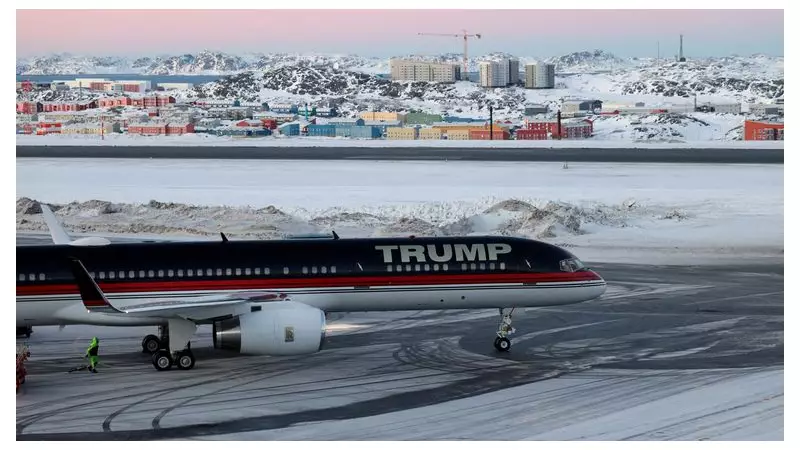
Trump's Renewed Push for Greenland Sparks Geopolitical Debate
Former US President Donald Trump has reignited controversy by persistently advocating for the acquisition of Greenland, framing it as a critical necessity for American national security. This stance has drawn sharp criticism from Greenland, Denmark, and other NATO allies, who have resisted his proposals. In a surprising shift, Trump recently indicated a potential diplomatic resolution following discussions at the World Economic Forum in Davos, though details remain vague and contested by NATO officials.
Historical Context and Strategic Importance
Greenland, a semi-autonomous territory of Denmark located northeast of Canada, holds significant geopolitical value due to its position straddling the Arctic Circle. With a population of just 57,000, the island has been a point of American interest for over 150 years, offering strategic advantages in missile defence and military presence. Trump has emphasised that its location provides the shortest route between Russia and the US, making it vital for security frameworks.
The island already hosts the Pituffik Space Base, a major US military installation, and experts note that existing agreements allow for expanded American military operations without annexation. This raises questions about the true motivations behind Trump's aggressive rhetoric, which has included implicit threats of military action and tariffs against European nations like the UK if his plans are obstructed.
Expert Analysis Challenges Security Claims
Military analysts and scholars have dismissed Trump's assertions of immediate threats in Greenland. Peter Viggo Jakobsen, an associate professor at the Royal Danish Defence College, stated that claims of Russian and Chinese ships posing dangers are "a figment of his imagination." He explained that while Russia occasionally operates submarines near Greenland, there is no substantial external threat, save for the US's own ambitions.
Jakobsen further highlighted that the US already enjoys de facto military control over Greenland, with permissions to enhance its presence if needed. The lack of consultation with Nuuk and Copenhagen on such expansions suggests that national security may not be the primary driver, pointing instead to ulterior motives.
Resource Wealth as a Potential Motive
Greenland is rich in natural resources, including rare earth minerals essential for telecommunications, uranium, oil, and natural gas. As global warming melts ice sheets, these resources become more accessible, and new trade routes like the Northern Sea Route and Northwest Passage are opening. This economic potential is significant, with many minerals currently supplied by China, prompting US interest in securing alternative sources.
Jakobsen draws parallels between Trump's Greenland ambitions and past actions in Venezuela, where oil reserves influenced US policy. He argues that control over Greenland's resources likely underpins Trump's annexation goals, despite denials from the former president, who maintains that national security is his sole concern.
Diplomatic Developments and Future Implications
In January 2026, Trump announced a "very productive" meeting with NATO chief Mark Rutte, proposing a framework for a deal involving Greenland and the broader Arctic region. However, NATO has clarified that sovereignty issues were not discussed, leaving the specifics of any agreement unclear. This diplomatic manoeuvre follows a pattern of Trump's unpredictable foreign policy, which continues to strain alliances and spark debate over Arctic governance.
As the situation evolves, the interplay between security rhetoric, resource competition, and international relations will shape the future of Greenland and its role in global affairs. Experts warn that without transparency, tensions could escalate, affecting NATO cohesion and regional stability.