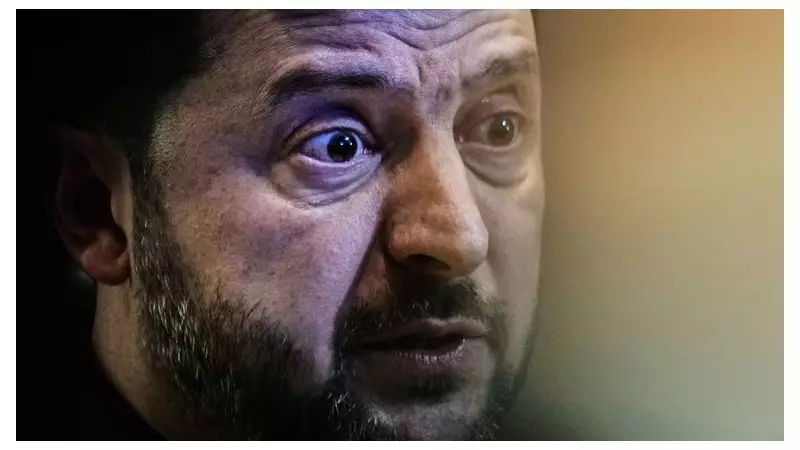
Ukrainian President Volodymyr Zelenskyy has launched a blistering critique of European nations during his address at the World Economic Forum in Davos, just hours before what he described as the first trilateral peace negotiations involving Ukraine, the United States, and Russia. The Ukrainian leader's impassioned speech highlighted what he perceives as Europe's persistent failure to strengthen its defensive capabilities despite ongoing security threats.
Groundhog Day for European Security
In remarks that occasionally echoed the confrontational tone of former US President Donald Trump toward European allies, Zelenskyy warned the continent about experiencing a perpetual "groundhog day" scenario regarding security matters. The president pointedly noted that exactly one year earlier at the same Davos forum, he had concluded his speech with the declaration that "Europe needs to know how to defend itself."
"A year has passed and nothing has changed," Zelenskyy stated with evident frustration. "We are still in a situation where I must say the same words." This repeated message underscores the Ukrainian leader's growing impatience with what he views as insufficient action from European partners during the prolonged conflict with Russia.
Call for Unified European Military Force
During his address, President Zelenskyy advocated for the creation of a "united armed forces" for Europe while simultaneously emphasising the continent's continued heavy reliance on American military support. This dual message highlighted the strategic dilemma facing European nations as they navigate complex security relationships while confronting an assertive Russia on their eastern flank.
The Ukrainian president's criticism comes at a particularly sensitive diplomatic moment, with preparations underway for what could represent a significant breakthrough in peace negotiations. Zelenskyy revealed that discussions about a potential settlement had advanced considerably, stating that a peace plan was "nearly ready, and that really matters."
Trilateral Meeting Preparations and Uncertainties
The prospect of trilateral discussions between Ukrainian, American, and Russian representatives in the United Arab Emirates represents a potentially historic development in the conflict. However, significant questions remain about the meeting's format, participants, and agenda. Initially described as occurring at a "technical level," the Ukrainian delegation has since expanded to include senior figures such as lead negotiator Rustem Umerov and Zelenskyy's chief of staff Kyrylo Budanov.
This escalation in representation suggests the discussions may have assumed greater importance than originally anticipated. Diplomatic observers note that the enhanced Ukrainian delegation could represent strategic positioning by Kyiv, simultaneously demonstrating willingness to engage in serious negotiations while applying subtle pressure on both American and Russian counterparts.
American Diplomacy and Russian Response
The trilateral meeting concept appears to have originated from American diplomatic channels, with Zelenskyy noting the proposal came as something of a surprise. "I hope that the Emirates know about it. Yes. Sometimes we have such surprises from our American side," the Ukrainian president remarked, hinting at the sometimes unpredictable nature of international diplomacy.
American envoys Steve Witkoff and Jared Kushner were photographed meeting Russian President Vladimir Putin in Moscow on Thursday evening, just before the scheduled Abu Dhabi discussions. This pre-meeting diplomacy underscores the complex three-way negotiations occurring behind the scenes. As of Thursday night, Moscow had not officially confirmed Russian participation in the trilateral format, maintaining characteristic diplomatic ambiguity.
Military Developments and Diplomatic Context
Beyond the diplomatic manoeuvring, President Zelenskyy reported tangible security achievements during his Davos visit, including agreements on a new air defence package for Ukraine. The Ukrainian leader also made striking claims about Russian military losses, asserting that Ukraine had successfully prevented expansion of Russian forces while inflicting approximately 45,000 troop casualties monthly.
These military assertions provide crucial context for the diplomatic efforts, highlighting how battlefield realities continue to shape negotiation dynamics. The juxtaposition of Zelenskyy's European criticism, reported military progress, and imminent peace talks creates a complex diplomatic landscape where multiple strategic objectives intersect.
As preparations continue for the Abu Dhabi meeting, international observers will be watching closely to see whether this trilateral format can produce meaningful progress toward resolving Europe's most significant security crisis in decades. The coming days will reveal whether Zelenskyy's Davos criticisms of European inaction will be overshadowed by diplomatic breakthroughs or whether they will stand as another chapter in the ongoing struggle to coordinate international response to the Ukraine conflict.