The World Economic Forum's 2026 gathering in Davos opens under the theme "A Spirit of Dialogue," a notion facing an immediate and profound challenge. The star attendee, US President Donald Trump, arrives with the largest American delegation in the event's history, fresh from a year of policies that have systematically dismantled pillars of the post-war international system.
A Clash of Visions in the Swiss Alps
President Trump will be joined in the Swiss resort by key figures including Secretary of State Marco Rubio, Treasury Secretary Scott Bessent, Commerce Secretary Howard Lutnick, and Special Envoy Steve Witkoff. This formidable presence starkly contrasts with the forum's stated mission of fostering multilateral cooperation.
His virtual address last year, just days after his second inauguration, set a chaotic tone for the subsequent twelve months. He threatened sweeping tariffs, pressured NATO allies to increase defence spending, and demanded the Federal Reserve slash interest rates "immediately."
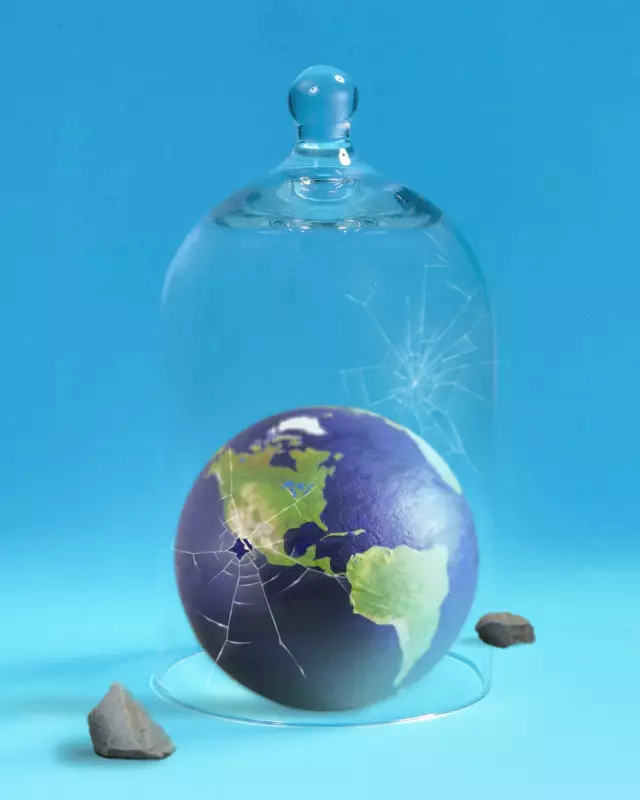
Now, the rules-based global order, already frayed by Russia's invasion of Ukraine and the ascent of an autocratic Beijing, is unravelling at an accelerated pace. The WEF's own pre-meeting survey of over 1,300 leaders identified "geoeconomic confrontation" between major powers as the top risk for the next two years, followed by the threat of outright war between nations.
Global Tumult and a Growing Fightback
The forum convenes amidst extraordinary geopolitical instability. War continues in Ukraine, with President Volodymyr Zelenskyy attending to rally support, despite Trump's recent suggestion that Kyiv is more reluctant for peace than Moscow. Recent weeks have also seen Trump deploy troops to seize Venezuelan President Nicolás Maduro, escalate rhetoric on annexing Greenland, and threaten Iran over its protest crackdown.
Yet, a counter-movement is emerging. Central bankers made an unprecedented intervention to defend Federal Reserve Chair Jerome Powell's independence. Meanwhile, leaders like NATO chief Mark Rutte, French President Emmanuel Macron, and European Commission President Ursula von der Leyen are flying in to advocate for free trade, transatlantic ties, and defending Ukraine.
UN Secretary-General António Guterres, also attending, issued a stark warning: "When leaders run roughshod over international law... they are not only undermining global order, they are setting a perilous precedent." He emphasised that this erosion is happening in plain sight, driven significantly by US actions.
Global military spending has soared to $2.7 trillion, a 9.4% annual increase marking the steepest rise since the Cold War's end. This arms race, fuelled by perceived threats from Russia, China, and the US itself, is a clear symptom of the deteriorating climate.
The Davos Machine: Power, AI, and Private Jets
The forum's allure for the global elite remains potent. Over 60 heads of state, 55 finance ministers, and 800 corporate CEOs are expected. Delegates pay 27,000 Swiss francs (£25,000) per person, on top of hefty membership fees. The scene is one of concentrated power: ski-booted participants move between public debates, thousands of private meetings, and champagne-fuelled parties in sponsor-dominated hotels.
Key figures from the AI revolution, including Nvidia's Jensen Huang, Microsoft's Satya Nadella, and Anthropic's Dario Amodei, will be present. In a nod to the technology's risks, the UN will launch an independent scientific panel on AI to counterbalance the commercial drive of US firms showcasing their wares on Davos's Promenade.
However, the event's environmental footprint is glaring. A Greenpeace analysis found private jet flights for Davos more than tripled between 2023 and 2025.
WEF President Børge Brende expressed hope that Trump's deal-making instincts would foster dialogue but conceded the meeting faces "the most complicated geopolitical backdrop since the WEF was founded." Critics like UNAids' Winnie Byanyima see a fundamental contradiction, arguing Trump's "might is right" approach is antithetical to a rules-based world.
A Forum at a Crossroads
This year marks a symbolic shift as the first gathering without founder Klaus Schwab, "Mr Davos," after his departure following allegations he contested. His absence underscores a moment of reckoning for the institution.
Former insiders offer mixed reviews. Danny Sriskandarajah of the New Economics Foundation believes the WEF is now "a relic of the past," its multi-stakeholder model undermined by the collapse of the global order it was designed to navigate. Yet Jamie Drummond, co-founder of the One charity, recalls its heyday, launching initiatives like Gavi and Make Poverty History with Bono in 2005.
While such optimism has faded, Drummond still attends, hoping to influence power. "This is not Davos's heyday, it is on the decline – but it's not dead yet," he concludes. As the global elite congregate amidst the Alpine snow, the question hanging over Davos 2026 is whether it can host a genuine dialogue to mend a broken system, or merely bear witness to its final unravelling.