
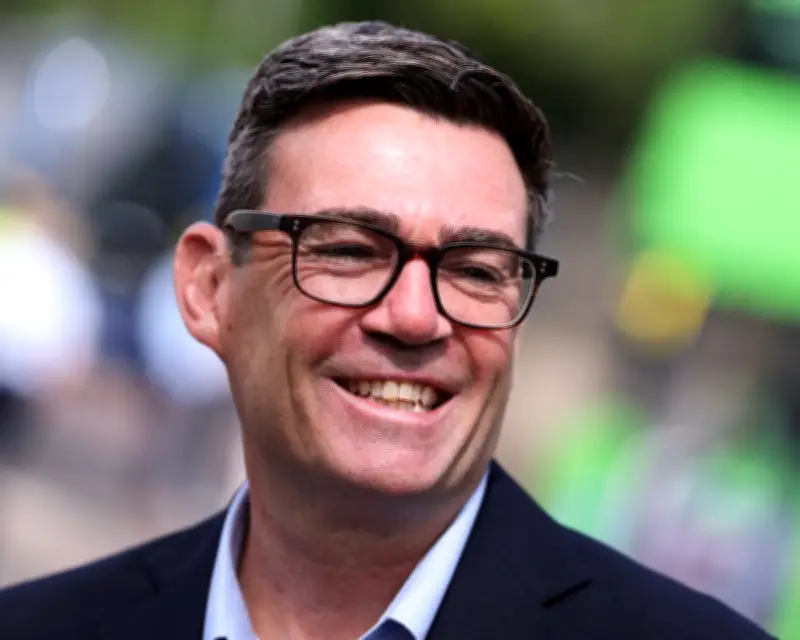
Andy Burnham has become prime minister without having campaigned on any manifesto promises, a rare position that is already testing his pledge to 'do politics differently'. Just three days into his tenure, he has faced accusations of performing U-turns over raising the income tax threshold, raising taxes for higher earners, and freezing private sector rents.
Minor Controversies Stem from Open Speaking Style
The minor controversies are mostly a function of Burnham's habit of speaking openly about his ideas before they are fully formed. Earlier this week, he said that while campaigning in the Makerfield byelection, he heard more complaints about the income tax threshold than any other issue, prompting speculation he would raise it. Reports on Tuesday suggested he had ruled it out, only for him to clarify on Wednesday that it was still an option.
'It's funny these days you can't answer a question honestly without then people reading everything else into it,' Burnham told broadcasters. 'I want to answer questions honestly in this job, as I said before. I think that's all about trust in politics and doing politics differently, and I'm determined to keep working in that way.'
Rent Freeze and Prison Policy Debates
A similar scenario played out over freezing private sector rents. Asked on Monday if such a move could be part of his package to tackle the UK's cost of living crisis, he replied: 'We're looking at all of those things.' On Wednesday, however, it was reported that officials were not actively considering such a move. Burnham has also kickstarted an unexpected debate on releasing prisoners early, saying he would review the policy, which has been one of the government's main tools for easing overcrowding in prisons.
'Andy appears to have just realised he is the prime minister,' said one Labour official. 'He is a talented communicator and he is right that the media spins messages and this can be a hostile environment. But it is his job to go into that with his eyes wide open. He hasn't fought an election or had much scrutiny, and so people are desperately trying to understand what his priorities and platforms are.'
A Deliberate Communication Strategy
For many, Burnham's approach is a necessary response to the buttoned-up way in which his predecessor, Keir Starmer, used to speak and to the modern media environment which demands authenticity above discipline. His open, conversational style worked well as Greater Manchester mayor, when reporters became used to his off-the-cuff comments during press conferences, and he seems determined to bring the same outlook to Downing Street.
'He's not an idiot,' said Sean Kemp, who advised former Liberal Democrat leader Nick Clegg and is now a partner at Hanbury Strategy. 'He knows what he's doing, but he doesn't care, and he's going to keep on saying it. And he's done it so much now, I'm starting to think now that he's decided this is just how he does things.'
Media Use and Risks of Misunderstanding
The approach is also reflected in the media he uses to communicate. He has already shown his willingness to use mischievous social media posts to get his message across, and took part in an online question-and-answer session on Reddit shortly after winning the Makerfield byelection. But the chances of being misunderstood were highlighted in another post-Makerfield interview with Gary Lineker, where he said: 'I do believe we need a greater sense of fairness and people feeling that things are being done in the right way and a fair way. But at the same time, you know, I don't want to sort of be perceived as somebody who's coming in with grudges and agendas.'
Burnham's desire to bypass traditional political journalism is not new, say political communication experts, but it does carry risks. 'I think every single prime minister in the last 25 years has tried to do that,' said Kemp. 'Then they realise that these are the people reporting day to day on what you are doing, and still, to a great extent, are setting the parameters of how you're viewed.'
Guto Harri, once communications director for former prime minister Boris Johnson, said: 'He's not an ordinary person any more, he is the first lord of the Treasury and the prime minister of Britain. So if he says these things, it is reasonable for the people who hear him to think something will follow. And if something doesn't follow, then people are likely to become cynical quite quickly.'




