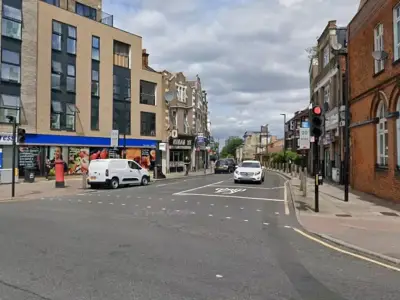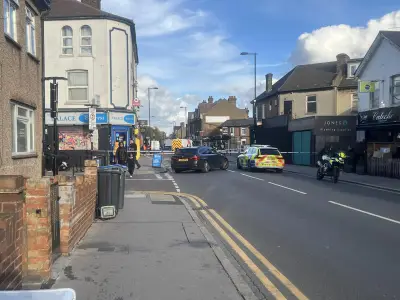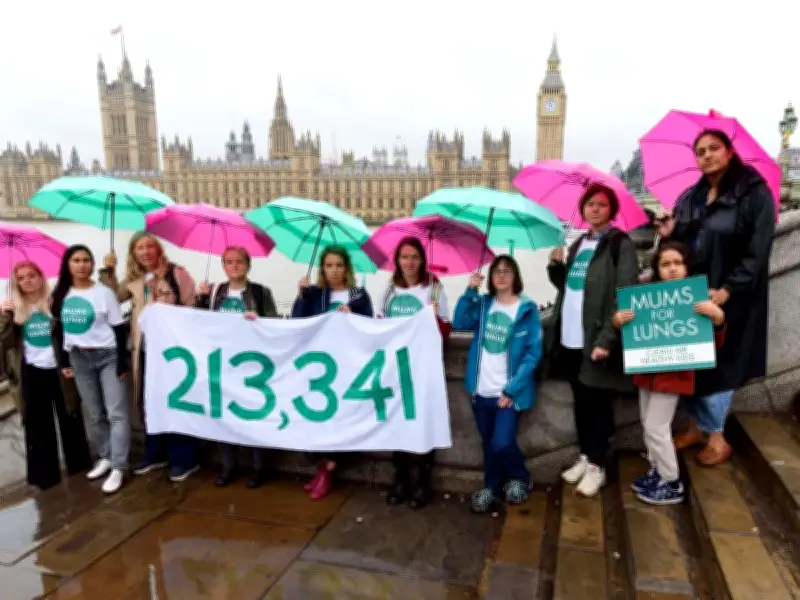
A North London councillor has called for stricter air quality measures after a report found Brent has some of the highest rates of childhood asthma hospital admissions in the UK. The latest figures place Brent's childhood asthma admission rate at 333.8 per 100,000, double the London average, with the highest rates in Harlesden and Kilburn.
The report by Mums for Lungs found 115,357 admissions to A&E and hospital for children aged 0-18 across English cities. The Brent Community and Wellbeing Committee identified housing conditions and overcrowding, air quality and pollution, and deprivation as key factors contributing to the heightened rates.
Decline in admissions but rates remain high
The committee reported a 12.4 per cent decrease in admissions in this year's figures (2025/26) compared to 2024/25. Despite this, the borough ranks second-highest in London for emergency admissions among both younger children aged 0-9 and older children aged 10-18.
Green Party Councillor Alexandre Amandine for Harlesden and Kensal Green, also a campaigner for Mums for Lungs, has called on Brent Council to implement the World Health Organisation's (WHO) air quality standards to help curb the issue.
"We cannot tolerate that childhood asthma admission rate in Brent is twice the London average," said Amandine. "Brent council needs to have much higher health ambitions to protect children from asthma and other pollution-related illnesses. That requires tackling all sources of air pollution head on, as well as tackling mould and damp in dwellings."
Call for WHO standards adoption
Amandine advocates for Brent Council to adopt WHO air quality standards, which are stricter than UK ones. "Other London boroughs such as Camden have already adopted the WHO standards," he said. "As Brent Council is currently reviewing its Air Quality Action Plan (AQAP) that will be implemented from 2028, now is the time for Brent to prioritise clean air for the health of all residents, and especially children."
The report follows air quality campaigners Mums for Lungs highlighting national figures of children hospitalised with asthma. Jermima Harthorn, the charity's founder, said: "This has to be a wake-up call for our Mayor to continue the work he started which has seen pollution levels fall."
Council response and progress
Responding to the figures, Cllr Liz Dixon, Cabinet Member for Community Safety and Public Health, pointed to several schemes the administration is using to tackle the issue. A review of the Air Quality Action Plan is due in 2028, with targeted interventions planned for areas experiencing higher pollution levels.
"Every child deserves to grow up breathing clean air, and for families living with asthma and respiratory conditions, this is about their health, quality of life and the kind of borough we want to leave to future generations," said Dixon. "We've made real progress in Brent, with nitrogen dioxide levels at our monitoring stations falling by an average of 45% since 2019, supported by measures including School Streets, better cycling infrastructure, greener transport and planting more trees across the borough."
Dixon added: "However, we recognise there is still a long way to go, and while meeting national standards is important, we share the World Health Organisation's ambition to go further. Our next Air Quality Action Plan will build on that progress, but cleaner air is something we all have a part to play in delivering."
The administration noted that nitrogen dioxide concentrations have declined and levels have met the national annual mean objective since 2023. The next Air Quality Action Plan is scheduled for implementation from 2028.